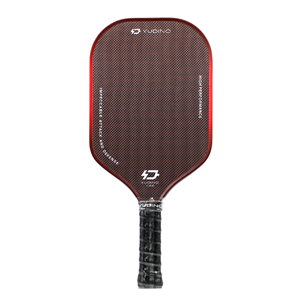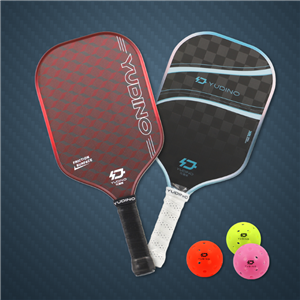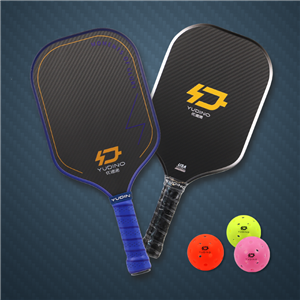
Carbon Fiber Pickleball Paddle for Beginners
If you are new to pickleball and shopping for your first paddle, you have probably already noticed that carbon fiber is everywhere — in product listings, in YouTube reviews, in conversations at the court. And the question that naturally follows is a reasonable one: as a beginner, should you start with a carbon fiber pickleball paddle, or is it overkill for someone still learning the basics?
The honest answer is more nuanced than most reviews give you. Carbon fiber is not automatically the wrong choice for beginners — but it is also not automatically the right one. The answer depends on what kind of beginner you are, how seriously you plan to pursue the sport, and whether you understand what the material actually changes about how the paddle plays.
This guide walks through everything a beginning pickleball player needs to know about carbon fiber: what the material does, how it affects learning, which specifications make it more beginner-friendly, and how to buy one that supports your development rather than fighting against it. By the end, you will have a clear, specific answer — not a generic "it depends" — that matches your actual situation.
What Beginners Actually Struggle With on the Court
Before evaluating whether a carbon fiber pickleball paddle is right for beginners, it helps to be honest about what beginning players actually struggle with. Because the right equipment solves real problems — not theoretical ones.
Inconsistent swing mechanics. New players have not yet developed the muscle memory for a repeatable swing path. Drives land long on one shot and short on the next. Dinks sail or pop up unintentionally. The swing is fundamentally unreliable in the early months of play.
Difficulty controlling the kitchen line. The non-volley zone (kitchen) is central to pickleball strategy, but soft-game control — dinking with precision, resetting hard shots, dropping into the kitchen from the transition zone — requires a level of touch that beginners are still developing.
Unpredictable spin results. New players often generate unintentional spin through wrist flick, inconsistent contact point, or mistimed swings. They are not directing spin — it is happening to them, not because of them.
Too much pace on drives. Beginners frequently drive the ball harder than necessary, resulting in shots that sail out. They rely on power to compensate for imprecision rather than developing placement and spin.
Arm fatigue. Players new to any racquet sport have not yet developed the specific muscle conditioning for extended paddle play. Heavier equipment or equipment that transmits high vibration accelerates this fatigue.
Now match these beginner problems against what a carbon fiber paddle actually does: it amplifies spin (both intentional and unintentional), rewards precise swing mechanics, delivers crisper feel with less forgiveness on off-center hits, and generates less bounce-back on drives than fiberglass. Some of these characteristics help beginners. Others make the learning curve steeper.
The Case FOR Starting with Carbon Fiber
The conventional wisdom — "beginners should use fiberglass" — is not wrong, but it is also not universally correct. There are genuine reasons why a beginner might benefit from starting on a carbon fiber pickleball paddle rather than fiberglass.
You Learn to Play "The Right Way" Immediately
Modern high-level pickleball is built on control, spin, and precision — not on hitting the ball as hard as possible. Fiberglass paddles' trampoline effect rewards harder swings with more pace, which feels satisfying initially but reinforces the bad habits most recreational players develop: over-swinging, relying on the paddle's flex for power instead of technique, and neglecting the soft game.
Carbon fiber, because it rewards controlled, deliberate shots rather than power-dependent play, can orient your learning from the beginning toward the skills that matter at higher levels. If you want to develop competitive pickleball ability — not just recreational proficiency — starting on carbon fiber builds the foundation for that goal more effectively.
The Spin Feedback Is Educational
While unintentional spin can be frustrating for beginners, it is also educational. When your wrist flick produces unintended side spin and the ball goes wide, the carbon fiber surface makes that feedback unmistakably clear. Fiberglass is more forgiving — but "forgiveness" in equipment often means the paddle compensates for errors in ways that hide them from the player.
Carbon fiber's feedback loop is more demanding but more informative. Players who learn on carbon fiber often develop cleaner swing paths faster because the paddle does not mask errors the way forgiving surfaces do.
You Get More Years of Useful Life From the Same Paddle
If you buy a beginner fiberglass paddle intending to upgrade to carbon fiber in six months, you are planning to buy two paddles instead of one. A well-chosen, beginner-appropriate carbon fiber paddle — the right grade, core thickness, and weight for a new player — stays useful well past the beginner stage. As your game develops, the same paddle's spin and control capabilities become more accessible and more valuable, not less. The investment horizon is longer, which changes the cost calculation.
Entry-Level Carbon Fiber Is Now Genuinely Affordable
The price barrier that historically separated beginner and advanced paddle categories has largely collapsed in the carbon fiber segment. T700 carbon fiber paddles — the genuine high-performance material, not entry-grade T300 — are now available for $50 to $80 from manufacturers who have brought precision construction to the mass market. At these price points, the carbon fiber "premium" is minimal, making the material accessible for beginners who do not want to invest in a paddle they will outgrow.
The Case AGAINST Carbon Fiber for Some Beginners
The case for carbon fiber is real — but it is not universal. Here is when a fiberglass or soft-surface paddle genuinely serves beginning players better.
When Your Main Goal Is Casual Social Play
If you are picking up pickleball to play twice a month with friends, to get some light exercise on weekends, or to join a low-key social group at the local recreation center — carbon fiber's performance advantages are largely irrelevant. A casual recreational player at this frequency does not benefit from spin-generating grit or precise kitchen control. Any functional paddle at $30 to $60 works perfectly well for this use case.
When Arm Comfort Is a Priority
Players new to racquet sports sometimes experience elbow, shoulder, or wrist discomfort in the first weeks of play. Carbon fiber paddles at lower price points can transmit higher vibration than quality fiberglass alternatives — not because the material is inherently worse for vibration, but because premium carbon fiber paddles use thermoform construction that significantly reduces vibration, while budget options may not. If arm health is a concern, a well-built mid-range fiberglass paddle or a thermoform-construction carbon fiber paddle in the $80+ range are both better choices than a budget carbon fiber option with basic construction.
When Technique Is Entirely Undeveloped
Players who are genuinely at day-one skill level — have never played pickleball, are still learning to keep the ball in play, and are working on basic forehand and backhand contact — will experience more frustration than benefit from carbon fiber's grit. At this stage, the paddle should be the least of your concerns; technique and positioning are everything. A forgiving fiberglass paddle that keeps early shots more controllable is the better developmental tool at this stage.
Which Carbon Fiber Specs Make a Paddle More Beginner-Friendly
If you have decided that a carbon fiber pickleball paddle is the right starting point, the specification choices determine whether the experience supports your development or fights against it. These are the parameters that matter most for beginners.
Core Thickness: Choose 16mm
The 16mm polypropylene honeycomb core is the most important beginner-friendly specification in a carbon fiber paddle. The thicker core softens the contact feel — the ball dwells on the face slightly longer, giving the player more time to shape the shot and absorb pace on reset attempts. Off-center hits produce more acceptable results. Drives that would sail long from a 13mm core often stay in from a 16mm.
For beginners, the 16mm core's forgiving quality partially compensates for the reduced forgiveness of the carbon fiber face. The combination of carbon fiber grit with a 16mm core gives you the spin and control benefits of the material with enough cushioning to manage developing mechanics.
Avoid 13mm core paddles at the beginning. The crisper, less forgiving feel of a 13mm core rewards precise technique that beginners have not yet developed.
Surface Treatment: Coated Rather Than Raw Carbon
Raw carbon fiber surfaces leave the fiber weave completely exposed for maximum spin generation — but they are also the least forgiving surface treatment for inconsistent technique. The aggressive grit amplifies wrist flick errors and inconsistent contact points in ways that create unpredictable results.
For beginners, a carbon fiber face with a light protective finish coating reduces the raw grit slightly — still significantly more than fiberglass — while making the spin behavior more manageable. You get the spin capability development without the full amplification of early mechanical errors.
As your mechanics improve and you begin to direct spin intentionally, transitioning to raw carbon is a natural progression. But starting on coated carbon fiber gives you the material benefits with a reduced learning curve.
Weight: Stay in the Mid-Weight Range (7.5–8.0 oz)
Very lightweight paddles (under 7.2 oz) are popular with experienced players who prioritize quick kitchen reactions, but for beginners they can feel unstable on drives — the low mass means the paddle deflects more easily on contact, making the ball's response feel unpredictable. Heavier paddles (above 8.2 oz) accelerate arm fatigue for players who have not yet developed sport-specific conditioning.
The 7.5 to 8.0 oz mid-weight range provides enough stability for drives and enough maneuverability for kitchen exchanges — the balanced starting point that serves most beginning players best regardless of face material.
Standard Shape Over Elongated
The standard paddle shape (approximately 15.5–16 inches in length, 8–8.5 inches in width) has a larger overall face area than elongated designs. That larger face creates a bigger sweet spot — the area of the paddle that produces the best shot results on contact. For beginners whose contact point is still inconsistent, a larger sweet spot means more shots end up controllable rather than erratic.
Elongated paddles are well-suited for advanced players who have reliable technique and want to maximize reach and drive pace. For beginners, the sweet spot advantage of the standard shape is the more relevant benefit.
Grip Size: Measure Before You Buy
One of the most commonly overlooked specifications for beginners is grip circumference. Playing with the wrong grip size creates compensatory tension in the hand and wrist — players grip harder when the handle is too large (feeling insecure) or too small (trying to stabilize it). That tension kills touch and feel in soft-game situations.
The measurement: hold the paddle in your dominant hand in a continental grip (the way you would shake hands with the paddle). There should be approximately one finger's width of space between your fingertips and the base of your thumb. Zero gap means too small; more than one finger means too large.
Most adult players fall in the 4 1/8 to 4 1/4 inch circumference range. Starting with the right grip size is one of the most cost-free performance decisions you can make as a beginner.
Budget Guide: What to Expect at Each Price Point for Beginners
$35–$60: Functional Entry With Genuine T700
The sub-$60 range now includes genuine T700 carbon fiber paddles from manufacturers — primarily Chinese-market brands — who have brought precision carbon construction to mass-market pricing. The key is verifying the fiber grade: "carbon fiber" in the product name does not guarantee T700. Look for T700 explicitly in the specifications.
At this price point, paddles typically use 16mm cores, standard shapes, and basic edge guard construction. The face performance is genuine; durability details (edge guard longevity, handle wrap quality) are average. For a beginner testing whether carbon fiber suits their game, this range is the intelligent entry point.
$70–$110: The Beginner Sweet Spot
This range consistently delivers the best combination of genuine performance and construction quality for beginners. Paddles in this category increasingly feature thermoform construction or improved bonding methods, better handle wrap materials, and more consistent manufacturing quality between units.
For beginners who have decided pickleball is a sport they will play seriously and want equipment that stays relevant as their game develops, the $80–$110 range makes the most sense for the investment. The performance gap between this tier and premium paddles is real but modest. The gap between this tier and entry-level budget options is also real — primarily in construction quality and durability.
$120–$200: Performance That Exceeds Beginner Needs
Premium carbon fiber paddles in this range deliver the absolute ceiling of current technology: optimized thermoform construction, premium T700 or T800 fiber weaves, precision core dimensions, and extensive design refinement. They are excellent paddles — but they are optimized for players with developed technique who can detect and use the marginal improvements in grit texture, face response, and vibration characteristics.
Most beginners will not notice the difference between an $80 thermoform paddle and a $180 premium paddle in the first 12 to 18 months of play. The $100 price difference delivers real value to advanced players; for beginners, it buys diminishing returns. Wait until your game develops before investing at this level.
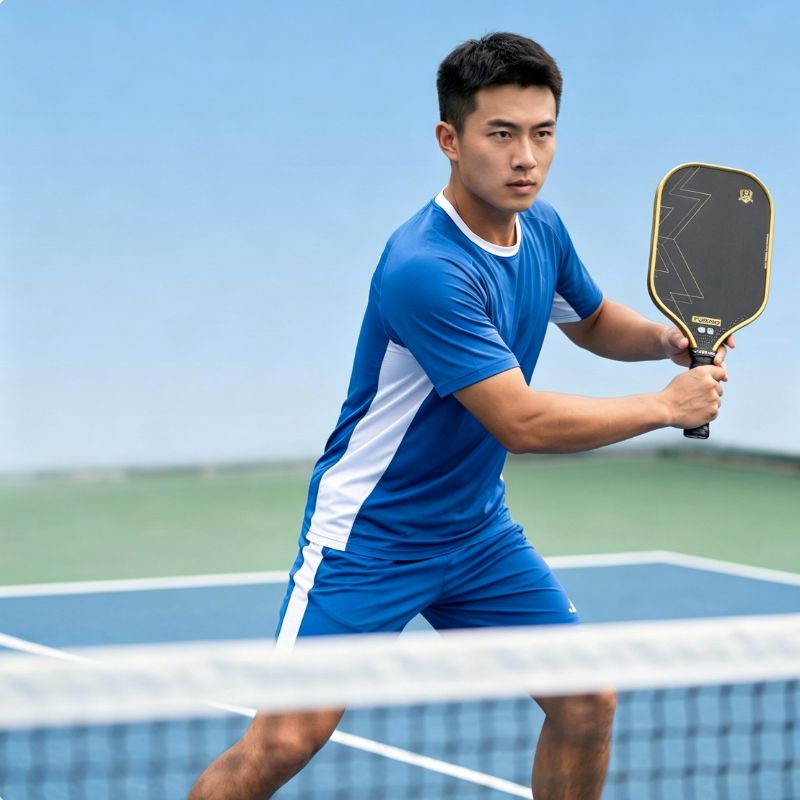
The Transition Roadmap: How Your Paddle Needs Change as You Improve
Understanding how your equipment needs evolve over time helps you buy the right paddle now and know when upgrading makes sense.
Month 0–3 (Complete Beginner): Focus entirely on technique, positioning, and the rules of the game. The paddle is almost irrelevant. If buying carbon fiber, choose a coated surface, 16mm core, standard shape, mid-weight. Budget $60–$90.
Month 3–6 (Developing Beginner, approximately 2.0–2.5 DUPR): You are starting to have consistent rallies, your third-shot drop is developing, and you are beginning to work on kitchen exchanges. The 16mm carbon fiber specification you started with is still appropriate and is now starting to provide real benefit in the kitchen game.
Month 6–12 (Intermediate, approximately 3.0 DUPR): You are intentionally trying to generate spin, your swing mechanics are more consistent, and you are studying the game strategically. This is the point at which a raw carbon fiber face upgrade pays off — the grit amplifies your improving spin mechanics. Consider upgrading to a raw surface, same or slightly upgraded core thickness.
12 months+ (3.5+ DUPR): Shape preferences and weight optimization become relevant. Elongated shapes may suit your developing playing style. Premium thermoform construction starts to deliver perceptible differences in feel and consistency that your developed technique can detect.
Common Beginner Mistakes When Buying Carbon Fiber
Buying raw carbon fiber as a first paddle. The most aggressive spin surface available is not the best starting point for mechanics that are still developing. Raw carbon amplifies errors as visibly as it amplifies successes. Start on coated carbon; upgrade to raw as your mechanics solidify.
Choosing the lightest paddle available. Lightweight paddles marketed for quick kitchen reactions are optimized for experienced players whose technique is stable. For beginners, under 7.2 oz paddles can feel unstable on drives because the low mass deflects inconsistently on contact. Mid-weight is the right starting point.
Assuming any paddle labeled "carbon fiber" delivers T700 performance. The carbon fiber designation covers a range of fiber grades. T300 fiber — used in lower-cost paddles — delivers partial benefits of the material at a reduced performance level. Verify T700 explicitly in the spec sheet before purchasing.
Not budgeting for the right core thickness. The 16mm core is the beginner-appropriate specification in carbon fiber paddles — it provides a forgiving contact feel that compensates for developing mechanics. 13mm cores are stiffer and less forgiving. This parameter is as important as the face material for beginners.
Buying a paddle sized for professional play. Elongated shapes, ultra-thin cores, and minimum-weight constructions are designed for players whose technique fully exploits those characteristics. Beginners using professional-specification paddles often experience more frustration than benefit. Standard shape, 16mm core, mid-weight is the specification matched to the beginner learning curve.
Frequently Asked Questions
Q: Should a beginner buy a carbon fiber pickleball paddle or start with fiberglass?
A: It depends on how seriously you plan to play. If you are picking up pickleball as a casual recreational activity, fiberglass is forgiving and affordable — a perfectly valid starting point. If you plan to play regularly, improve your game, and potentially compete, starting on carbon fiber (with beginner-appropriate specifications: 16mm core, coated surface, standard shape) builds the right foundation. The material is no longer expensive enough to justify delaying if your intentions are serious.
Q: What is the best carbon fiber paddle for a complete beginner?
A: The best beginner carbon fiber paddle combines: T700 fiber grade (verified in specs), 16mm core, coated surface (not raw), standard shape (not elongated), mid-weight (7.5–8.0 oz), and correct grip size for your hand. Price range $60–$100. Thermoform construction is a bonus that improves feel and reduces vibration. Avoid the cheapest options that do not specify fiber grade — budget T300 paddles significantly underperform genuine T700.
Q: Is carbon fiber harder to control than fiberglass for beginners?
A: In some ways, yes — and in others, no. The carbon fiber surface's grit creates more spin, which can feel unpredictable when swing mechanics are inconsistent. In that sense, it is less forgiving than fiberglass's smoother surface. But carbon fiber's stiffness also provides more precise directional control in kitchen play and short exchanges — which is arguably the area that matters most in developing pickleball. The net effect for most beginners is a slightly steeper early learning curve but faster development toward skillful play.
Q: Will I need to buy another paddle after I improve, or can I keep using my beginner carbon fiber paddle?
A: If you choose the right beginner carbon fiber paddle — 16mm core, T700 fiber, standard shape — you can continue using it well past the beginner stage. The material's capabilities grow with your skill: spin and control features that were neutral or slightly difficult at the beginner stage become actively useful at intermediate and advanced levels. You will eventually want to experiment with raw carbon surfaces and potentially different shapes and weights as your preferences develop, but there is no built-in expiration on a well-chosen beginner-oriented carbon fiber paddle.
Q: How long does a carbon fiber paddle last for a beginner who plays twice a week?
A: At two sessions per week, a quality T700 carbon fiber paddle maintains its performance characteristics for 18 months to 2+ years. The coated surface used in beginner-appropriate specifications wears more slowly than raw carbon, extending effective surface life. Signs to watch for: smooth areas on the face where grit has worn away (reduced spin response), delamination at the edge guard, or soft spots in the face indicating core damage. With basic care — keeping the paddle dry, avoiding contact with hard surfaces, storing in a sleeve — most quality paddles serve beginners through the first 2 years of development without performance compromise.
Conclusion
A carbon fiber pickleball paddle for beginners is not a mistake — it is a question of which carbon fiber specifications you choose and what your goals for the sport are.
If you are picking up pickleball seriously and want to develop real game skills rather than casual recreational ability, the right beginner carbon fiber paddle — T700 fiber, 16mm core, coated surface, standard shape, mid-weight — gives you a genuine performance foundation that grows with your game. The material is now affordable enough that the "wait until you're better" argument has largely lost its economic basis at the $60–$90 price point.
If you are approaching pickleball purely as occasional casual recreation, the carbon fiber advantage is less meaningful — any functional mid-range paddle serves that use case adequately.
The key is buying the beginner-appropriate specification, not the most aggressive performance configuration. Raw carbon, 13mm cores, and elongated shapes are tools for players who have the technique to use them. 16mm cores, coated surfaces, and standard shapes are the specifications that make carbon fiber accessible, learnable, and genuinely helpful from the first session. Start there, play consistently, and let the paddle's capabilities reveal themselves as your game develops around them.