How Do I Choose a High-Quality 18K Carbon Fiber Pickleball Paddle?
Choosing a high-quality 18K carbon fiber pickleball paddle requires evaluating more than just the paddle face material. While 18K carbon fiber is known for its exceptional power, durability, and responsiveness, the overall performance of a paddle also depends on core construction, paddle thickness, weight distribution, surface texture, manufacturing quality, and certification standards. For players, distributors, and private-label buyers, understanding these factors can help ensure the paddle delivers the right balance of power, control, spin, and long-term durability.
As pickleball continues to expand globally, premium carbon fiber paddles have become one of the fastest-growing product categories. However, not all 18K carbon fiber paddles are manufactured to the same standard. Knowing what to look for can help buyers avoid low-quality products and make a more informed purchasing decision.
Why Is 18K Carbon Fiber Popular?
The term "18K carbon fiber" refers to a woven carbon fiber surface made from bundles containing 18,000 individual filaments.
Compared with fiberglass and many traditional composite materials, 18K carbon fiber offers:
Greater structural rigidity
Faster energy transfer
Stronger shot power
Excellent durability
Premium appearance
Consistent performance
Because of these characteristics, 18K carbon fiber paddles are commonly chosen by competitive players, tournament athletes, and power-focused users seeking maximum performance on the court.
1. Verify the Carbon Fiber Surface Quality
The first step is confirming that the paddle genuinely uses high-quality 18K carbon fiber.
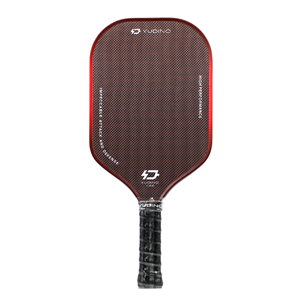
Some manufacturers advertise carbon fiber paddles while using thin decorative carbon layers or lower-grade composite materials underneath. A genuine 18K carbon fiber surface should feature:
Uniform carbon weave pattern
Consistent texture across the paddle face
Strong structural integrity
High stiffness without excessive brittleness
Premium manufacturers usually provide detailed material specifications and production information.
When sourcing from overseas suppliers, always request close-up surface images and material documentation before placing large orders.
2. Evaluate the Paddle Core Material
The paddle core has a major impact on overall performance.
Even the best carbon fiber face cannot compensate for a poorly designed core.
Most high-quality 18K carbon fiber pickleball paddles use polymer honeycomb cores because they provide:
Better vibration absorption
Improved control
Reduced player fatigue
Consistent ball response
Excellent durability
A high-quality core helps create the balance between power and touch that many advanced players seek.
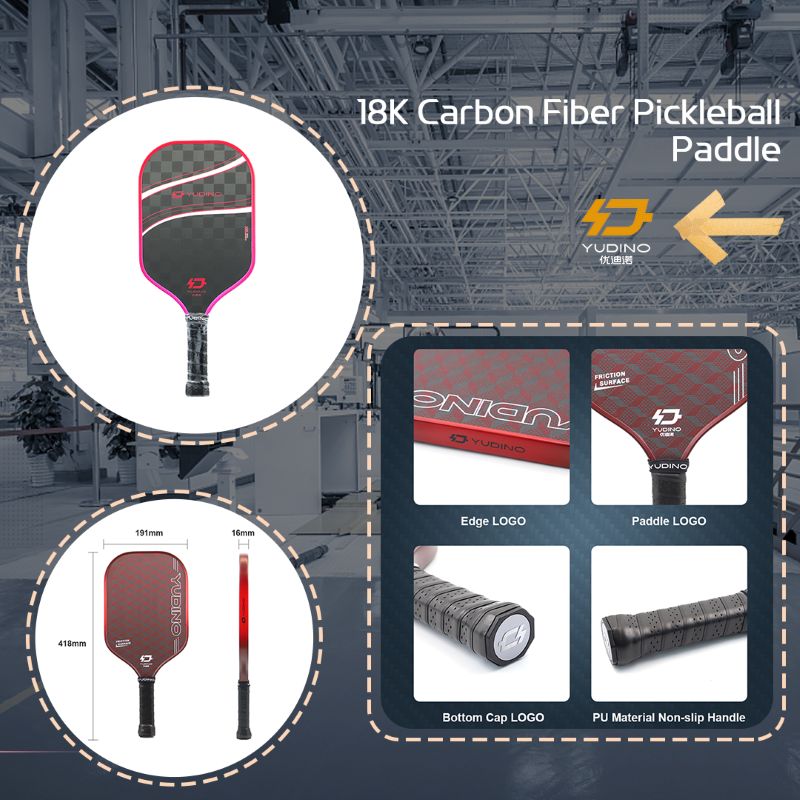
3. Choose the Right Paddle Thickness
Paddle thickness significantly influences performance.
14mm Thickness
Advantages:
More power
Faster response
Quicker hand speed
Suitable for aggressive players
16mm Thickness
Advantages:
Better control
Larger sweet spot
Improved stability
Better touch shots
Players focused on offensive performance often prefer 14mm models, while all-court players frequently choose 16mm versions for additional control.
The best thickness depends on individual playing style rather than a single universal standard.
4. Check Paddle Weight Carefully
Weight directly affects maneuverability and power output.
Most premium 18K carbon fiber paddles fall within these categories:
| Weight Category | Weight Range | Suitable For |
|---|---|---|
| Lightweight | 7.3–7.8 oz | Fast reactions and control |
| Midweight | 7.8–8.3 oz | Balanced performance |
| Heavyweight | 8.3+ oz | Maximum power |
For most players, a midweight paddle offers the best balance between power and control.
Distributors should consider offering multiple weight options to accommodate different customer preferences.
5. Examine Surface Texture for Spin Performance
One reason many players upgrade to premium carbon fiber paddles is to improve spin generation.
A quality 18K carbon fiber paddle should feature:
Textured carbon surface
Raw carbon finish
Consistent grit pattern
Durable surface treatment
These features increase friction between the paddle and ball, helping players generate topspin, slice, and controlled placement shots.
The surface texture should remain effective after extended use and not wear down quickly.
6. Look for a Large and Forgiving Sweet Spot
A larger sweet spot improves consistency during gameplay.
High-quality paddles are engineered to maintain stability even when the ball is not struck directly in the center.
Benefits include:
Reduced mishits
Greater accuracy
Better control
Increased confidence during rallies
For intermediate and advanced players, sweet spot performance can be just as important as raw power.
7. Assess Manufacturing Quality and Build Consistency
Build quality is often overlooked by first-time buyers.
Before purchasing, inspect:
Edge guard attachment
Handle construction
Surface finish
Core bonding quality
Weight consistency
Grip installation
Premium paddles should show clean workmanship with no visible defects, loose edges, or inconsistent finishing.
For distributors and private-label brands, factory quality control procedures are often more important than material specifications alone.
8. Verify Tournament Compliance
Players intending to compete should ensure the paddle meets tournament requirements.
Many serious buyers specifically look for paddles that comply with major pickleball competition standards.
When evaluating suppliers, ask:
Is the paddle tournament approved?
Has it undergone performance testing?
Are certification documents available?
Can approval markings be verified?
Compliance increases consumer confidence and expands market opportunities.
9. Consider Handle Length and Grip Comfort
A paddle may have excellent materials but still perform poorly if the grip is uncomfortable.
Important considerations include:
Grip circumference
Handle length
Cushioning material
Moisture resistance
Anti-slip performance
Players using two-handed backhands often prefer longer handles, while others may prioritize comfort and maneuverability.
Comfort directly affects performance during long matches.
10. Evaluate the Manufacturer's Experience
For importers, distributors, and private-label brands, choosing the right manufacturer is critical.
Reliable manufacturers typically offer:
OEM and ODM services
Consistent production quality
Material traceability
Quality inspections
Product testing reports
Custom branding options
Stable lead times
An experienced manufacturer can significantly reduce procurement risks and improve long-term business success.
Common Mistakes When Buying an 18K Carbon Fiber Paddle
Many buyers focus solely on the "18K" label and overlook other critical factors.
Common mistakes include:
Ignoring paddle core quality
Choosing weight based only on power
Overlooking handle comfort
Not checking tournament compliance
Purchasing from suppliers without quality verification
Failing to evaluate spin texture durability
A truly high-quality paddle combines premium materials with superior engineering and manufacturing processes.
When choosing a high-quality 18K carbon fiber pickleball paddle, buyers should evaluate the entire paddle system rather than focusing only on the carbon fiber face. Core construction, paddle thickness, weight, spin texture, sweet spot performance, build quality, and certification all play crucial roles in determining overall performance.
For serious players, retailers, and private-label brands, investing in a well-designed 18K carbon fiber paddle can deliver superior power, durability, consistency, and long-term value. By carefully assessing these key factors, buyers can confidently select a paddle that meets both performance expectations and market demands.