How Paddle Thickness Affects Your Game
Walk through any paddle comparison guide online, and you'll find plenty of attention paid to face material, carbon weave density, and paddle shape. Core thickness — the millimeter measurement that determines how much cushion sits between the two face layers — gets mentioned far less often, despite being one of the most consequential specs in the entire build. Change a paddle's core thickness by just 2 or 3 millimeters, and you change how power transfers at contact, how soft or crisp a dink feels, how forgiving the paddle is on off-center hits, and how the arm absorbs impact over a long match. This article explains exactly how that works and what it means when choosing between paddles at different thickness points.
What Core Thickness Actually Measures
The core thickness figure you see in a paddle's spec sheet refers to the depth of the honeycomb layer inside the paddle — typically a polypropylene (PP) structure — not the overall paddle depth including the face layers. Thicker honeycombs create more space between the two face surfaces, which changes both the physical flex of the paddle and the timing of energy transfer when the ball makes contact. In a quality thermoformed pickleball paddle, this core is hot-pressed directly against the carbon face layers as a single continuous unit, which means the thickness dimension translates predictably into performance rather than being affected by adhesion inconsistencies from layer-by-layer assembly.
Most paddles on the market today fall into three general thickness ranges: thin (11–13mm), mid (14–15mm), and thick (16mm and above). Each range produces a meaningfully different on-court experience, and the best choice depends on how you actually play.
Thin Paddles (11–13mm): Power and Speed With a Trade-Off
A thin core compresses and rebounds quickly. When the ball hits a thin-core paddle, it spends less time in contact with the face — the dwell time is shorter — which means energy is returned to the ball faster and the shot comes off the paddle with more pop and a harder, crisper feel.
Players who rely on fast drives, aggressive serves, and flat power shots often gravitate toward thinner cores for exactly this reason. The paddle generates natural pace without requiring a larger swing. At the net, reset volleys feel more responsive and punchy.
The honest trade-off: that same fast rebound is less forgiving. Off-center hits transmit more vibration to the hand, touch shots require more precise calibration because the ball leaves the face quickly, and the hard response means dinking and soft game work demands more technique to keep the ball from jumping off the paddle faster than intended. A thin-core thermoformed pickleball paddle built well will be consistent and durable — but it won't compensate for imprecision in the way thicker cores do.
Best suited for:
Players with strong baseline technique and consistent contact point
Singles play with a power-oriented game style
Players who've developed reliable touch and don't need the core to help them reset
Mid Thickness (14–15mm): The Practical Midpoint
The 14 to 15mm range is where most manufacturers position their flagship paddles, and for good reason — it genuinely balances the main competing demands of pickleball performance without sacrificing either end of the spectrum entirely.
A mid-thickness core gives enough dwell time to soften contact on touch shots without becoming sluggish on drives. The sweet spot is more forgiving than a thin-core build, vibration on mishits is more controlled, and the arm feels less fatigued after extended play. For players who compete in both singles and doubles, or who want one paddle to cover a range of situations, mid-thickness is the rational choice.
In terms of construction, a thermoformed pickleball paddle at 14–15mm is also practical for manufacturers: the mold compression ratios are well-established, making it easier to produce consistent results batch to batch. For buyers evaluating a product line, mid-thickness paddles tend to have the tightest unit-to-unit weight and feel consistency from quality suppliers.
Best suited for:
All-around players competing in mixed formats
Players developing their game and needing balance
The most versatile SKU for product lines targeting a broad audience
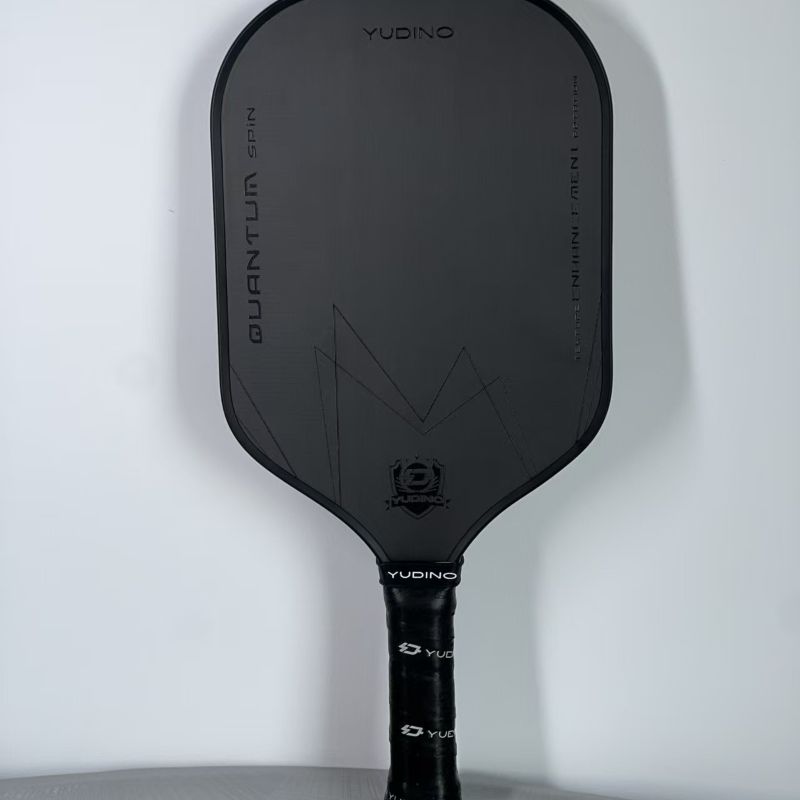
Thick Paddles (16mm and Above): Control, Forgiveness, and Comfort
At 16mm and beyond, the PP honeycomb core has enough depth to act as a genuine shock absorber. The ball spends more time in contact with the face — longer dwell time — which gives the player more opportunity to influence direction and spin at contact rather than simply reacting to a fast rebound.
This makes thick-core paddles particularly effective for net play, dinking sequences, and reset games in doubles. The soft, cushioned feel is also noticeably easier on the arm over long matches, which matters for players who experience elbow or wrist discomfort with harder-responding paddles. In competitive doubles contexts especially, the 16mm core has become increasingly standard at the performance end of the market.
There is a trade-off here as well: the extended dwell time that makes touch shots so manageable also slightly limits the explosive pop available on flat drives. Players who rely primarily on power will notice the difference. But for most recreational and competitive doubles players, the control advantage significantly outweighs the modest reduction in raw pace.
A well-engineered thermoformed pickleball paddle at 16mm makes the most of the thick core's properties. Because the face and core are fused under heat and pressure as one unit, the full depth of the honeycomb actively participates in ball contact — there are no adhesion gaps between layers that reduce the effective cushioning the core should be providing.
Best suited for:
Doubles players focused on net play, resets, and dinking
Players managing arm fatigue or joint sensitivity
Anyone prioritizing control and consistency over maximum power output
How Construction Method Interacts With Thickness
Paddle thickness only performs as advertised when the core is properly bonded to the face layers. In a laminated build where face and core are glued separately, air gaps or uneven adhesion across the surface can create inconsistent contact feel — parts of the face flex differently than others, the sweet spot is narrower than the core spec should allow, and performance changes as the bond weakens over time.
In a thermoformed pickleball paddle, the hot-press process applies even heat and pressure across the entire surface simultaneously. The PP honeycomb core bonds to the carbon face as a continuous unit, with no seams or adhesion variation across the hitting surface. This means a 16mm thermoformed paddle actually performs like a 16mm paddle — the thickness isn't partially cancelled out by construction inconsistency. For players trying to calibrate their game around a specific thickness spec, and for buyers trying to ensure customers receive consistent feel across an entire production order, this distinction is more than academic.
Questions Players Ask About Paddle Thickness
Does a thicker paddle always mean more control? Generally, yes, up to a point. Thicker cores increase dwell time and soften ball response, which gives more opportunity for shot placement. But technique still matters — no thickness converts poor mechanics into precision.
Will a thick-core paddle reduce drive power significantly? Some reduction, yes, but it's less dramatic than many players expect. Most 16mm paddles still generate competitive pace on full drives — the difference becomes most apparent on fast, flat exchanges at the net rather than on groundstrokes from the baseline.
Is there a thickness limit set by regulations? Governing bodies regulate combined paddle dimensions (length plus width) but do not currently set a maximum core thickness. Paddle thickness is a performance-design decision made by the manufacturer, not a regulatory constraint.
How do I know if my current paddle's core is the right thickness for my game? If your touch shots consistently run long, you may benefit from a thicker core. If your drives feel slow or muted and lack the crispness you want, a thinner core may suit your game better. Requesting samples across thickness options is the most reliable way to evaluate the difference before committing.
Does core thickness affect how long a paddle lasts? Indirectly. Thicker cores distribute impact force across more material, which can reduce localized stress at the face-core bond over time. In a thermoformed pickleball paddle where that bond is already stronger than a laminated equivalent, the durability advantage compounds.
What Thickness Means for Sourcing a Paddle Line
For importers and brand owners building a product range, thickness differentiation is one of the cleaner ways to create meaningful tier separation within the same material spec. Positioning a 13mm paddle as a power-oriented performance option, a 15mm as the all-around flagship, and a 16mm as the control-focused or doubles-specific offering gives a brand clear, technically defensible positioning for each SKU — without requiring different face materials, shapes, or branding.
When evaluating a manufacturer, it's worth confirming that core thickness is maintained consistently across a production run rather than varying within a batch. Thickness tolerance directly affects paddle weight and feel — even a 1mm variance in core depth changes the paddle's mass distribution enough for experienced players to notice. A supplier with in-house thermoforming presses and documented production controls is better positioned to hold tight thickness tolerances than one outsourcing the pressing step.
Final Thoughts
Paddle thickness is one of the most direct levers in pickleball equipment design. Thin cores prioritize power and speed; thick cores prioritize control and forgiveness; mid-range cores serve players who need both. What makes a given thickness spec actually perform as expected is the construction method behind it — and a properly built thermoformed pickleball paddle, where the full depth of the core is uniformly bonded under heat and pressure, delivers on its thickness specification in ways that laminated builds often don't.
Whether you're choosing a paddle for your own game or evaluating specs for a product line, thickness deserves the same attention as face material and shape. It shapes how the paddle feels, how forgiving it is, and how the arm holds up across a long season — and getting it right for the intended player profile is one of the clearest ways to build a paddle that earns repeat loyalty rather than quiet replacement.
FAQ
What is the most popular paddle thickness for recreational players?
The 14 to 16mm range dominates recreational pickleball. Most players find that mid-to-thick cores offer the best balance of forgiveness and performance without requiring the advanced technique that thin-core paddles demand.
Can I customize core thickness when ordering paddles for private label?
Yes — most manufacturers offering a thermoformed pickleball paddle line can supply the same mold with different core thickness options, which makes it practical to carry multiple performance tiers under one brand without requiring entirely separate product development.
Does paddle thickness affect the grip feel or handle response?
Core thickness primarily affects the face response, not the handle feel directly. However, a thicker core does reduce the vibration that travels through the throat and into the handle on mishits, which many players notice as a more comfortable overall feel.
Is a 16mm core paddle suitable for beginner players?
Yes — the additional forgiveness and softer contact of a 16mm core often makes it one of the most beginner-friendly options available, alongside a wide body shape. The reduced vibration and larger effective sweet spot are both beneficial for developing players.
What is the minimum order quantity when sourcing paddles in specific thickness variants?
This varies by manufacturer, but suppliers with flexible production capability can often accommodate thickness-specific orders at low minimums — making it feasible to test each tier before scaling up to full production quantities.