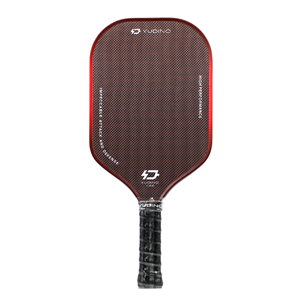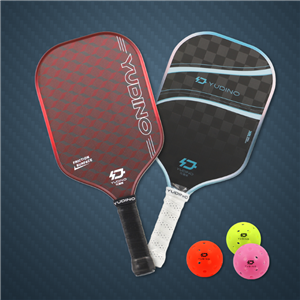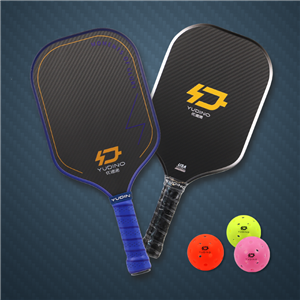
What Is a Thermoformed Pickleball Paddle?
Pickleball paddle technology continues to evolve, one term is appearing more frequently in the market:
Thermoformed pickleball paddle.
From professional-level equipment to OEM manufacturing discussions, thermoforming has become one of the most important innovations in modern paddle design.
But what exactly does “thermoformed” mean, and why are so many high-performance paddles using this technology?
This guide explains the structure, advantages, and real-world performance of thermoformed pickleball paddles.
Quick Answer: What Is a Thermoformed Paddle?
A thermoformed pickleball paddle is a paddle that is manufactured using heat and pressure to fuse the paddle structure into a single integrated unit (unibody construction).
Instead of assembling multiple layers separately, thermoforming creates a stronger, more unified paddle structure with improved durability and performance.
How Thermoformed Paddles Are Made
Traditional paddles are usually built by:
bonding face materials (carbon fiber or fiberglass)
attaching them to a honeycomb core
adding an edge guard
These components are glued together in layers.
Thermoforming Process:
Thermoformed paddles use a different approach:
Heat and pressure are applied to bond materials together
The paddle face wraps around the core
The entire structure becomes a single molded unit
This process is often called:
Unibody construction
Heat-pressed paddle design
Because of this, thermoformed paddles are structurally more stable than traditional laminated paddles.
Key Structural Difference: Unibody vs Layered Construction
| Feature | Traditional Paddle | Thermoformed Paddle |
|---|---|---|
| Structure | Layered assembly | One-piece structure |
| Bonding method | Adhesive bonding | Heat + pressure fusion |
| Durability | Moderate | Higher |
| Consistency | Can vary | More consistent |
Thermoformed paddles reduce the risk of delamination, which is a common issue in layered paddle designs.
Why Thermoformed Paddles Perform Differently
The performance advantage of thermoformed paddles comes from how energy moves through the paddle.
1. More Efficient Energy Transfer
Because the structure is fully bonded, energy from your swing is transferred more directly to the ball.
This results in:
faster ball speed
more consistent response across the face
2. Improved Stability
Many thermoformed paddles include:
foam-injected edges
reinforced perimeter structures
These features increase stability and expand the sweet spot, especially on off-center hits.
3. Reduced Vibration
The integrated structure helps reduce unwanted vibration, making the paddle feel:
more solid
more controlled
less harsh on the arm
Common Materials Used in Thermoformed Paddles
Thermoforming is a manufacturing process—not a material itself.
Most thermoformed paddles still use:
Carbon Fiber Face
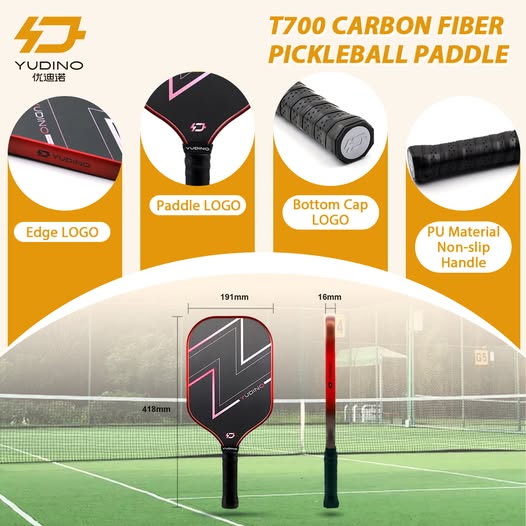
Often T700 carbon fiber
Provides high strength and spin potential
Polymer Honeycomb Core
Lightweight structure
Balanced power and control
Industry-standard core design
Thermoformed Paddle vs Traditional Paddle
Here is how they compare in real gameplay:
Power
Thermoformed paddles often produce more “pop” due to improved structural rigidity.
Control
Because of the stable structure, players experience more predictable ball response.
Durability
Thermoformed paddles are generally more resistant to:
structural fatigue
long-term performance loss
Feel
Players often describe thermoformed paddles as:
more solid
more connected
more responsive
Are Thermoformed Paddles Better?
Not always—but in many cases, yes.
Thermoformed paddles are especially beneficial for:
intermediate and advanced players
players seeking consistency and stability
competitive-level performance
However, beginners may not always notice a major difference compared to standard paddles.
Industry Trend: Why Thermoforming Is Growing Fast
In recent years, thermoforming has become a key trend in paddle manufacturing.
Reasons include:
Demand for higher durability
increased performance expectations
growth of competitive pickleball
Many premium paddles in 2026 now use:
thermoformed construction
carbon fiber surfaces
honeycomb or hybrid cores
From a Manufacturing Perspective
From a production standpoint, thermoforming requires:
higher precision molds
controlled temperature and pressure systems
strict quality control
For buyers and brands, this means:
more consistent product quality
better long-term reliability
stronger product positioning in the premium market
Manufacturers with integrated production capabilities—covering material selection, structural design, and process control—are better positioned to produce high-quality thermoformed paddles at scale.
Final Thoughts
Thermoformed pickleball paddles represent a significant step forward in paddle design.
By using heat and pressure to create a unified structure, these paddles offer:
improved durability
more consistent performance
enhanced stability and feel
As the pickleball market continues to evolve, thermoforming is likely to remain a core technology in high-performance paddle manufacturing.
FAQ
What does thermoformed mean in pickleball paddles?
It refers to a manufacturing process where heat and pressure are used to fuse the paddle into a single, unified structure.
Do thermoformed paddles have more power?
Yes, many thermoformed paddles generate more power due to improved energy transfer and structural rigidity.
Are thermoformed paddles more durable?
In most cases, yes. The integrated construction reduces the risk of layer separation and improves long-term durability.