Why Do Thermoformed Pickleball Paddles Deliver Superior Power Performance?
Many professional players find that, compared to traditionally constructed paddles, thermoformed paddles deliver noticeably greater power, more stable feedback upon impact, and more efficient energy transfer.
So, what enables thermoformed pickleball paddles to generate such powerful shots?
The answer lies not only in the materials themselves but also in the unique manufacturing process and overall structural design.
As a professional pickleball paddle manufacturer, YUDINO explains how thermoforming technology enhances paddle power by examining three key aspects: the manufacturing process, structural principles, and performance characteristics.
Why do thermoformed pickleball paddles deliver more power?
Simply put, the thermoforming process uses high heat and pressure to fuse the paddle face, honeycomb core, and edge structure into a tightly integrated unit, thereby enhancing energy transfer efficiency upon impact.
When the pickleball strikes the paddle surface, the paddle's structure generates an instantaneous reactive force.
Because thermoformed paddles feature:
greater structural rigidity;
a more stable frame; and
reduced energy loss;
they are able to transfer more power back to the ball, resulting in faster shot speeds and greater explosive power.
Manufacturing Principles of Thermoformed Pickleball Paddles
While traditional paddles are typically assembled from multiple layers of materials, thermoforming technology utilizes a heat-and-pressure process to fuse various components into a more cohesive, unified structure.
The production process primarily involves:
1. Carbon Fiber Face
High-performance thermoformed paddles typically feature a carbon fiber composite surface layer.
Carbon fiber offers:
High strength;
Lightweight properties;
Excellent rigidity;
Enabling the paddle to respond rapidly to the striking motion.
2. Honeycomb Core Structure
The paddle's interior typically utilizes a polypropylene (PP) honeycomb core.
The honeycomb structure serves to:
Reduce the paddle's overall weight;
Provide robust structural support;
Enhance stability upon impact.
3. Integrated Thermoforming
Under high heat and pressure, the face, core, and edge structures are fused into a single, integrated unit.
Compared to traditional bonding methods, this structure minimizes:
Material gaps;
The risk of delamination;
Performance degradation over prolonged use.
The result is a paddle structure characterized by superior stability and strength.
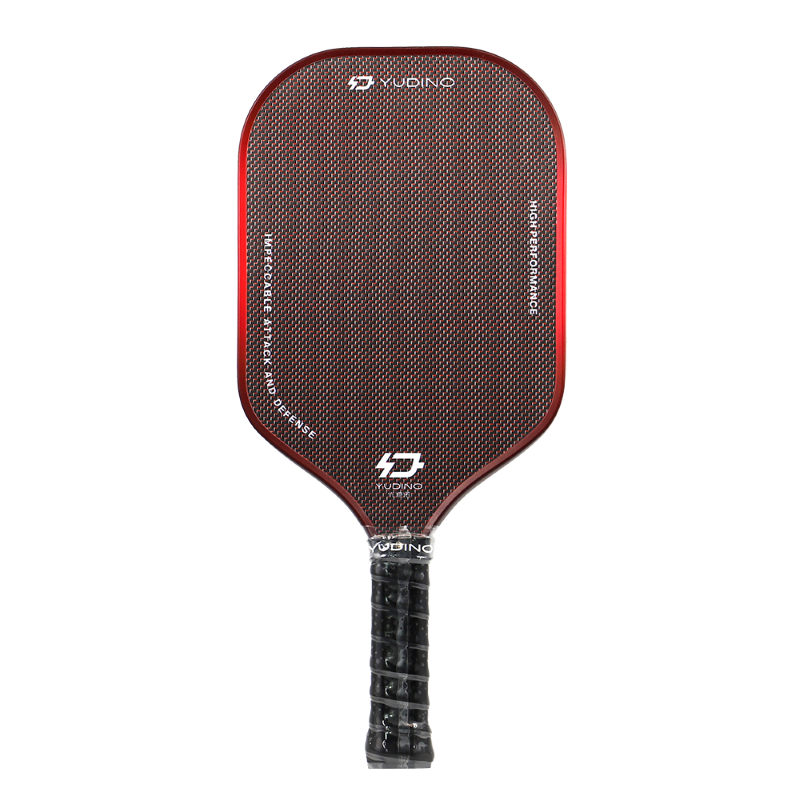
How does thermoforming technology enhance paddle performance?
1. More efficient energy transfer
Power output hinges on energy conversion efficiency.
With traditional paddles, energy can be lost during a shot due to:
Material deformation;
Structural vibration;
Losses at connection points.
Thermoformed structures offer superior overall rigidity, minimizing unnecessary energy loss and allowing more power to be transferred to the ball.
This is why thermoformed pickleball paddles typically deliver faster ball speeds.
2. Enhanced paddle stability
Fast-paced matches require players to swing rapidly and hit with power.
If a paddle lacks structural stability, issues such as the following can arise:
Off-center hits;
Reduced power;
Inconsistent feel.
Thermoforming technology strengthens the paddle frame, ensuring stable performance even on off-center hits.
3. Expanded effective hitting area
A great paddle requires not only power but also forgiveness.
Thermoformed structures promote more uniform force distribution across the paddle, effectively expanding the hitting area (sweet spot).
This results in:
Reduced power loss on off-center hits;
More consistent match performance;
Easier maintenance of shot quality during rallies.
4. Improved product durability
Paddle longevity is a key consideration for both professional athletes and commercial customers.
By strengthening material bonding, the thermoforming process reduces the likelihood of issues such as:
Core damage;
Face delamination;
Loosening of edge structures.
Consequently, high-end competitive pickleball paddles increasingly utilize thermoforming manufacturing methods.
Performance Differences Between Thermoformed Rackets and Traditional Rackets
| Comparison Criteria | Thermoformed Pickleball Paddle | Traditional racket construction |
| Manufacturing Method | High-temperature, high-pressure unitary molding | Multi-layer material assembly |
| Power Output | Stronger, more responsive | Softer feel |
| Stability | High-rigidity structure | Relies on material combinations |
| Impact Feedback | More direct feel | Greater comfort |
| Control Experience | Suited for power-based playstyles | Suited for a technical playing style |
| Intended Use | Competitive, high-performance market | Mass market / Entry-level market |
What advantages do traditional pickleball paddles still offer?
While thermoforming technology offers distinct performance benefits, paddles with traditional construction retain their own unique characteristics.
Softer hitting feel
Traditional construction provides a more cushioned feel upon impact, making it more suitable for players who prioritize nuanced control.
Superior touch feedback
For techniques such as:
dinks (short shots at the net);
precise placement control;
pace variations;
traditional paddles can offer more distinct tactile feedback.
More flexible product positioning
Thanks to mature manufacturing processes, traditional paddles can cater to a wide range of requirements regarding weight, materials, and price points.
Aside from the thermoforming process, what factors influence pickleball paddle power?
While thermoforming technology is a key factor affecting power, paddle performance is also influenced by various design elements.
Paddle Weight
Generally, a heavier paddle generates greater inertial power.
Paddle Thickness
Variations in thickness affect:
Elasticity;
Control;
Feedback upon impact.
Surface Material
Different materials influence the paddle's power and spin capabilities.
For example:
Carbon fiber: Offers quick responsiveness and excellent control;
Fiberglass: Provides greater elasticity and noticeable power feedback.
Paddle Shape
Elongated paddles typically allow for faster swing speeds and greater hitting distance.
Professional manufacturers often combine these factors to design products that balance power and control.
YUDINO Thermoformed Pickleball Paddle Manufacturing Advantages
As a professional pickleball paddle manufacturer, YUDINO continuously develops high-performance manufacturing technologies to provide advanced product solutions for global brand clients.
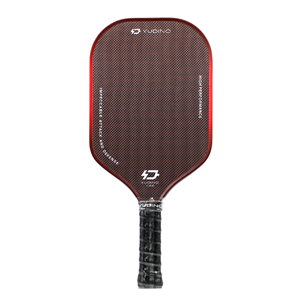
Our thermoformed pickleball paddles feature:
High-performance carbon fiber materials;
Precision thermoforming processes;
Premium honeycomb core structures;
Rigorous quality control procedures.
We also support:
OEM customization;
ODM development;
Logo customization;
Weight and specification adjustments;
Mass production services.
Whether serving professional sports brands, importers, or distributors, YUDINO delivers reliable manufacturing solutions tailored to market demands.
Conclusion
The superior power performance of thermoformed pickleball paddles stems primarily from their advanced, integrated manufacturing process.
By enhancing structural stability and improving energy transfer efficiency, thermoforming technology enables players to achieve greater speed, increased power, and a more consistent hitting experience.
As the sport of pickleball continues to evolve, thermoforming technology is emerging as a key trend in the production of high-performance paddles.
As a professional manufacturer, YUDINO remains committed to optimizing material applications and production processes, delivering high-quality thermoformed pickleball paddles and customized solutions to clients worldwide.