Best Competition Pickleball Paddle: 2026 B2B Buyer Guide
The global pickleball explosion is no longer just a trend; it is a multi-billion-dollar industry shift. For B2B stakeholders—importers, wholesalers, and brand owners—the challenge has evolved from simply sourcing "a paddle" to securing a Competition Pickleball Paddle that meets the rigorous demands of professional-grade play. In a market saturated with generic fiberglass options, the "Competition" label signifies a fusion of aerospace-grade materials, precision engineering, and USAPA-compliant specifications.
As a B2B partner, your reputation rests on the performance consistency of your inventory. This guide explores the technical architecture of high-end paddles, specifically focusing on why 18K Carbon Fiber and Thermoformed construction are the new non-negotiables for the 2026 season.
1. Defining the Competition Pickleball Paddle: Concept and Technical Superiority
A Competition Pickleball Paddle is not merely a recreational tool; it is a high-performance instrument designed for high-frequency impact, extreme spin generation, and vibration dampening. Unlike beginner paddles that use basic honeycomb cores and plastic faces, competition-grade paddles leverage advanced composite science.
The 18K Woven Carbon Fiber Advantage
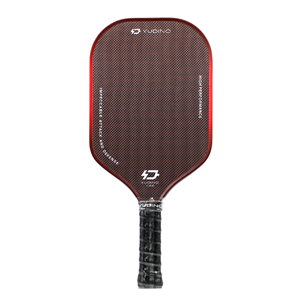
The core technical differentiator in our latest lineup is the 18K Woven Carbon Fiber surface. In the world of carbon composites, the "K" refers to the number of filaments per tow (18,000 filaments).
Structural Integrity: 18K provides a tighter weave than the standard T300 or T700, resulting in a more uniform surface tension.
Energy Return: For the B2B buyer, this means a paddle that offers "pop" without sacrificing the "dwell time" needed for dinking and resets.
Micro-Grit Texture: Through specialized UV-curing or peel-ply processes, our 18K surface maintains its friction coefficient significantly longer than cheap spray-on grits, ensuring players can generate 1500+ RPMs consistently.
2. Technical Mastery: Why Our Engineering Stands Out
Drawing from years of OEM/ODM experience in sports composites, we understand that a paddle's "feel" is a result of internal geometry.
Gen 3 Thermoforming Technology
Most low-cost paddles are "sandwich" constructions glued together. Our Competition Pickleball Paddle utilizes Gen 3 Thermoforming.
Unibody Construction: The face and handle are molded as a single continuous piece under high heat and pressure. This eliminates the "neck snapping" issue common in cheaper paddles.
Foam-Injected Perimeters: We inject high-density foam into the edges before sealing. This expands the "Sweet Spot" to the very edge of the paddle, increasing the Twist Weight. For your customers, this translates to stability; the paddle won't twist in their hand on off-center hits.
Reactive Polypropylene Honeycomb Core
We utilize a 14mm or 16mm Polypropylene (PP) Honeycomb Core.
14mm (Power/Aggressive): Ideal for players who prioritize drive and speed.
16mm (Control/Touch): The choice for professional "reset" players who need to take the pace off a ball.
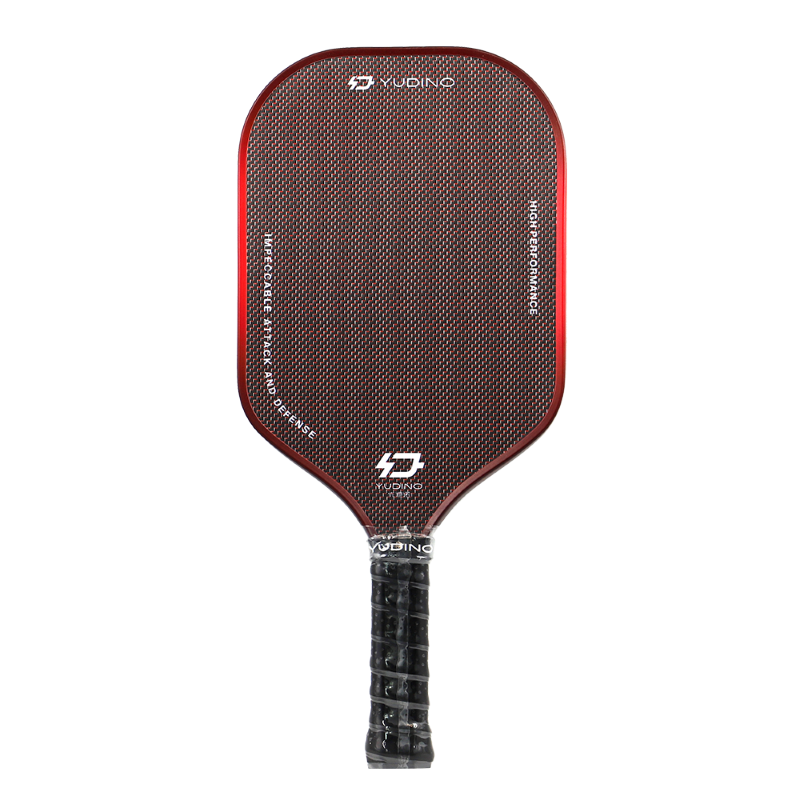
3. B2B Pain Points: Identifying Market Challenges and Solutions
For importers and brand owners, the "pain points" are different from those of an end-user. You care about return rates, certification, and brand longevity.
Scenario A: The "Dead Spot" Crisis
The Pain: Wholesalers often face returns because paddles develop "soft spots" after three months of play where the core delaminates from the face.
Our Solution: Our vacuum-sealed bonding process ensures a 99.9% adhesion rate, meaning your brand won't suffer from "dead paddle" reviews.
Scenario B: USAPA Compliance Uncertainty
The Pain: Importing 5,000 units only to find they fail the roughness test at a sanctioned tournament.
Our Solution: Every Competition Pickleball Paddle we manufacture is designed to strictly adhere to USAPA deflection and grit standards, ensuring your clients are tournament-ready.
4. Selection Criteria: Key Parameters for B2B Sourcing
When selecting a Competition Pickleball Paddle for your 2025 catalog, focus on these five parameters:
Swing Weight (110 - 120 range): This determines how heavy the paddle feels during a full motion. Professional players prefer a balanced swing weight for quick hand battles at the kitchen.
Twist Weight (6.5+): Higher twist weight equals more stability. If you are selling to "serious" players, this is a key selling point.
Static Weight (7.8oz - 8.3oz): The "Goldilocks" zone for competitive play.
Handle Length (5.3" - 5.7"): Modern "Power" players often use two-handed backhands. An elongated handle is a must-have for the 2025 competition market.
Grip Circumference (4.125" - 4.25"): Ensure your supplier offers customizable grip sizes or a standard size that accommodates over-grips.
5. Common Sourcing Errors to Avoid
As an SEO strategist, I see many B2B buyers falling into these traps which hurt their search rankings and customer trust:
Prioritizing Graphics Over Grit: A beautiful paddle that can't spin the ball will be returned. Always ask for the RZ (Roughness) value specs.
Ignoring the Handle Core: Many manufacturers use wood or cheap plastic in the handle. A true Competition Pickleball Paddle uses a carbon-forged handle to reduce vibration and prevent "tennis elbow."
Ordering Non-Thermoformed "Lookalikes": They look the same in photos but play entirely differently. Always verify the edge-seal technology.
6. Consumer Perspective: What Your End-Users Are Asking
"Will this paddle give me more power or control?"
Answer: Our 14mm 18K Carbon fiber model is optimized for "Power-Control Hybrid" play—providing 18K stiffness for power and a honeycomb core for touch.
"How long does the grit last?"
Answer: Unlike spray-on grit, our woven texture is part of the carbon face, lasting 2-3x longer under tournament conditions.
"Is the handle long enough for a two-handed backhand?"
Answer: Yes, our Competition series features a 5.5-inch elongated handle specifically designed for two-handed leverage.
7. Conclusion: Why Partner With Us for Your Competition Line?
The shift toward the Competition Pickleball Paddle is driven by a player base that is becoming more educated and demanding. To thrive as an importer or brand owner in 2025, you need a product that survives the "test of the court." By integrating 18K Carbon Fiber, Thermoforming technology, and foam-injected perimeters.
FAQ
Q1: Do you offer OEM/ODM services for the Competition Pickleball Paddle?
A: Yes. We specialize in B2B partnerships, offering full customization from carbon fiber weave patterns (12K, 18K, T700) to bespoke grip designs and branded end-caps, all while maintaining USAPA standards.
Q2: What is the minimum order quantity (MOQ) for wholesale competition paddles?
A: Our MOQ is designed to be flexible for brand owners looking to scale. Please contact our sales team through the product page for specific tiered pricing and sample order protocols.
Q3: How do you ensure consistency across large bulk orders?
A: We utilize automated heat-press molding and precision CNC cutting. Each batch undergoes a 10-point QC check, including surface roughness testing and weight calibration within a ±0.2 oz margin.
Q4: Can these paddles be marketed as "Professional Grade"?
A: Absolutely. Given the 18K carbon fiber construction and thermoformed unibody design, these paddles meet the technical requirements used by pros in the PPA and APP tours.
Q5: What is the lead time for custom-branded competition paddles?
A: Typically, production takes 30-45 days, depending on the level of customization, followed by your preferred shipping method (air or sea freight).