Graphite vs Fiberglass Pickleball Paddles: Which Material Is Better?
When buyers compare fiberglass pickleball paddles with graphite paddles, the question usually comes down to one thing:
Which paddle material offers the better playing experience?
The answer is not simply that one material is better than the other.
Graphite and fiberglass are designed to deliver different characteristics. Fiberglass is generally associated with a more elastic response and accessible power, while graphite is often selected for its direct feedback and control.
For players, the right choice depends on playing style and experience.
For retailers, distributors, and private-label brands, the decision should go one step further:
Which material makes more sense for your target customers and product positioning?
This guide compares graphite and fiberglass pickleball paddles from the perspective of performance, construction, player level, and B2B purchasing.
Graphite vs Fiberglass Pickleball Paddles at a Glance
Before looking at the details, the basic differences can be summarized as follows:
| Feature | Fiberglass Pickleball Paddles | Fiberglass Pickleball Paddles |
| Face response | More flexible and elastic | Stiffer and more direct |
| Power | Easy to generate | More dependent on player input |
| Control | Good | Strong |
| Impact feel | Softer | Crisp and direct |
| Beginner friendliness | Excellent | Good |
| Typical market position | Entry to mid-level | Mid to premium |
| Ideal users | Beginners and recreational players | Experienced and control-oriented players |
This comparison should only be used as a starting point.
A paddle's actual performance also depends on the core, thickness, weight, shape, balance, surface, and manufacturing quality.
That is particularly important when comparing different fiberglass pickleball paddles.
Two paddles can both use fiberglass but feel completely different on the court.
What Are Fiberglass Pickleball Paddles Designed to Do?
Fiberglass is valued in pickleball paddle construction because it provides a combination of flexibility, strength, and responsive rebound.
Compared with a very rigid face, fiberglass can flex more noticeably when the ball makes contact.
This creates an energetic response that can help players generate depth without relying entirely on a powerful swing.
That characteristic makes fiberglass pickleball paddles especially suitable for:
Beginner players
Recreational players
School programs
Club programs
Casual doubles players
Players who prefer easier power
For a beginner, this can make the first stage of learning more enjoyable.
New players often have inconsistent swing speed, contact points, and paddle angles.
A responsive fiberglass face can help make those imperfect shots feel less demanding.
This does not mean that fiberglass replaces good technique.
Instead, it gives newer players a paddle construction that is easier to work with while they develop their technique.
What Are Graphite Pickleball Paddles Designed to Do?
Graphite paddles generally emphasize a stiffer and more direct response.
When the ball contacts the paddle face, players can feel a more immediate connection between their swing and the ball.
That can be useful for players who already have consistent mechanics and want greater control over ball placement.
Graphite paddles can be attractive for:
Intermediate players
Advanced recreational players
Control-oriented players
Players who value direct feedback
Players who frequently play at the kitchen line
For these players, the goal may not be to make power easier.
Instead, they may want the paddle to respond predictably to subtle changes in swing speed and paddle angle.
Fiberglass vs Graphite: Which Has More Power?
If power is the main consideration, fiberglass has an important advantage.
The more flexible nature of fiberglass can create a lively rebound during impact.
This means a player with a moderate swing speed can still produce useful ball depth and pace.
That is one reason fiberglass is widely used for beginner-oriented paddle designs.
However, it would be incorrect to say that every fiberglass paddle is more powerful than every graphite paddle.
Power is affected by the entire paddle construction.
Important factors include:
Paddle weight
Core thickness
Core material
Paddle length
Balance point
Face construction
Player swing speed
For example, a heavier graphite paddle can produce considerable momentum even though graphite itself is relatively rigid.
Therefore, B2B buyers should never evaluate paddle performance based only on the word "fiberglass" or "graphite."
Which Material Offers Better Control?
Graphite is often preferred by players who prioritize control and direct feedback.
The stiffer face can provide a more immediate response when the player changes paddle angle or swing speed.
This can be helpful during:
Dinks
Drops
Resets
Volleys
Soft-game exchanges
Precision placement
But fiberglass should not be considered a control-focused player's worst option.
The core structure can significantly influence stability.
A well-designed fiberglass paddle with a thicker PP honeycomb core can provide a stable and predictable playing experience.
This is why the correct question is not:
"Is fiberglass good for control?"
A better question is:
"How is the fiberglass paddle constructed?"
Why the Core Matters
The paddle face gets most of the attention, but the core is equally important.
Modern pickleball paddles commonly use honeycomb core structures because they can provide a balance of weight, stability, and impact response.
For beginner-oriented fiberglass pickleball paddles, a PP honeycomb core is a practical combination.
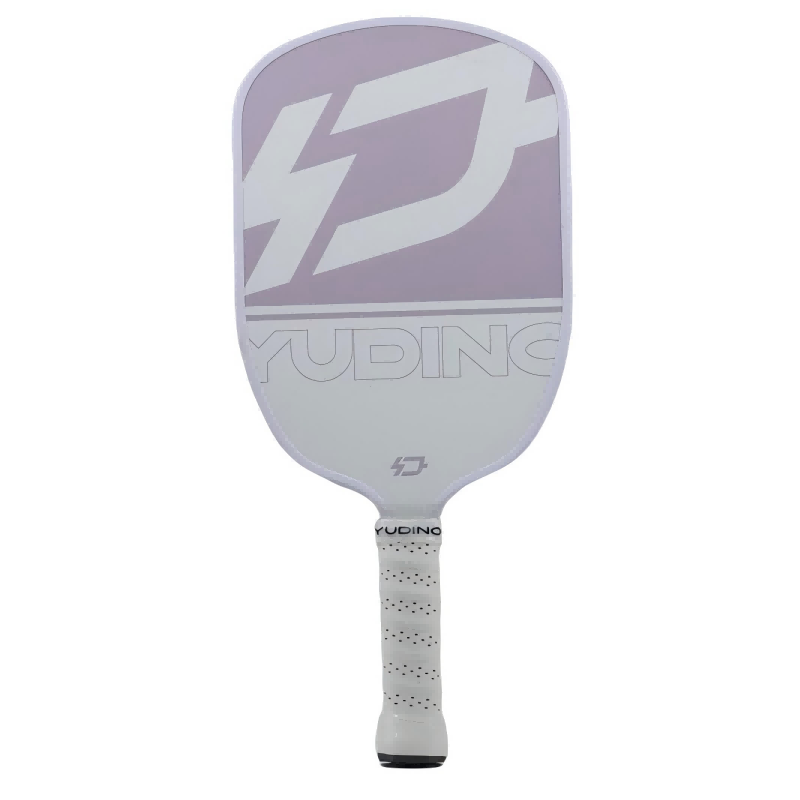
YUDINO's fiberglass beginner paddle uses a:
16 mm PP honeycomb core
The thicker core works together with the fiberglass face to create a stable paddle structure suitable for beginners and recreational players.
This is an important distinction for buyers.
Comparing:
Fiberglass + 16 mm PP Core
with:
Fiberglass + thinner core
does not produce the same playing experience.
Why 16 mm Matters for a Beginner Paddle
Paddle thickness influences stability and impact feel.
A thinner paddle can feel more responsive and energetic.
A thicker paddle can provide a more stable and controlled response.
For a beginner-oriented product, 16 mm is a practical specification because it can help create a stable hitting platform while reducing some of the harshness associated with thinner constructions.
YUDINO's fiberglass beginner paddle uses:
16 mm thickness
together with a PP honeycomb core and fiberglass face.
The complete construction is designed around the needs of players who are still developing their technique.
Weight: Another Important Difference
The material alone does not determine whether a paddle feels light or heavy.
The complete construction determines the final weight.
For beginners, a paddle that is too heavy can make repeated swings tiring.
A paddle that is too light may feel less stable for some players.
YUDINO's fiberglass beginner paddle weighs:
230 g ±5 g
This specification provides a practical middle ground for players who need both manageable handling and sufficient stability.
For B2B buyers, the ±5 g tolerance is also worth noting.
A supplier should be able to maintain consistent weight across production batches.
That consistency matters when a retailer sells the same model under one SKU.
Customers expect the next paddle they purchase to feel similar to the one they already own.
Does Paddle Shape Matter?
Yes.
Paddle geometry affects the usable hitting area and overall handling.
A wider paddle design can make it easier for beginners to find the ball with the center of the paddle.
YUDINO's fiberglass beginner paddle uses a:
Perseus widebody design
with dimensions of:
418 × 191 × 16 mm
The widebody configuration is intended to increase the effective hitting area and make the paddle more forgiving for players who are still developing consistent contact.
According to YUDINO's product specifications, the paddle's sweet spot is approximately 15% larger than standard paddle geometry.
For beginner-focused products, this is an important selling point because forgiveness can be more valuable than maximum performance.
Grip Construction Also Matters
The paddle face is only one part of the player's interaction with the equipment.
The grip determines how securely and comfortably the player can hold the paddle during repeated swings.
YUDINO's fiberglass beginner paddle uses an:
Extended non-slip handle with a perforated rubber surface.
This construction is designed to provide a secure grip while maintaining comfort during extended use.
For beginners, a stable grip can help reduce unnecessary changes in hand position.
For B2B buyers, grip construction should therefore be treated as part of the product specification rather than simply a cosmetic detail.
Graphite vs Fiberglass for Different Player Levels
The best material changes as the player's needs change.
Beginners
Fiberglass is usually a strong choice.
Beginners often benefit from:
Accessible power
Forgiving response
Comfortable impact
Stable construction
Reasonable price positioning
Recreational Players
Fiberglass remains highly competitive.
Recreational players may value comfort and easy power more than highly specialized control.
Intermediate Players
Both materials can work.
The choice depends more heavily on whether the player prefers power or control.
Advanced Players
Graphite and other high-performance composite constructions may become more attractive for players who prioritize precise feedback and control.
However, experienced power-oriented players can still prefer fiberglass.
The material should match the playing style rather than the player's skill level alone.
What Should B2B Buyers Check When Sourcing Fiberglass Pickleball Paddles?
If you are a retailer, distributor, or private-label brand, do not evaluate a supplier only by the product photo.
Ask for specific construction information.
1. Face Material
Confirm whether the paddle uses genuine woven fiberglass and ask about the material construction.
2. Core
Check:
Core material
Core thickness
Honeycomb structure
Bonding quality
3. Weight
Ask for:
Standard product weight
Production tolerance
Actual sample weight
4. Dimensions
Confirm the complete paddle dimensions rather than relying on product images.
5. Paddle Shape
Ask whether the product uses:
Widebody
Standard
Elongated
Other custom geometry
6. Grip
Evaluate:
Handle length
Grip material
Anti-slip performance
Comfort during extended use
7. Quality Consistency
Before placing a bulk order, compare several production samples.
The goal is to confirm that the supplier can reproduce the same specifications across multiple units.
YUDINO Fiberglass Beginner Paddle: Built for Entry-Level Players
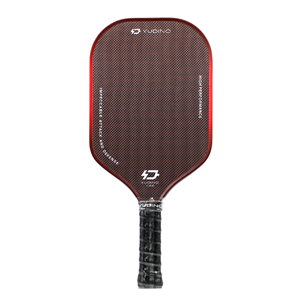
For buyers looking for a practical fiberglass pickleball paddle for the beginner market, YUDINO offers a dedicated beginner model.
Unlike a high-performance paddle simply being sold at a lower price, this model is specifically designed around beginner requirements.
Main Construction
Face: High-strength woven fiberglass
Core: 16 mm PP honeycomb
Weight: 230 g ±5 g
Grip: Extended non-slip handle with perforated rubber surface
Sweet Spot: Approximately 15% larger than standard paddle geometry
Dimensions: 418 × 191 × 16 mm
Shape: Perseus widebody design
Certification: USA Pickleball approved
The combination is intended to provide a balance of accessible power, stable handling, and beginner-friendly forgiveness.
Fiberglass Paddle Options for Different Beginner Markets
YUDINO also provides fiberglass paddle configurations for different beginner-oriented customer groups.
| Model | Target User | Main Specification |
| Fiberglass Beginner Paddle | General beginners | 230 g, 16 mm PP core |
| Junior Pickleball Paddle | Juniors/school programs | Lighter weight, shorter handle |
| Women's Fiberglass Paddle | Female recreational players | Approx. 210 g, ergonomic grip |
For brands building a beginner-focused product range, these three product directions can cover several important customer groups without changing the fundamental fiberglass positioning.
OEM and Private Label Fiberglass Pickleball Paddles
For B2B buyers, product performance is only one part of the purchasing decision.
Branding and supply flexibility also matter.
YUDINO provides:
Wholesale supply
Flexible MOQ
Custom logos
UV printing
Heat-transfer logo options
Private-label production
Custom colors
Custom packaging
Samples before bulk orders
For inventory planning, YUDINO provides a stated lead time of:
3 days for in-stock products
and:
15–25 days for customized orders
This allows distributors and private-label brands to select between ready-stock supply and customized production depending on their purchasing plan.
Graphite or Fiberglass: Which Should Your Business Choose?
The answer depends on your target market.
If your customers are mainly beginners, recreational players, schools, or entry-level buyers, fiberglass can provide a strong foundation for your product range.
If your customers are experienced players who prioritize direct feedback and control, graphite may be a better fit.
But a growing pickleball brand does not necessarily have to choose one material.
A more complete product portfolio can use:
Fiberglass → Entry Level
Graphite / Carbon Fiber → Performance Level
This allows customers to move between products as their playing experience develops.
Final Answer: Graphite vs Fiberglass Pickleball Paddles
So, which is better?
There is no universal winner.
Fiberglass pickleball paddles are particularly attractive when the priorities are accessible power, comfortable impact, forgiveness, and value.
Graphite paddles are often better suited to players who prioritize a direct response and precise control.
For beginners and recreational markets, a well-designed fiberglass paddle can provide an excellent balance of performance and usability.
For B2B buyers, the most important lesson is even simpler:
Do not buy a paddle based on the face material alone.
Evaluate the:
Fiberglass + Core + Thickness + Weight + Shape + Grip + Manufacturing Consistency
as one complete system.
If you are looking for a reliable supplier of fiberglass pickleball paddles for wholesale, OEM, or private-label production, YUDINO can provide beginner-focused fiberglass paddle solutions with flexible customization options.
YUDINO Fiberglass Pickleball Paddles
High-Strength Woven Fiberglass | 16 mm PP Honeycomb | 230 g ±5 g | OEM & ODM | Private Label
Contact YUDINO for samples, customization, and bulk orders.
WhatsApp: +86 150 0404 8823
Email: 18204151313@163.com
Phone: +86 18604151313
YUDINO — Pickleball Paddle Manufacturer for Global B2B Buyers