How to Choose a Pickleball Paddle: The Complete Beginner’s Guide (2026)
Pickleball is one of the fastest-growing sports in the world, and choosing the right paddle is one of the most important decisions for beginners.
With hundreds of paddle options available—different materials, weights, thicknesses, and shapes—new players often feel overwhelmed when trying to pick their first paddle.
The truth is that there is no single “best” pickleball paddle for everyone. The ideal paddle depends on your playing style, skill level, and personal preference.
This beginner-friendly guide explains the most important factors you should consider when choosing a pickleball paddle in 2026.
Quick Answer: How to Choose a Pickleball Paddle
If you're new to pickleball, look for a paddle with the following characteristics:
Weight: 7.6 – 8.2 oz (balanced control and power)
Core Thickness: 16mm for better control
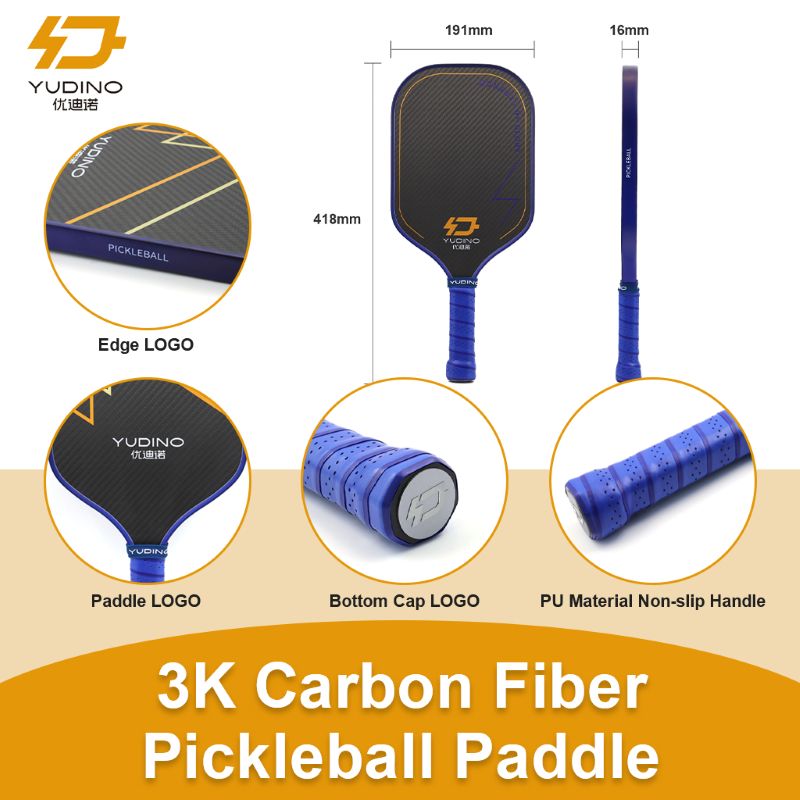
Surface Material: Carbon fiber or fiberglass
Core Type: Polymer honeycomb
Grip Size: Comfortable and secure in your hand
These specifications provide a balanced combination of power, control, and comfort, making them ideal for most beginners.
Step 1: Choose the Right Paddle Weight
Weight is one of the first factors that affects how a paddle feels during play.
Pickleball paddles are generally divided into three weight categories.
| Weight Type | Weight Range | Characteristics |
|---|---|---|
| Lightweight | 7.0 – 7.5 oz | Faster swings, less power |
| Midweight | 7.6 – 8.4 oz | Balanced power and control |
| Heavyweight | 8.5+ oz | Maximum power, slower swing |
What Beginners Should Choose
Most beginners perform best with midweight paddles, which offer a good balance between maneuverability and power.
Lighter paddles are easier on the arm but may require stronger swings, while heavier paddles provide power but can reduce reaction speed.
Step 2: Understand Paddle Materials
The paddle face material plays a major role in how the ball behaves when it hits the paddle.
The three most common materials are:
Carbon Fiber
Carbon fiber paddles are increasingly popular because they provide:
excellent control
strong spin potential
high durability
They are widely used in competitive play.
Fiberglass (Composite)
Fiberglass paddles are known for:
stronger power
softer feel
lower cost
This material is often recommended for beginners who want easy power.
Graphite
Graphite paddles are lightweight and responsive, though they are less common today compared with carbon fiber.
Step 3: Consider Paddle Thickness
The thickness of a paddle refers to the depth of its internal core, which significantly affects performance.
Most paddles are either 14mm or 16mm thick.
14mm Paddle
More power
Faster response
Slightly smaller sweet spot
16mm Paddle
Better control
Larger sweet spot
Improved soft-game performance
Beginner Recommendation
Many beginners prefer 16mm paddles because they are more forgiving and easier to control.
Step 4: Look at the Paddle Core
Inside every pickleball paddle is a honeycomb core that absorbs impact and affects ball feel.
The most common core type is:
Polymer Honeycomb Core
Advantages include:
reduced vibration
balanced power and control
lightweight construction
Polymer cores are used in the majority of modern paddles and are widely recommended for beginners.
Step 5: Choose the Right Grip Size
Grip size is often overlooked, but it plays an important role in comfort and control.
If the grip is too large, it can reduce wrist movement.
If it is too small, the paddle may twist in your hand.
Typical Grip Sizes
| Grip Size | Best For |
|---|---|
| 4.0 in | Small hands |
| 4.125 in | Average hands |
| 4.25 in | Larger hands |
A simple rule is to choose the smallest grip that still feels comfortable, since overgrips can always increase thickness if needed.
Step 6: Consider Paddle Shape
Although most paddles look similar, there are several shape variations.
Standard Shape
Balanced design with a wider face and larger sweet spot.
Elongated Shape
Longer paddles provide:
extended reach
more spin potential
However, they usually have slightly smaller sweet spots.
Beginners often find standard-shaped paddles easier to use.
Common Mistakes Beginners Make
When buying their first paddle, beginners often make these mistakes:
Choosing the Most Expensive Paddle
High-end paddles are designed for competitive players and may not provide noticeable benefits for beginners.
Ignoring Weight
A paddle that is too heavy or too light can negatively affect comfort and performance.
Focusing Only on Brand
While brand reputation matters, paddle specifications are more important than brand names.
Recommended Paddle Specs for Beginners
If you want a simple starting point, these specifications work well for most new players:
Weight: around 8.0 oz
Thickness: 16mm
Core: polymer honeycomb
Surface: carbon fiber or fiberglass
Grip size: 4.125 inches
This setup offers a balanced combination of power, control, and forgiveness.
Final Thoughts
Choosing the right pickleball paddle does not need to be complicated. By focusing on a few key factors—weight, materials, thickness, and grip—you can quickly narrow down the options and find a paddle that fits your needs.
For beginners, a balanced paddle with a comfortable grip and forgiving sweet spot is usually the best starting point.
As your skills improve, you can experiment with different paddle designs to better match your playing style.
FAQ
What paddle should a beginner use in pickleball?
Beginners should generally start with a midweight paddle (around 8 oz) with a polymer honeycomb core and a 16mm thickness for better control.
Is carbon fiber better than fiberglass for pickleball paddles?
Carbon fiber paddles offer better control and spin, while fiberglass paddles generate more power and are often more affordable.
How much should a beginner spend on a pickleball paddle?
A beginner paddle typically costs between $50 and $120, though prices vary depending on materials and brand.