How to Choose a Professional Pickleball Paddle?
Many people have questions about how to choose a more professional pickleball paddle. How should one evaluate the price, type, material, etc.? In fact, when choosing a pickleball paddle for competitive play, it mainly depends on three key factors: material, weight, and paddle face shape. These parameters directly affect ball control, power output, and hitting consistency during competitive play. Are you interested in learning about professional pickleball paddles? Below, we will introduce how to find a paddle that suits you.
Three major indicators determine racket performance
1. Material: The core basis of feel and durability, material determines the racket's weight, elasticity, and durability.
| Carbon fiber | Like T700 carbon fiber, the material has high strength and is lightweight, providing better ball control accuracy, power transfer, and durability, suitable for professional players seeking precise shots and quick reactions. |
| Composite materials | If the budget is limited, you can consider composite materials of carbon fiber and fiberglass, balancing performance and cost while maintaining a certain level of control and power. |
| Pure plastic material | Weighing over 250g, poor elasticity makes it easy to deform, which not only affects skill improvement but may also lead to wrist strain. |
2. Weight: Affects swing speed and ball control stability. Professional pickleball paddles need to be matched according to strength and skill level.
Lightweight (under 204g) | The racket is flexible to swing, suitable for women, teenagers, and those with less strength, making it easy for quick interceptions; however, its stability is slightly weaker for powerful smashes. |
Medium weight (207-238g) | Balancing ball control and explosive power, it is mainstream in the market, suitable for casual or advanced training, and fits over 80% of enthusiasts. |
Heavy type (243g and above) | Smash has strong stability and suits advanced players with ample strength; beginners may find their swings slow and increase errors, so it is not recommended for entry-level players. |
3. Racket face: Its size determines the margin of error. The size of the racket face determines the range of the 'sweet spot'; the larger the sweet spot, the higher the margin of error.
Large hitting surface (160-170 cm²) | Suitable for beginners and casual players, with a broad sweet spot and low error rate, it can enhance the sense of achievement in sports and meet the needs of leisure and entertainment. |
Medium phakic area (140-160 cm²) | Used for advanced transition, balancing error tolerance and ball control accuracy, suitable for enthusiasts with a basic foundation who need to improve their ball control skills. |
Small patting surface (below 140cm²) | Suitable for advanced players, with very high ball control precision but low tolerance for errors, and strict technical requirements. |
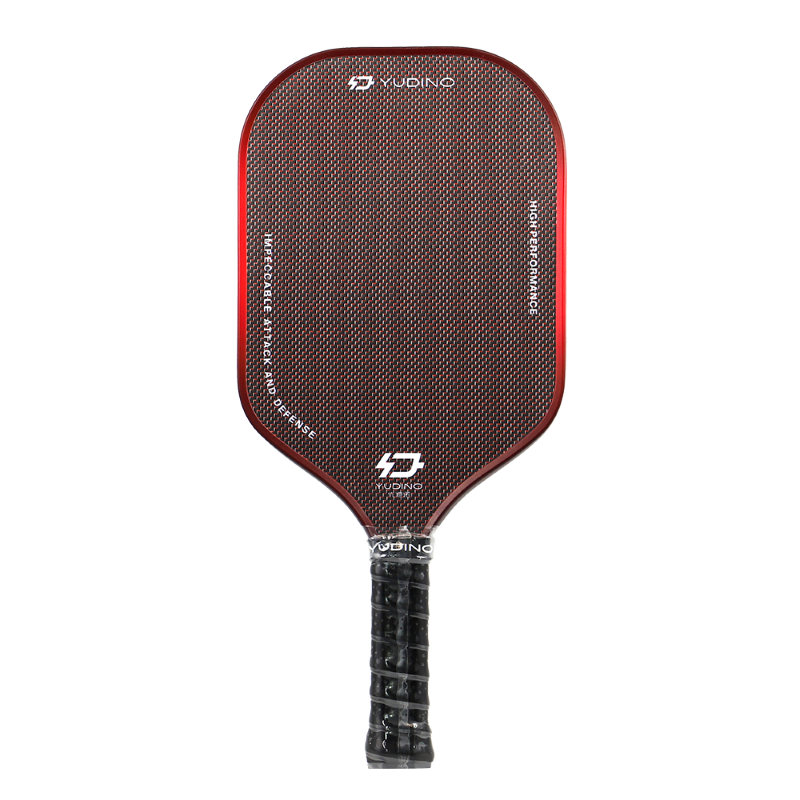
Professional pickleball paddle suggestions and recommendations
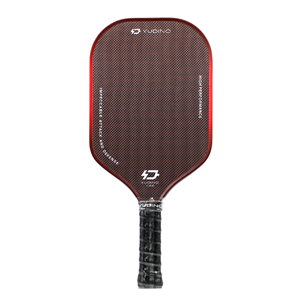
A professional pickleball paddle needs to balance power, control, maneuverability, and comfort. It is recommended to choose a paddle made of carbon fiber, weighing 230-240 grams, with a concentrated sweet spot and a thickness of 13-16 mm, and to select the paddle shape and handle size according to personal playing style preferences. When testing the paddle, pay attention to the smoothness of the swing, the feel of hitting the ball, and control accuracy, and choose the paddle that suits you best.
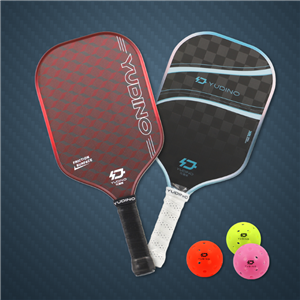
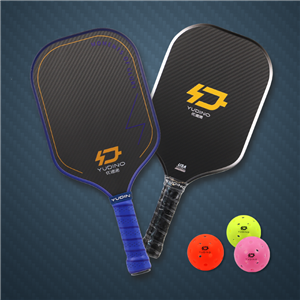
In professional competition scenarios, a stable and controllable racket is often more important than simply pursuing power. Based on this need, it is recommended to prioritize mid-to-high-end models with a T700 carbon fiber racket face and a PP honeycomb core structure.
The reference configuration is as follows:
Material: T700 carbon fiber surface
Core: PP honeycomb core (Polypropylene Honeycomb)
Weight: Approximately 230g ±5g
Thickness: 16mm
Racket type: Standard or extended (chosen based on playing style)
This configuration is characterized by low deformation and stable energy feedback, and it can maintain consistent hitting performance during continuous rallies and fast net interceptions. Compared to fiberglass rackets, it provides clearer hitting feedback and more precise control, making it suitable for match situations that require stable shot placement and rhythm control. In actual use, the surface of this type of racket usually has a slightly rough texture, which helps enhance spin performance while providing better tactile feedback during defense and transition shots.
Applicable to:
Advanced players with a certain foundation, competitive players participating in clubs or tournaments, and those who focus on ball control and stability in their playing style.
Ps. For brand owners, clubs, and event buyers, this type of racket has strong market adaptability:
Supports OEM/ODM (logo, surface texture, packaging customization)
Weight, thickness, and racket type can be adjusted according to needs
Suitable for mid-to-high-end product line deployment (replacing entry-level fiberglass rackets)
Speaking of this, does it make your heart flutter? If you are looking for stability, precision, and endurance on the court, and want to choose a professional pickleball paddle, then this paddle is a good choice.