How to Evaluate a Pickleball Paddle Manufacturer Before Placing a Bulk Order
Choosing a pickleball paddle manufacturer is not simply a matter of comparing quotations.
For distributors, retailers, sports brands, and importers, the bigger question is whether a manufacturer can consistently produce the required paddle specification, maintain quality across a bulk order, meet the agreed production schedule, and support future orders.
A supplier may offer an attractive unit price and a convincing product catalog, but that does not necessarily mean the factory is suitable for long-term cooperation.
Before placing a bulk order, buyers should evaluate the manufacturer from several practical perspectives: product capability, sample consistency, quality control, production capacity, customization, documentation, lead time, packaging, and after-sales support.
This guide provides a practical framework for evaluating a pickleball paddle manufacturer before committing to bulk production.
1. Start With the Manufacturer's Actual Product Capability
The first step is to determine whether the manufacturer can produce the type of paddle you actually need.
A professional paddle manufacturer should be able to clearly explain its available configurations rather than simply showing a large product catalog.
Depending on your project, you may need to confirm:
Carbon fiber or fiberglass face materials
Different carbon fiber grades or constructions
PP honeycomb core options
Core thickness
Paddle shape
Paddle dimensions
Target weight
Handle length and grip size
Surface texture
Edge guard construction
Printing and graphic options
Custom packaging
The important point is not how many models appear on a supplier's website.
The more useful question is:
Can the manufacturer consistently produce the exact specification required for your market?
For example, if your product specification requires a particular face material, core thickness, weight range, surface texture, and handle configuration, the manufacturer should be able to confirm each item before quotation and sampling.
A clear specification at the beginning also makes later quality inspection much easier.
2. Check the Factory, Not Just the Product Catalog
A product catalog shows what a supplier wants buyers to see. It does not necessarily show how the products are manufactured.
Before placing a bulk order, buyers should investigate the manufacturer's actual production capabilities.
Useful information includes:
Production facility
Manufacturing equipment
Assembly processes
Quality inspection areas
Research and development capabilities
Product testing facilities
Production team
Warehouse and packaging operations
If possible, request factory photos, production videos, or a factory visit.
For larger orders, a video inspection or third-party factory audit can provide additional evidence.
The purpose is not simply to confirm that the supplier has a factory.
The purpose is to understand whether the factory has the infrastructure required to manufacture your product consistently.
3. Evaluate Samples Before Discussing Large-Volume Production
A sample is one of the most useful tools for reducing purchasing risk.
Do not evaluate a paddle only by its appearance.
A professional sample evaluation should cover at least four areas.
Physical Specifications
Check:
Length
Width
Thickness
Weight
Handle length
Grip dimensions
Shape
Edge construction
Record the actual measurements instead of relying only on the supplier's specification sheet.
Surface and Appearance
Inspect:
Surface finish
Texture consistency
Graphics
Logo placement
Edge finishing
Paint or coating quality
Handle appearance
Playing Characteristics
Depending on your product positioning, evaluate:
Power
Control
Ball response
Spin
Balance
Vibration
Comfort
Stability
The purpose is not necessarily to determine whether the paddle is personally your favorite.
The purpose is to determine whether the sample matches the product specification and target market.
Production Consistency
For a serious bulk project, testing only one sample may not be enough.
If possible, evaluate multiple samples from the manufacturer.
Compare their:
Weight
Dimensions
Surface finish
Graphics
Handle construction
Overall playing characteristics
Consistency between samples can provide useful evidence about manufacturing control.
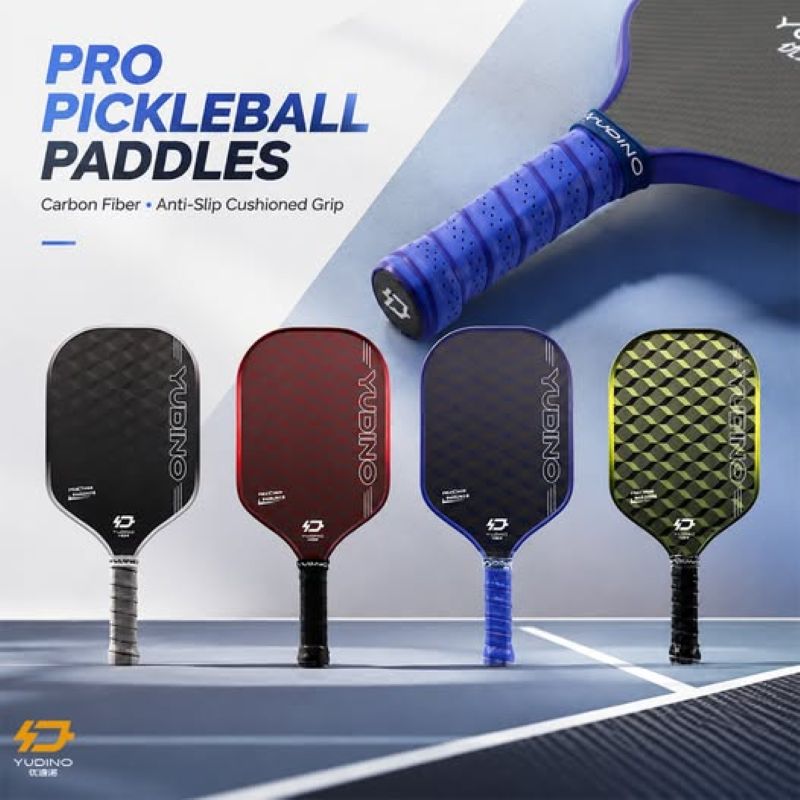
4. Ask How Quality Is Controlled During Production
A manufacturer should be able to explain how quality is controlled, not simply say that its products are "high quality."
Ask where inspections take place during the production process.
For example:
Incoming materials
Are materials checked before production?
Production
Are key manufacturing parameters monitored?
Assembly
Are bonding, edge construction, handle installation, and other processes inspected?
Finished products
Are finished paddles checked for dimensions, weight, appearance, and functional requirements?
Pre-shipment
Are products inspected before packing and shipment?
The specific inspection system will vary between manufacturers, but the important point is that quality control should be a process rather than a final visual check.
5. Verify Weight and Specification Consistency
Weight is particularly important for pickleball paddles because it directly affects product positioning and user experience.
If a product is marketed within a specific weight category, buyers should understand how the manufacturer controls weight during production.
For example, if the agreed specification is 230 g ± 5 g, the manufacturer should have a practical method for checking whether finished paddles remain within the agreed tolerance.
The same principle applies to:
Thickness
Length
Width
Handle dimensions
Surface characteristics
Graphics
Other customized specifications
Before bulk production, it is useful to establish a written product specification or approved sample as the production reference.
This gives both the buyer and manufacturer a common quality benchmark.
6. Ask How the Manufacturer Handles Customization
For private-label and OEM projects, customization capability is more important than simply adding a logo.
Ask whether the manufacturer can modify:
Paddle shape
Face material
Core thickness
Weight
Handle
Grip
Surface texture
Graphics
Logo
Packaging
You should also clarify whether customization requires:
New tooling
New molds
Minimum order quantities
Additional development fees
Longer production time
The more customized the paddle, the more important it becomes to confirm the final specification before mass production.
7. Understand the Sample-to-Mass-Production Process
One common purchasing risk is assuming that the approved prototype will automatically be reproduced exactly during mass production.
For customized paddles, buyers should ask:
Will the approved sample be used as the production reference?
Will a pre-production sample be provided?
Can production samples be inspected before the full order is completed?
How are specification changes documented?
Who approves the final production specification?
For larger OEM projects, pre-production validation can be particularly useful.
It provides an opportunity to identify problems before the entire order has been manufactured.
8. Verify Production Capacity Against Your Order Volume
A manufacturer does not need to have the largest factory to be a suitable supplier.
The more important question is whether its production capacity is appropriate for your order and future purchasing plan.
Ask:
What is the normal production volume?
What is the expected lead time for my order quantity?
How does the factory handle peak-season demand?
Can repeat orders be supported?
Can production capacity be reserved for long-term customers?
What happens if the order volume increases?
For a growing brand, this matters because the first order may be relatively small.
If the product performs well in the market, future orders may increase significantly.
A suitable supplier should therefore be evaluated not only for today's order but also for potential future supply.
9. Confirm Lead Time Before Placing the Order
Production lead time should be discussed before payment rather than after the purchase order has been confirmed.
Separate the timeline into different stages:
Sample development
How long does it take to prepare or develop the sample?
Artwork approval
How long is required to confirm graphics and packaging?
Production
How long does mass production normally take?
Inspection and packaging
How much time is required before shipment?
This makes it easier to identify where delays may occur.
For customized orders, lead time can also depend on artwork complexity, material availability, tooling, production quantity, and current factory scheduling.
10. Check Documentation and Certification Carefully
If certification or regulatory compliance is important for your target market, do not rely only on statements on a website.
Ask the supplier to provide documentation relevant to the specific product.
For example:
Certification information
Test reports where applicable
Product specifications
Inspection records
Material documentation where required
Packaging information
For competition-oriented products, buyers should also verify whether the certification applies to the exact paddle model and configuration they intend to purchase.
A certification associated with one model should not automatically be assumed to cover every customized product.
11. Evaluate Packaging and Shipping Preparation
A paddle can meet the product specification and still arrive damaged if packaging is not suitable for international transportation.
Before placing a bulk order, confirm:
Individual paddle packaging
Carton specifications
Protective materials
Quantity per carton
Shipping marks
Barcode or labeling requirements
Retail packaging
E-commerce packaging
Customized packaging
If the paddles are intended for retail distribution or e-commerce fulfillment, packaging requirements should be discussed during the product development stage rather than after production.
12. Understand How Defective Products Are Handled
Quality problems can occur even with an experienced manufacturer.
What matters is how the supplier handles them.
Before placing a bulk order, clarify:
How defects are defined
How defective products are reported
What evidence is required
Whether replacement is available
Whether compensation is possible
How future batches are handled
Who is responsible for shipping defective products back, if necessary
These details may seem less important before an order is placed, but they become critical when a quality issue occurs.
A clear procedure protects both sides.
13. Look for Evidence of Long-Term Supply Capability
A good manufacturer should not only be capable of completing one order.
For distributors and brands, long-term consistency is often more valuable.
Consider whether the manufacturer can support:
Product development → Sampling → Mass production → Quality control → Packaging → Delivery → Repeat orders
Ask whether the supplier can maintain the same product specification when you reorder several months later.
This is especially important for private-label brands.
Changing the weight, core construction, surface texture, or other important characteristics between batches can create customer complaints even when the product still appears visually similar.
14. Compare Suppliers Using the Same Evaluation Criteria
When comparing several manufacturers, avoid comparing only the unit price.
Create a supplier evaluation table using the same criteria for every manufacturer.
| Evaluation Factor | Supplier A | Supplier B | Supplier C |
| Product specification | |||
| Sample quality | |||
| Sample consistency | |||
| Manufacturing capability | |||
| Quality control | |||
| Customization | |||
| MOQ | |||
| Production lead time | |||
| Certification/documentation | |||
| Packaging capability | |||
| After-sales process | |||
| Repeat-order capability | |||
| Total purchasing cost |
This approach makes the purchasing decision more objective.
A supplier with the lowest quotation may not have the lowest total cost if inconsistent quality results in returns, rework, delays, or lost sales.
15. A Practical Pre-Order Checklist
Before placing a bulk order, a buyer should ideally be able to answer "yes" to most of the following questions:
Have we confirmed the exact paddle specification?
Have we evaluated physical samples?
Have we compared multiple samples where appropriate?
Have we reviewed the manufacturer's production capability?
Have we understood its quality-control process?
Have we confirmed the acceptable tolerances?
Have we approved the final artwork and packaging?
Have we confirmed MOQ?
Have we confirmed sample and production lead times?
Have we checked relevant certification or documentation?
Have we agreed on inspection procedures?
Have we clarified defective-product handling?
Have we confirmed shipping and packaging requirements?
Have we discussed repeat-order requirements?
If several of these questions remain unanswered, the order may not yet be ready for mass production.
Final Thoughts
Evaluating a pickleball paddle manufacturer is ultimately a risk-control process.
The goal is not to find the supplier with the lowest quotation or the largest product catalog.
The goal is to identify a manufacturer that can provide:
Clear specifications + consistent samples + controlled production + reliable quality + realistic lead times + suitable customization + long-term supply support.
For a new brand, distributor, retailer, or importer, a small amount of additional evaluation before the first bulk order can help prevent much larger problems after production begins.
The most useful question to ask a manufacturer is therefore not simply:
"How much does this paddle cost?"
A better question is:
"How can you demonstrate that you can consistently produce the paddle I am going to sell?"