Is the Carbon Fiber Pickleball Paddle Easy to Wear Out?
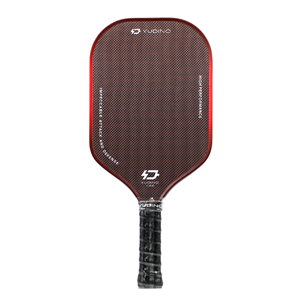
From the point of view of the nature of the material, carbon fiber pickleball paddle has an excellent anti-wear foundation. Most of these rackets use imported carbon fiber T700 carbon cloth lamination process, and the measured hardness is usually up to 2.3 times that of glass fiber rackets, and the strength can still be retained by 92% after 30,000 hits. In daily use, the regular friction between the carbon fiber pickleball paddle and the ball, and the occasional light rubbing on the ground, usually does not cause obvious scratches or cracks, and the service life can reach one or two years or even longer. This durability stems from the physical properties of carbon fiber itself-the combination of high strength and impact resistance allows carbon fiber pickleball paddle to withstand the impact of hitting the ball in fierce confrontation and is not prone to permanent deformation.
However, carbon fiber pickleball paddle is not absolutely wear-resistant, and the wear in certain scenarios still requires us to pay more attention to it in use.“Hitting the racket” in doubles is the most common cause of injury. Even a slight collision may cause the carbon fiber layer inside the racket frame to break. This kind of “internal injury” will quietly reduce the strength of the racket. The edge of the racket frame and the area of the guard tube are also prone to wear and tear. Frequent scratching of the ball will cause the edge to drop paint, and the aging of the guard tube may cause the ball line to directly rub against the racket frame, speeding up the loss. In addition, extreme environments will indirectly exacerbate wear and tear: high temperatures will cause the racket resin to decompose and its toughness to decrease, while low temperatures will increase brittleness, making the carbon fiber pickleball paddle easier to break in the event of a collision.
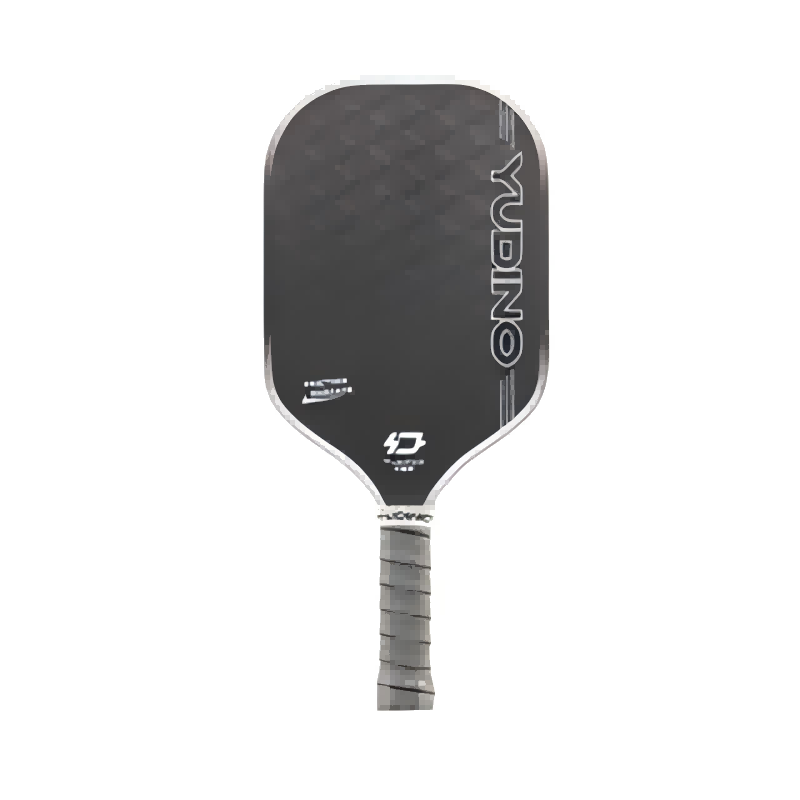
Scientific maintenance can significantly delay the wear rate of carbon fiber pickleball paddle to a certain extent. For cleaning, apply a dry cloth or a slightly wet soft cloth to wipe the dust on the pat surface after each use. Stubborn stains can be dipped in a small amount of neutral detergent. Avoid rinsing with water or using chemical solvents to avoid coating shedding and moisture infiltration. When storing, it should be kept away from high temperature exposure and cold environments. In summer, it is not recommended to put it in the trunk of a car for a long time. It is recommended to cut the ball line to release pressure and prevent the frame from deformation and collapse. For easy-to-wear parts, special edge protection stickers can be pasted, and the wire protection tube can be replaced in time if it wears out, which can effectively reduce direct friction damage.
Compared with common glass fiber rackets, carbon fiber pickleball paddle has more prominent wear-resistant advantages. Experimental data show that under the same frequency of use, glass fiber rackets are more likely to be damaged by bumps, and 7% permanent deformation will occur after 30,000 hits, while carbon fiber pickleball paddle can still maintain stable performance. Although the price of carbon fiber pickleball paddle is higher, it has a higher price/performance ratio due to its longer service life.
In summary, carbon fiber pickleball paddle is a “durable” equipment, which is not prone to serious wear and tear under normal use. As long as you master the correct method of use and do daily maintenance such as cleaning and storage, carbon fiber pickleball paddle can always be in good condition and become a durable and reliable partner on the court. For users who pursue performance and durability, carbon fiber pickleball paddle is undoubtedly a choice worth investing in.