OEM vs ODM Pickleball Paddles: What Is the Difference?
When sourcing pickleball paddles from China, brand owners often encounter two terms: OEM and ODM.
Both models let a company sell pickleball paddles under its own brand, but the buyer's and manufacturer's responsibilities differ.
In simple terms:
OEM means the buyer defines the product, and the manufacturer produces it according to the buyer's specifications.
ODM means the manufacturer provides an existing design or technical solution, and the buyer customizes it for its own brand and market.
The difference becomes important when you are deciding how much control you need over the paddle's construction, how much development work you want the factory to handle, how quickly you need to launch, and how much you are prepared to invest in product development.
For a new pickleball brand, ODM may provide a faster path to market.
For an established brand with its own product specifications, OEM may provide greater control and differentiation.
This guide explains the practical differences between OEM and ODM pickleball paddles and what buyers should consider before selecting a manufacturing model.
1. OEM vs ODM Pickleball Paddles: The Quick Answer
The simplest way to understand the difference is:
| Item | OEM Pickleball Paddle | ODM Pickleball Paddle |
| Product concept | Mainly provided by the buyer | Mainly provided by the manufacturer |
| Product design | Buyer-defined | Manufacturer-developed |
| Existing model | Not necessarily required | Usually based on existing design/platform |
| Customization | High | Medium to high |
| Engineering involvement | Higher from buyer | Higher from manufacturer |
| Development complexity | Higher | Lower |
| Launch speed | Usually slower | Usually faster |
| Product differentiation | Higher potential | Moderate to high |
| Development investment | Usually higher | Usually lower |
| Suitable for | Established brands | New or growing brands |
| Best advantage | Product control | Development efficiency |
Neither model is universally better.
The right choice depends on your product strategy.
2. What Is an OEM Pickleball Paddle?
OEM stands for Original Equipment Manufacturer.
In an OEM project, the buyer normally provides detailed requirements for the product, while the factory is responsible for manufacturing according to those requirements.
For example, a brand may specify:
T700 carbon fiber
16mm PP honeycomb core
Elongated paddle shape
230g ± 5g target weight
Specific handle length
Customized surface texture
Custom logo
Custom graphics
Custom packaging
The manufacturer then develops or adjusts the production process to meet these requirements.
The buyer therefore has greater control over the final product.
OEM is particularly suitable when the brand already understands its target market and knows what product it wants to sell.
3. What Is an ODM Pickleball Paddle?
ODM stands for Original Design Manufacturer.
Under an ODM model, the manufacturer contributes more of the product design and technical development.
Instead of starting with a completely new product concept, the buyer can select a suitable product platform or design from the manufacturer's existing capabilities and customize it for its own brand.
For example, a brand might tell YUDINO:We want a premium carbon fiber paddle for intermediate and advanced players, with a retail target of approximately $120–$150.
The manufacturer can then recommend:
Suitable carbon fiber
Core thickness
Paddle shape
Weight range
Handle configuration
Surface construction
Existing product platform
The brand can then customize the visual identity and selected product specifications.
This reduces the amount of technical development that the buyer needs to manage internally.
4. OEM vs ODM: Who Is Responsible for the Product?
This is one of the biggest differences between the two models.
OEM
The buyer takes greater responsibility for defining the product.
The manufacturer focuses primarily on:
Engineering implementation + Manufacturing + Quality Control
ODM
The manufacturer takes greater responsibility for:
Product concept + Technical recommendation + Product development + Manufacturing
The brand focuses more on:
Market positioning + Branding + Sales + Distribution
This distinction is particularly important for companies that do not have an internal product-development team.
5. Which Model Gives You More Product Control?
If maximum product control is the priority, OEM generally provides the stronger option.
With OEM, the buyer can define specifications such as:
Face material
Carbon fiber type
Core
Core thickness
Paddle dimensions
Weight
Balance
Handle
Surface
Edge construction
Graphics
Packaging
The manufacturer then works according to the approved technical specification.
This is useful when a brand wants to create a product that differs substantially from competitors.
For example, a brand might want to develop a paddle specifically designed around:
16mm control + elongated shape + 230g weight + premium carbon fiber construction.
An OEM project gives the brand more freedom to define that product.
6. Which Model Is Faster?
ODM is generally faster when the selected product is based on an existing manufacturing platform.
The manufacturer already understands:
Material combination
Core construction
Production process
Mold requirements
Assembly
Quality control
The brand may only need to customize selected specifications and branding.
An OEM project can take longer because it may involve:
Product Design → Engineering → Prototype → Testing → Modification → Final Sample → Mass Production
If a new mold or completely new construction is required, the development cycle can become longer.
Therefore:
ODM = generally faster market entry
OEM = generally greater development flexibility
7. Which Model Is More Suitable for a New Pickleball Brand?
For a new brand, ODM is often the easier starting point.
A startup may have:
Limited product-development experience
Limited technical resources
Limited initial budget
Uncertain market demand
Instead of designing an entirely new paddle, the brand can start with a proven platform and customize:
Logo
Graphics
Color
Weight
Handle
Packaging
Selected materials
This allows the brand to focus on testing its market.
After receiving customer feedback, the brand can develop a more differentiated OEM product.
A practical development path can therefore be:
ODM → Market Test → Customer Feedback → Product Optimization → OEM
This reduces the risk of investing heavily in a product before understanding customer demand.
8. When Should an Established Brand Choose OEM?
OEM becomes more attractive when the brand already has clear product requirements.
For example, an established brand may know that its customers prefer:
16mm paddles
Specific swing weight
Specific balance
Specific grip size
Particular surface texture
Specific carbon fiber construction
In this situation, using a generic ODM design may limit differentiation.
OEM allows the company to build the product around its own requirements.
OEM can therefore be suitable for:
Established sports brands
Performance-oriented brands
Brands with an R&D team
Brands with proprietary product concepts
Companies seeking strong differentiation
Brands planning long-term product development
9. What Can Be Customized in an OEM or ODM Paddle?
The level of customization depends on the project.
YUDINO can support customization in areas including:
Materials
Fiberglass
3K carbon fiber
12K carbon fiber
18K carbon fiber
T700 carbon fiber
Advanced composite constructions
Core
PP honeycomb core
Different core thicknesses
Different structural configurations
Dimensions
Paddle length
Paddle width
Handle length
Grip circumference
Weight
Lightweight
Mid-weight
Heavyweight
Customer-defined target weight
Design
Paddle shape
Surface design
Texture
Graphics
Logo
Colors
Packaging
Retail box
Paddle bag
Product sets
Customized cartons
Brand labels
YUDINO's product portfolio currently includes multiple carbon fiber constructions and different core configurations, providing a technical base for both ODM selection and deeper OEM development.
10. OEM vs ODM: What About Product Differentiation?
This is particularly important in the current pickleball market.
If a brand sells a paddle that looks almost identical to dozens of competing products, price can become the main basis for competition.
ODM can still provide customization, but the underlying product platform may be shared with other customers depending on the manufacturer's business model and agreement.
OEM provides greater potential for differentiation because the product can be developed around the buyer's own specifications.
Differentiation can come from:
Unique shape
Specific weight distribution
Proprietary construction
Special material combination
Unique surface
Custom handle
Distinctive graphics
Packaging
Product positioning
However, buyers should discuss exclusivity and intellectual-property ownership separately with the manufacturer.
Customization does not automatically mean that every component of a product is legally exclusive to one customer.
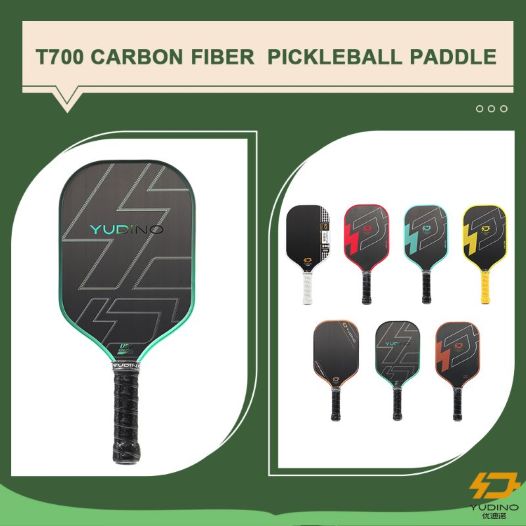
11. Who Owns the Mold?
Mold ownership is an important question for deeper OEM projects.
If a new paddle shape requires a dedicated mold, the buyer should confirm:
Who pays for the mold
Who owns the mold
Whether the mold can be used for other customers
Whether the mold can be transferred
What happens if cooperation ends
Whether the manufacturer stores the mold
How long the mold can be maintained
For ODM projects based on an existing product platform, a new mold may not be necessary.
For fully customized OEM projects, mold ownership should be clearly defined before production begins.
This is one of the procurement details that can prevent future disputes.
12. What About Intellectual Property?
Brand owners should distinguish between several types of intellectual property.
Brand IP
Your:
Logo
Brand name
Packaging artwork
Product graphics
should be clearly identified as your property.
Product Design
A completely new paddle shape or construction may involve additional intellectual-property considerations.
Manufacturer's Existing Technology
An existing manufacturing method or product platform may belong to the manufacturer.
Customer-Developed Design
If your company provides a proprietary design, the ownership and permitted use should be clearly documented.
For OEM projects, it is advisable to define IP ownership and confidentiality terms in writing before development begins.
13. How Does OEM vs ODM Affect Cost?
The cost structure can be different.
ODM
Because the manufacturer already has a product platform, development costs can be lower.
The buyer may mainly pay for:
Paddle
Branding
Packaging
Selected customization
Sample
OEM
A deeper OEM project may involve additional costs such as:
Engineering
New mold
Prototype development
New materials
Testing
Tooling
Special packaging
However, OEM does not automatically mean a higher unit price.
A larger production quantity can spread development costs across more units.
Therefore, buyers should distinguish between:
Development Cost
and
Unit Manufacturing Cost
A product with a higher initial development investment may ultimately have a competitive unit cost at larger production volumes.
14. How Does MOQ Differ Between OEM and ODM?
MOQ is normally easier to manage with existing ODM products.
Because the factory already produces the product, the production setup is relatively straightforward.
For a customized OEM product, MOQ may be influenced by:
New material procurement
Mold requirements
Production setup
Packaging
Special components
Manufacturing efficiency
YUDINO does not apply one universal MOQ to every project.
For standard products, small trial orders can be supported where applicable.
For customized OEM/ODM projects, the MOQ is confirmed according to:
Product + Materials + Customization + Packaging + Production Requirements
This is more practical than giving every customer the same MOQ regardless of product complexity.
15. Can You Order Samples Before a Bulk Purchase?
Yes.
Sample approval should be considered an important stage of both ODM and OEM procurement.
For an ODM project, the buyer can evaluate an existing product and determine whether it meets the intended market requirements.
For OEM, the sample is even more important because it confirms whether the manufacturer's production matches the agreed specifications.
A sample review should include:
Dimensions
Thickness
Weight
Balance
Handle
Surface
Graphics
Logo
Packaging
Playing performance
YUDINO supports sample development and sample orders before bulk production.
For new products, the sample should be treated as the reference standard for subsequent mass production.
16. What Should Be Included in an OEM/ODM Purchase Agreement?
A professional B2B agreement should go beyond simply stating:"Carbon fiber pickleball paddle."
The agreement should identify the actual product.
Important specifications can include:
Product
Model
Material
Core
Thickness
Dimensions
Weight range
Handle
Surface
Branding
Logo
Graphics
Color
Printing method
Packaging
Individual packaging
Accessories
Carton
Labels
Quality
Tolerances
Inspection standard
Defect definition
Testing requirements
Commercial Terms
MOQ
Unit price
Payment terms
Delivery schedule
Development
Sample approval
Mold ownership
IP ownership
Confidentiality
After-Sales
Defective product handling
Replacement
Quality claims
Response process
The more important the project, the more detailed these terms should be.
17. How Does YUDINO Handle OEM and ODM Pickleball Paddle Projects?
YUDINO supports both product-selection-based ODM projects and customized OEM development.
For buyers without a complete technical specification, YUDINO can help evaluate:
Target player
Price positioning
Paddle material
Core thickness
Weight
Shape
Product configuration
For customers with an established specification, YUDINO can work according to the required:
Material
Dimensions
Core
Weight
Construction
Surface
Branding
Packaging
The company's product range includes 3K, 12K, 18K and T700 carbon fiber options, as well as fiberglass paddle constructions.
This provides multiple technical starting points for different market segments.
18. YUDINO's Manufacturing Capacity for OEM/ODM Orders
Production capability becomes increasingly important when a successful product moves beyond the sample stage.
YUDINO operates an approximately 3,000 m² production facility with more than 20 hot-press machines and reports an annual production capacity of approximately 50,000 pickleball paddles.
The company also has an independent R&D center and laboratory to support product development and testing.
This production structure allows YUDINO to support different stages of a brand's development:
Sample → Trial Order → Regular Order → Larger-Volume Production
For a growing brand, the ability to continue supplying the same product specification can be more important than simply finding the cheapest factory for the first order.
19. What Is the Production Lead Time?
Lead time depends on the project type.
Existing Product / ODM
If an existing product is selected and only standard branding or limited customization is required, the process can generally move faster.
Selected stocked models can be shipped in approximately 3 business days, subject to stock availability.
Custom OEM/ODM
A customized product requires additional time for:
Artwork confirmation
Material preparation
Sample development
Production setup
Manufacturing
Inspection
Packaging
YUDINO's typical custom production lead time is approximately 15–25 business days, depending on the project and production requirements.
New product development involving new molds or structural changes may require additional development time.
The final delivery schedule should therefore be confirmed after the complete specification is approved.
20. What Quality Assurance Does an OEM/ODM Buyer Need?
When you sell a paddle under your own brand, quality problems become your brand's problem.
For this reason, quality assurance should be discussed before production.
YUDINO's quality process includes inspection of:
Raw materials
Production processes
Paddle weight
Appearance
Dimensions
Structural integrity
Finished product performance
The company can also provide relevant inspection documentation and production/testing information for customers according to project requirements.
For larger OEM programs, buyers can establish their own acceptance criteria.
For example:
Target weight: 230g ± 5g
Core thickness: 16mm
Specified paddle dimensions
Approved graphic file
Approved packaging
The approved sample can then serve as the physical reference for mass production.
21. What Happens If the Product Has Quality Problems?
This should be discussed before placing the order rather than after receiving the goods.
Buyers should establish:
How defects are defined
What inspection method is used
What evidence is required
How quality claims are submitted
How defective products are handled
Whether replacement or credit is available
How recurring quality problems are addressed
YUDINO provides after-sales support for B2B orders and can coordinate quality issues based on the agreed product specification and inspection requirements.
For larger orders, buyers should establish the quality acceptance standard before production.
22. OEM or ODM: Which One Should Your Brand Choose?
Use the following decision framework.
Choose ODM If:
You are a new brand.
You do not have an internal engineering team.
You want to launch quickly.
You are testing market demand.
You want to reduce initial development investment.
You are comfortable starting from an existing product platform.
Choose OEM If:
You already have a detailed product concept.
You need a unique paddle specification.
Product differentiation is important.
You have your own technical requirements.
You plan long-term product development.
You want greater control over the final product.
Consider a Hybrid Approach If:
You want to launch quickly but eventually develop proprietary products.
A practical strategy is:
Phase 1: ODM
Launch a proven paddle platform under your brand.
Phase 2: Product Feedback
Analyze customer reviews, sales data, returns, and player preferences.
Phase 3: OEM
Develop a differentiated paddle around actual market demand.
This can reduce the risk associated with developing a completely new product before validating the market.
23. OEM vs ODM for Different Types of Buyers
| Buyer Type | Recommended Approach |
| New startup | ODM |
| Amazon seller testing pickleball | ODM |
| Sports retailer | ODM / OEM |
| Distributor | ODM |
| Established sports brand | OEM / ODM |
| Professional paddle brand | OEM |
| Brand with R&D team | OEM |
| Premium performance brand | OEM |
| Company entering pickleball for first time | ODM |
| Long-term product development program | OEM |
This is not a fixed rule.
A large brand can still use ODM to launch a new product quickly, while a startup with strong product-development resources can begin directly with OEM.
24. OEM vs ODM: A Practical Example
Imagine two companies entering the pickleball market.
Company A: New E-Commerce Brand
The company has strong online marketing capabilities but little paddle-development experience.
It wants to launch within a short timeframe.
The company selects an existing carbon fiber paddle platform and customizes:
Logo
Graphics
Packaging
Grip
Selected weight configuration
ODM is likely the more efficient choice.
Company B: Established Sports Brand
The company already has:
An R&D team
A defined customer base
A target retail price
A specific paddle concept
Technical specifications
It wants a differentiated 16mm paddle with a particular weight distribution and surface construction.
OEM is likely the better choice.
The important point is that the best manufacturing model depends on the buyer's internal capabilities and business objectives.
25. Why Manufacturing Capability Still Matters
OEM and ODM are not only about product design.
The manufacturer must also be able to reproduce the approved specification at scale.
YUDINO's approximately 3,000 m² production facility, 20+ hot-press machines, R&D center, laboratory, and reported annual production capacity of approximately 50,000 paddles provide the manufacturing infrastructure for both standard and customized production.
For brands, this means the supplier can support a product through different commercial stages instead of treating every order as a one-time transaction.
A reliable long-term supply relationship should ideally cover:
Development → Production → Quality Control → Delivery → After-Sales Support → Repeat Orders
26. Questions to Ask Before Choosing OEM or ODM
Before signing a manufacturing agreement, ask the supplier:
Product Development
Is this an existing model or a new design?
Who owns the product design?
Can the product be modified?
Can you develop a new mold?
Materials
What carbon fiber options are available?
What core materials are available?
Can thickness be customized?
Can weight and balance be controlled?
MOQ
What is the MOQ for this exact configuration?
Does a new mold change the MOQ?
Can I place a small trial order?
Samples
Can I order samples?
How long does sample development take?
Will the approved sample be used as the production reference?
Quality
What inspection process is used?
What tolerances are allowed?
Can inspection reports be provided?
How are defective products handled?
Delivery
What is the production lead time?
What is the earliest shipment date?
Can you support repeat orders?
IP
Who owns the mold?
Who owns the design?
Can the manufacturer sell the same design to other customers?
Can confidentiality terms be signed?
These questions can reveal whether a supplier is actually suitable for a long-term OEM/ODM relationship.
Frequently Asked Questions
Is OEM or ODM better for pickleball paddles?
Neither is universally better. ODM is generally more suitable for brands that want a faster and simpler product-development process, while OEM is better for brands that require greater control and product differentiation.
Is ODM cheaper than OEM?
ODM can have lower initial development costs because the manufacturer may already have an existing product platform. OEM can involve additional engineering, tooling, testing, or mold costs. The final unit price also depends heavily on order volume and specifications.
Can I customize an ODM pickleball paddle?
Yes. Depending on the manufacturer, ODM paddles can be customized in areas such as logo, graphics, color, weight, grip, packaging, and selected product specifications.
Can YUDINO develop a completely new pickleball paddle?
Yes. YUDINO supports OEM/ODM development and can work with customers on customized materials, core thickness, paddle shape, weight, construction, graphics, and packaging.
What materials can YUDINO provide?
YUDINO offers fiberglass and multiple carbon fiber options, including 3K, 12K, 18K, and T700 carbon fiber, depending on the product requirements.
What is the MOQ for YUDINO OEM paddles?
MOQ depends on the product configuration and customization requirements. Standard products can support smaller trial orders, while customized projects are quoted according to materials, production setup, packaging, and order quantity.
Can I order a sample before a bulk order?
Yes. YUDINO supports sample orders and sample development for buyers who want to evaluate the product before committing to larger production.
How long does OEM pickleball paddle production take?
Custom production typically takes approximately 15–25 business days after specifications and artwork are confirmed. New product development, new molds, or major structural changes may require additional time.
How quickly can standard paddles be shipped?
Selected stocked models can generally be shipped in approximately 3 business days, subject to stock availability and order requirements.
Can YUDINO customize the paddle weight?
Yes. Weight can be specified according to the product requirements. YUDINO also provides weight consistency control during production.
Can YUDINO customize packaging?
Yes. Packaging can be developed for retail stores, e-commerce, distributors, clubs, and other sales channels.
Who owns the mold in an OEM project?
Mold ownership should be agreed upon in the OEM contract. Buyers should confirm who pays for the mold, who owns it, whether it can be used for other customers, and what happens when the business relationship ends.
Is an OEM paddle automatically exclusive?
No. Customization and exclusivity are separate matters. If exclusivity is important, it should be specifically negotiated and documented in the commercial agreement.
Does YUDINO provide quality inspection?
Yes. YUDINO carries out quality inspection during production and before shipment and can provide relevant inspection information according to project requirements.
Conclusion
The difference between OEM and ODM pickleball paddles is ultimately about who controls product development.
ODM puts more of the product-development responsibility on the manufacturer.
OEM gives the brand greater control over the product specification and development direction.
For a new brand that wants to enter the market quickly, ODM can provide a practical starting point.
For an established brand that already knows what it wants to build, OEM can provide greater flexibility and differentiation.
There is also no requirement to use only one model throughout the life of a brand.
A company can start with ODM, collect real market feedback, and later move toward OEM development as its product strategy becomes more mature.
YUDINO supports both approaches, with capabilities covering carbon fiber and fiberglass materials, core thickness, paddle shape, weight, handle configuration, surface design, branding, packaging, sample development, production, and quality inspection.
Its approximately 3,000 m² production facility, 20+ hot-press machines, independent R&D and laboratory capabilities, and approximately 50,000-unit annual production capacity provide the manufacturing foundation for both trial orders and long-term supply programs.
For standard products, selected models can generally ship within approximately 3 business days when available. Customized production typically requires approximately 15–25 business days, while more complex OEM development may require additional time for engineering, tooling, sampling, and testing.
For buyers, the most important question is therefore not simply:
"OEM or ODM?"
It is:"How much control do I need, how much development work can my team handle, and how quickly do I need to bring the product to market?"
Once those questions are answered, choosing the right manufacturing model becomes much easier.
Planning an OEM or ODM pickleball paddle project?
Prepare your target market, player profile, preferred materials, paddle thickness, weight, expected quantity, branding, packaging, and target delivery date. YUDINO can then evaluate whether an existing ODM platform or a customized OEM development route is more suitable for your project.