What Are the Basic Rules of Pickleball?
The Origin of Pickleball:
In the summer of 1965, three fathers—Joel Pritchard, Bill Bell, and Barney McCallum—took their families on vacation to Bainbridge Island, Washington. After a few days, the children started complaining of boredom, so the three fathers got together and brainstormed ways to entertain the kids. They pooled all the resources they had—a few ping-pong paddles, a perforated plastic ball, and an old badminton court—to hold the world's first pickleball game, which the children thoroughly enjoyed. Pritchard's vacation dog, Pickles, was known for its tendency to bite the ball and run away, leading the family to simply call the plastic ball "Pickles' ball," which eventually became the name of the sport.
What equipment is included in Peak badminton?
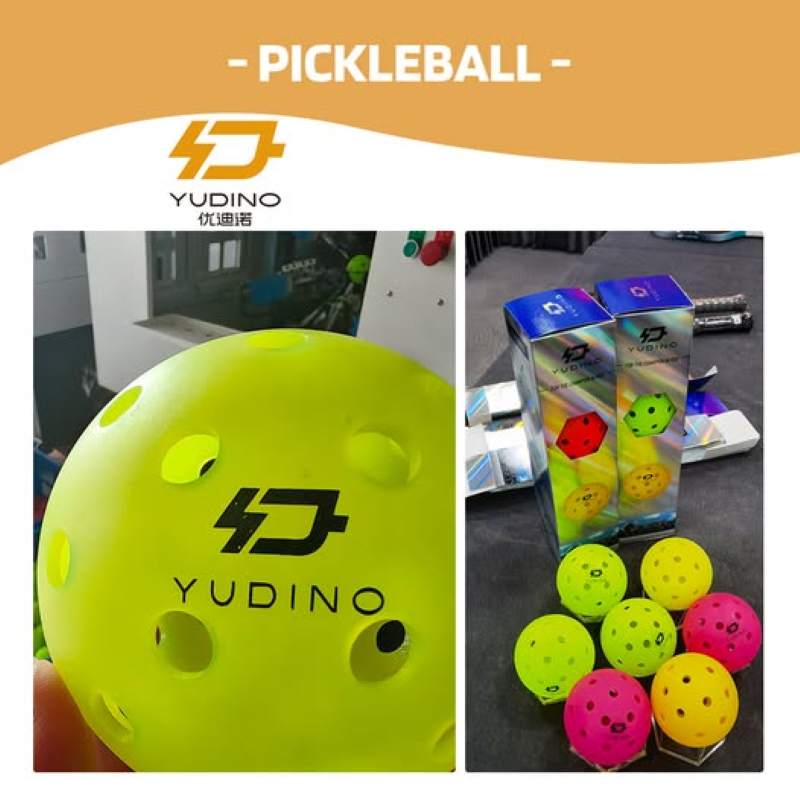
Indoor ball:
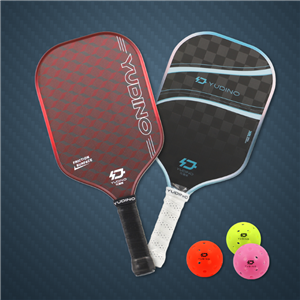
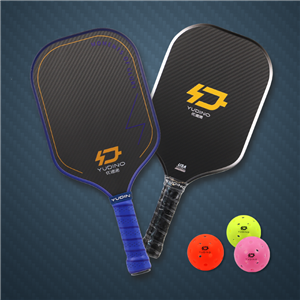
26-hole design, lightweight and slow-flying, suitable for control; Outdoor ball: 40-hole design, thick wall, strong wind resistance, and faster bounce; Diameter: Approximately 74mm, made of hard plastic.
Peak rackets:
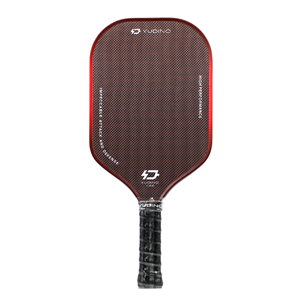
Specifications: Length ≤ 43.18cm, total length and width ≤ 60.96cm, no weight limit; Materials are divided into three categories: wood (entry-level), fiberglass (lightweight and durable), and carbon fiber (professional grade, high elasticity); Recommendation for beginners: Choose a wide-faced racket (larger hitting area) or the standard size (40.64×20.32cm) to improve forgiveness.
Shoes:
Peak courts are similar to badminton courts, so choose shoes with good support. Avoid running shoes!!!
Apparel:
Quick-drying material + breathable mesh design: Avoid cotton (it absorbs sweat and becomes heavy).
What are the court sizes?
Standard Peak Court: 13.41 meters long × 6.10 meters wide (equivalent to a badminton doubles court), suitable for both singles and doubles.
Net Height: 91.44 cm on each side, lowered to 86.36 cm in the middle (reduces the advantage of smashes).
How are the court areas divided?
Non-volley zone (kitchen area, no-volley zone): Extends 2.13 meters (7 feet) on each side of the net, marked with red lines on the ground.
Purpose: To prohibit volleys before the shuttlecock bounces, preventing violent smashes at the net.
Service area: Divided into left and right zones, separated by the center line; the area outside the baseline is the service stance.
Basic Rules of Pickleball:
1. Serving Rules:
Movement Requirements: Underhand serve (low-hand toss or hit after the ball bounces), hitting point below waist level, racket face trajectory from bottom to top.
Standing: Stand with both feet outside the baseline, following the "left odd, right even" rule (odd numbers on the score, left court; even numbers, right court). Only the serving side needs to change positions after consecutive points; the receiving side does not need to change positions.
Landing Point: Must be served diagonally to the opponent's service court. A serve on the line is valid; a serve touching the net does not result in a re-serve, and possession changes.
2. Double Bouncing Rule:
In the first round (excluding the first serve), the receiver/serving side must wait for the ball to bounce before hitting it. Hitting before the ball bounces is a foul. After the first round, the ball can be hit freely.
Process:
① Serve →② Receiver returns the ball after bouncing →③ Serve the ball after bouncing →④ Volleys are then allowed.
In the first rally after the serve, the receiving player must allow the ball to bounce once on their own court before hitting it; similarly, the serving player must also allow the ball to bounce once on their own court before hitting it. Serving Stance: Both feet must be outside the baseline when serving. Serving: The ball must be hit with the racket before it bounces. The ball must land in the hitting area diagonally opposite the court and must not touch the non-volley line.
3. Non-Volley Zone Prohibitions:
It is a foul if a player stands inside the non-volley zone and hits a ball that has not bounced.
It is a foul if a player stands in the valid zone and hits a ball that has not bounced, causing it to enter the non-volley zone due to inertia.
Rules: Volleying is prohibited inside the zone unless the ball bounces inside the zone; volleying from outside the zone and then stepping into the zone due to inertia is also a violation.
Tips: Maintain balance by suspending one foot in the air, or call a teammate to pull you out to avoid stepping into the zone.
4. Direct Scoring Format: Pickleball Singles Direct Scoring Format:
Points per Rally: Both the serving and receiving sides score 1 point for winning the shot in a rally (i.e., the opponent makes a mistake or fails to return the ball effectively). For example, if the receiver returns the ball out of bounds after the server serves, the server scores; if the receiver successfully returns the ball and the server makes a mistake, the receiver scores. Technical Foul Points: If one side is penalized for a technical foul and the penalized side has zero points, the opponent scores directly.
Serving Order: At the start of each game, the player on the right serves first. If the serving side scores, subsequent serves alternate between the left and right sides (even-numbered points are served from the right side, odd-numbered points from the left side). Positioning Requirements: When serving, the player's feet must be behind the baseline, and the ball must be served into the diagonally opposite service court. The receiver must be ready to receive the ball in the corresponding service court.
Usually, a 15-point system is used. The first side to reach 15 points and lead by at least 2 points wins the game. If the score is tied at 15, the game will continue until one side takes a 2-point lead.
Doubles Pickleball Scoring System:
1. Scoring Method: Points are awarded per rally. The side that wins the rally, regardless of who serves, scores 1 point.
2. Serving Position: For even-numbered points (0, 2, 4...), the serve originates from the right service court. For odd-numbered points (1, 3, 5...), the serve originates from the left service court.
3. Rotation of Service: Each team has only one opportunity to serve. If the serving team makes a fault (e.g., the serve goes out of bounds or into the net), they lose the serve, and the opposing team scores 1 point. The opposing team then gains the serve.
4. Double Bouncing Rule: After the serve, the ball must bounce once, and the receiver must also wait for the ball to bounce once before hitting it. From the third shot onwards, both sides can choose to volley or wait for the ball to bounce before hitting it.
5. Non-Volling Zone: Volleys (hitting the ball in the air before it bounces) are prohibited within the "kitchen zone" (2.13 meters from the net).
Match Flow and Scoring Example:
To help you understand how a match works more intuitively, let's look at a concrete example: Assume Team A is serving, and the current score is 3-2 (Team A has scored first).
Scenario 1: Team A serves and wins the rally, making the score 4-2. Team A continues serving, but because the total score is 4 (an even number), the server needs to switch to the right service court.
Scenario 2: Team B (the receiving team) wins the rally, making the score 3-3. Simultaneously, because Team A makes a mistake, Team B not only scores but also gains the right to serve. Team B then serves, and since the score is 3-3 (an even number), they start serving from the right service court.
Winning Conditions: Matches are usually decided in a single game, with common scoring systems of 11, 15, or 21 points. To win a game, two conditions must be met simultaneously: reaching the required score (e.g., 15 points) and leading the opponent by at least 2 points. For example, in a 15-point system, if the score reaches 15-15 (a tie), the game will continue until one side takes a 2-point lead (such as 17-15).