What Should Buyers Look for in a Pickleball Paddle for Spin? A Practical Buying Guide
At present, spin performance has become an important feature for many pickleball paddle buyers. For brands, wholesalers, and sporting goods channel buyers, choosing a pickleball paddle designed for spin is not simply a matter of checking whether the product name includes “Spin.”
When selecting products, many buyers pay attention to technical details such as 18K carbon fiber, paddle surface texture, and core material. However, a paddle’s spin performance is affected by multiple factors, including surface design, surface treatment, material combination, core construction, thickness, and weight. Therefore, when purchasing a Spin pickleball paddle, buyers need to evaluate the overall construction and product positioning rather than focusing on just one material or specification.
1. Surface Texture Is an Important Factor in Evaluating Spin Performance.
The spin performance of a pickleball paddle is first related to the friction between the paddle surface and the ball. When the ball contacts the paddle surface, the surface texture can affect the contact between the ball and the paddle. A suitable texture design can help players better control the direction of the ball’s spin while maintaining a consistent hitting experience.
For buyers, when selecting a Spin paddle, it is important to understand the surface treatment used by the supplier. Spin paddles on the market may use different surface treatment processes, such as carbon fiber texture and micro-sand texture. Different processes can affect the feel of the paddle surface and the overall user experience.
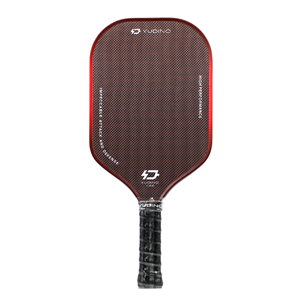
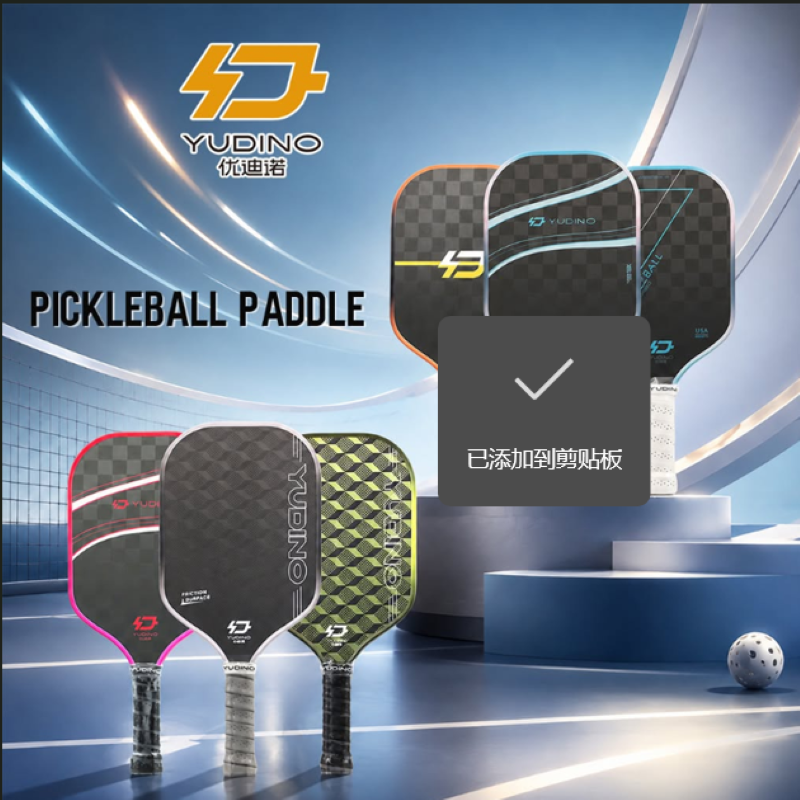
For example, YUDINO’s 18K carbon fiber pickleball paddle features a micro-sand textured surface design. The surface texture is designed to improve the friction characteristics of the paddle face and provide users with better spin control.
For bulk purchasing, buyers should look beyond the type of surface texture and also confirm whether the texture is uniform, whether the surface effect remains consistent between different production batches, and whether the surface treatment process remains stable during production. These details can affect how end users evaluate product quality and can also influence subsequent sales feedback for brands.
2. Carbon Fiber Material Needs to Be Evaluated Together with the Overall Construction.
Carbon fiber is a common material used in high-performance pickleball paddles, but buyers cannot judge a product’s performance based on the material name alone. For example, 18K carbon fiber is generally used to describe the tow specification in carbon fiber fabric, while the actual paddle performance is also affected by the surface texture, core construction, and overall design.
A pickleball paddle designed for a Spin-oriented product positioning usually requires several structural elements to work together: the surface material affects hitting feedback; the surface treatment affects friction; the core construction affects stability; and the overall design affects the sense of control.
Take YUDINO’s 18K carbon fiber pickleball paddle as an example. The product features an 18K carbon fiber paddle face structure, combining the carbon fiber material with the overall structural design to improve surface stability and hitting feedback.
For buyers, 18K can be used as one reference factor when evaluating a product, but it should not be the only standard for judging product value. More importantly, buyers need to confirm whether the material combination meets the needs of the target market and whether the product structure suits the usage habits of end users.
3. Core Construction and Thickness Affect the Playing Experience.
In addition to the paddle surface material, the internal construction of the paddle also affects the user experience.
Most pickleball paddles currently use a honeycomb core structure. Different core materials and thicknesses can affect the paddle’s power output, control, and hitting stability. For a Spin-oriented product, the paddle needs to provide spin performance while also maintaining good control. If the paddle focuses only on surface friction while overlooking overall stability, users may find it difficult to achieve a consistent hitting experience during actual play.
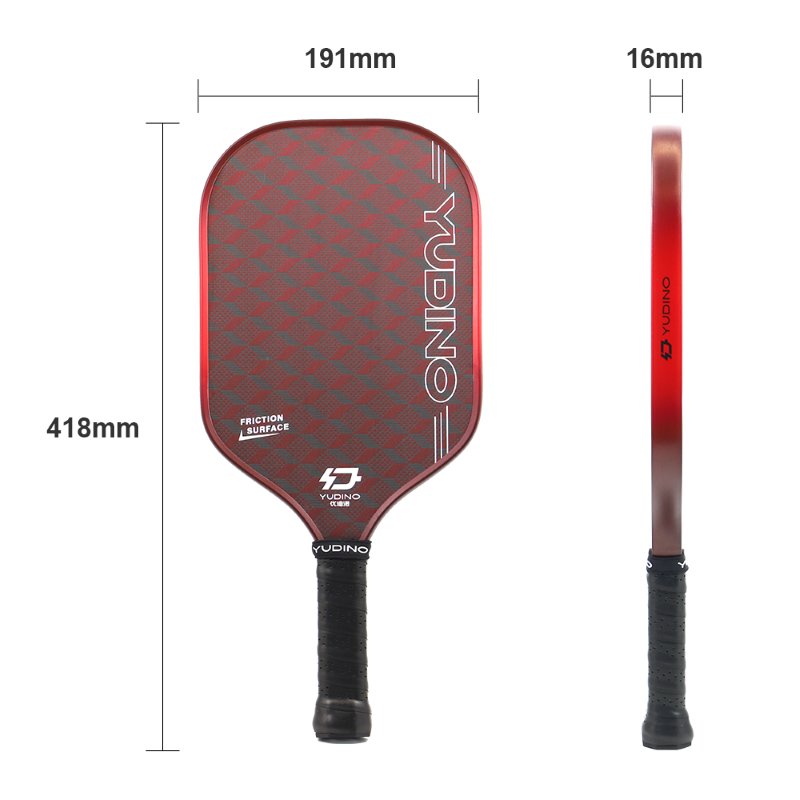
For example, a 16 mm paddle is generally more focused on control and stability. YUDINO’s 18K carbon fiber pickleball paddle features a 16 mm thickness and a PP honeycomb core structure, allowing the product to maintain hitting stability in addition to its spin characteristics.
For buyers, when confirming product specifications, they should pay particular attention to the following: core material, paddle thickness, paddle face dimensions, and overall structural design. These specifications should be confirmed during the sample stage and used as important standards for subsequent mass production.
4. Weight Design Needs to Match the Target Market.
Weight is also an important factor to consider when purchasing Spin pickleball paddles.
Lighter paddles are generally easier to swing and are suitable for users who need quick reactions. However, if the weight is too low, it may also affect hitting stability. Therefore, buyers should not simply assume that lighter is better. Instead, they need to choose the right product positioning based on their target customer group.
For example: competitive users pay more attention to the balance between speed and control; general consumers focus more on comfort during use; premium markets place greater emphasis on overall performance.
Take YUDINO’s 18K carbon fiber pickleball paddle as an example. The product weight is controlled at 230 g ± 5 g. A clearly defined weight range can help buyers determine the product positioning and also make subsequent quality inspections easier.
5. How Should Buyers Confirm Spin Paddle Samples Before Bulk Purchasing?
| Sample Confirmation Item | Inspection Content | Key Procurement Concerns |
| Appearance and Surface Inspection | Paddle face texture, surface treatment, overall appearance | Confirm whether the surface effect meets product requirements, check for obvious production issues |
| Parameter Specification Inspection | Racket dimensions, weight range, thickness, material structure | Confirm whether the actual sample parameters are consistent with the specification information provided by the supplier |
| Actual Use Test | Spin performance, ball control feel, hitting stability, grip comfort | Evaluate whether the actual product usage experience meets the target market demand |
| Production Standard Confirmation | Use the data after sample confirmation as the basis for mass production | Reduce specification differences during mass production and ensure batch consistency |
About YUDINO Pickleball Paddles.
YUDINO focuses on the R&D, production, and export of pickleball paddles, providing OEM/ODM cooperation and product supply support for overseas brands, wholesalers, and sporting goods buyers.
The company’s product range covers multiple series, including carbon fiber pickleball paddles and performance-oriented pickleball paddles. Based on different market needs, YUDINO can provide various material, structural, thickness, and weight configuration options to help customers develop pickleball paddle products that fit their target market positioning.
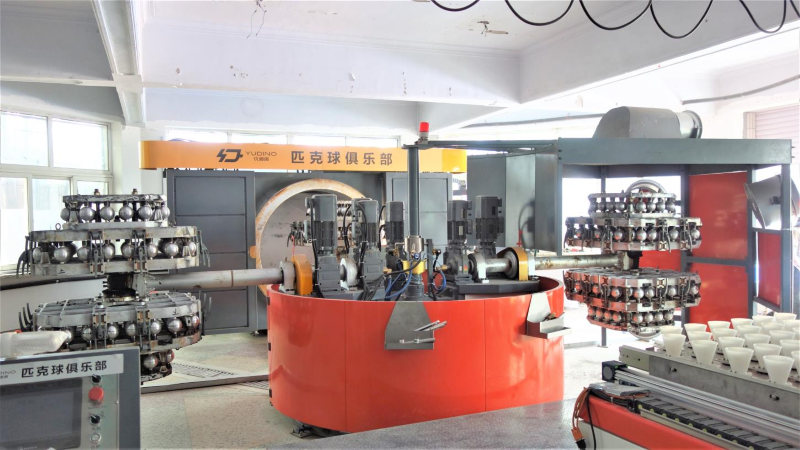
YUDINO’s production base is located in Dandong, Liaoning, China. The company has capabilities in pickleball paddle product development, production management, and bulk supply, providing overseas customers with support throughout product design, specification confirmation, and mass production.
With stable product development capabilities and experience in supply management, YUDINO is committed to providing reliable pickleball paddle supply solutions for buyers worldwide. If you are looking for a pickleball paddle supplier or would like to learn more about our products, please contact YUDINO for detailed information.
FAQ:
What questions should buyers ask when purchasing Spin pickleball paddles?
· What surface material does the Spin pickleball paddle use?
· What surface treatment process is used on the paddle?
· What type of core construction does the paddle use?
· Are the product specifications consistent?
· Will the mass-produced products remain consistent with the samples?
· Does the supplier support OEM and product development?