Which Carbon Fiber and Graphene Materials Are More Suitable for Making Pickleball Paddle?
With the continuous improvement of the equipment requirements of pickleball sports, "which racket material to choose" has become an entanglement point for many players. Among them, carbon fiber and graphene are two materials that are often compared. As a professional pickleball equipment company, YUDINO, today, we will take the first perspective, from the dimensions of material characteristics, sports adaptability, and actual use experience, to talk about which carbon fiber and graphene are more suitable for making pickleball paddles.
First, look at the core characteristics of the two materials. As an emerging material, graphene does have eye-catching advantages-it has extremely high strength, excellent thermal and electrical conductivity, and can theoretically achieve rapid energy conduction in the racket. However, in the practical application of pickleball paddle, graphene mostly exists in the form of "additives", which is difficult to make into a racket alone, usually mixed with other materials, which leads to the performance of graphene is greatly affected by the mixing ratio and process accuracy, and the cost remains high, and the price of the final product far exceeds the budget of ordinary players.
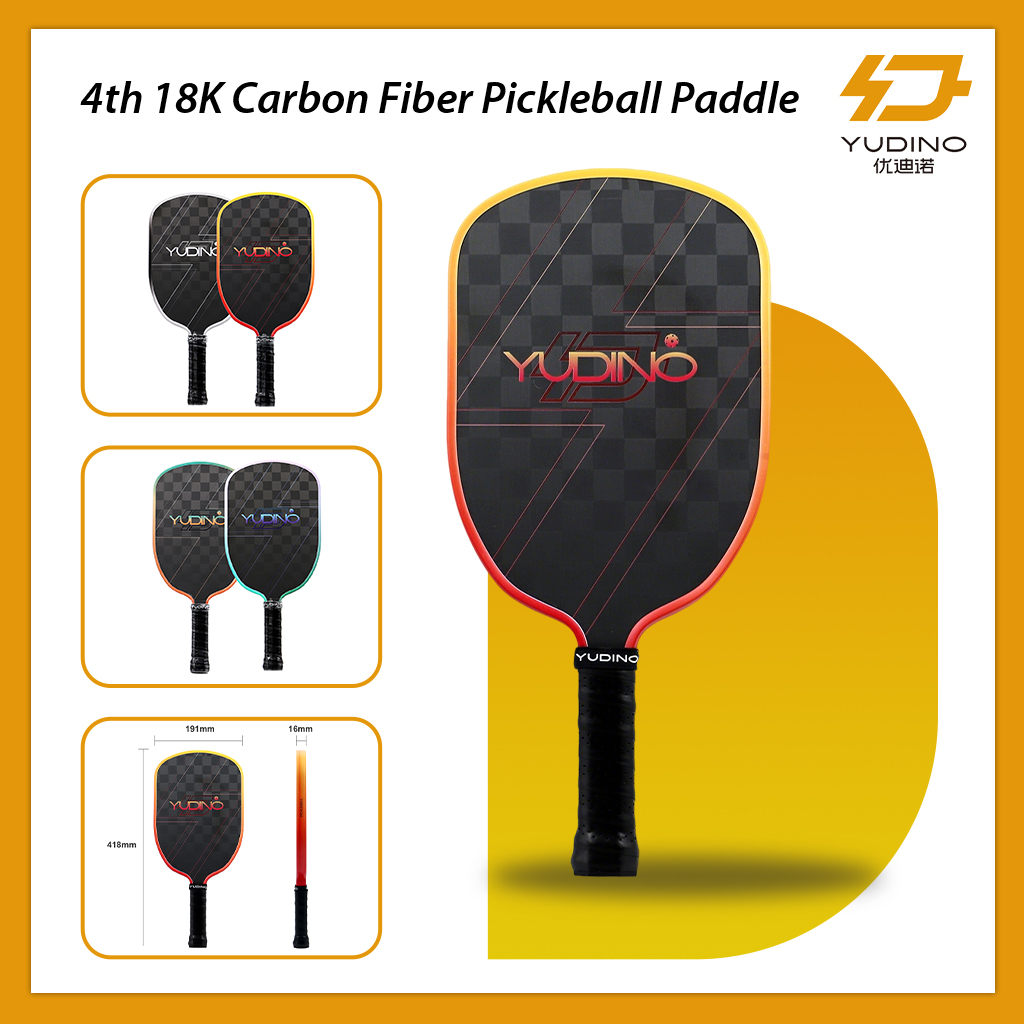
Looking at carbon fiber again, its advantages are exactly in line with the core needs of a pickleball paddle. The low density of carbon fiber can keep the racket lightweight, and even if it is swung for a long time, it will not fatigue the arm. At the same time, its torsional strength and deformation resistance are excellent. When vigorously dunking or quickly counterattacking, the racket frame is not easy to deform, and it can stably transmit the power of hitting the ball and ensure the accuracy of returning the ball. More importantly, the processing technology of carbon fiber is mature, the performance is stable, and there is no need to rely on complex mixing ratios to mass-produce rackets of consistent quality. This is also the key reason why it can become the mainstream pickleball paddle material.
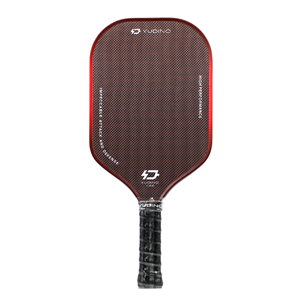
Judging from the actual scene of the pickleball movement, the adaptability of carbon fiber is much higher than that of graphene. Pickleball sports pay attention to "controllability". Whether it is a novice practicing basic movements or a casual player enjoying sports, the racket needs to have soft batting feedback to avoid arm strain due to the excellent material. When YUDINO developed the carbon fiber pickleball paddle, it made full use of the characteristics of carbon fiber. By adjusting the weaving density of the racket frame, the racket has sufficient support and cushioning to absorb the vibration when hitting the ball. Even novices can quickly adapt. The graphene material is too rigid. If the mixing ratio is not controlled properly, the vibration sensation when hitting the ball will be very obvious. Long-term use can easily cause discomfort to the wrists and arms. It is more suitable for a few professional players who pursue extreme strength and can skillfully control their movements. The audience is very narrow.
In terms of cost performance and practicality, carbon fiber also has more advantages. The high research and development and processing costs of graphene materials have led to the high price of rackets equipped with this material, and the difficulty of maintenance. Once there is a bump damage, the repair cost is almost equivalent to re-purchasing. The carbon fiber racket is not only priced more favorably to the people, but also adapts to the budget of most players, and maintenance is also more convenient.
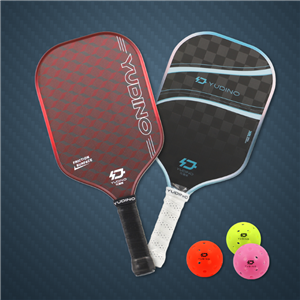
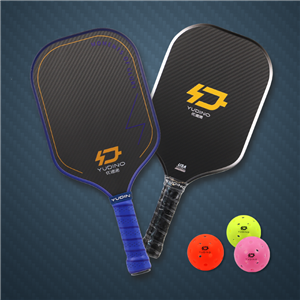
As a company focused on carbon fiber pickleball paddles, YUDINO has always believed that a good racket material is not the pursuit of "gimmicks" but to truly meet the needs of players. We insist on using high-purity carbon fiber raw materials and refuse to add irrelevant impurities. Each racket has undergone strict torsional and deformation resistance tests to ensure that the best balance is found between lightweight and stability. From novice entry models to advanced models, YUDINO's carbon fiber pickleball paddle can cover the needs of different players, which is the core reason why we can be recognized in the market.
In summary, although graphene material has bright spots in theoretical performance, in the practical application of pickleball paddles, carbon fiber has become a more suitable choice for most players due to its balanced performance, wide adaptability, and people-friendly price. If you are worried about choosing a pickleball paddle, it is recommended to give priority to carbon fiber material.