Why 18K Carbon Fiber Pickleball Paddles Are Becoming a New Trend in Competitive Training
Pickleball paddles have evolved from basic equipment into a core factor affecting shot quality. In high-frequency training and high-intensity matches, material and structure directly determine stability, power transfer efficiency, and consistency of control.
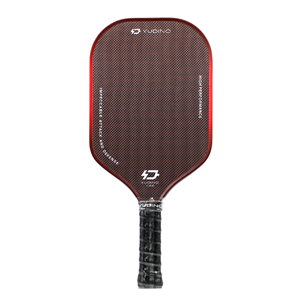
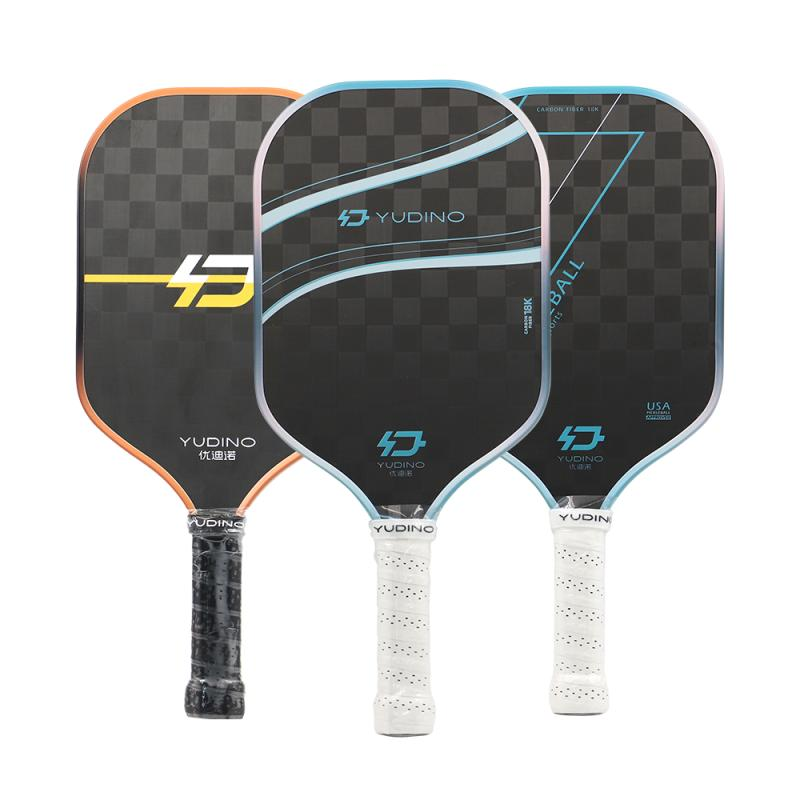
18K carbon fiber pickleball paddle, based on a combination of high-density carbon fiber surface layer and PP honeycomb core, is seeing increased adoption in intermediate to advanced training and club-level competitions.
Structure of 18K Carbon Fiber Pickleball Paddle:
1、18K Carbon Fiber Face:
The high-density carbon fiber weave structure ensures a more even distribution of force, reducing localized deformation, thereby improving consistency in shot rebound trajectory and stability.
Compared to fiberglass and low-density carbon fiber structures, the 18K surface layer minimizes localized deformation during high-speed shots, delivering stable feedback.
2、PP Honeycomb Core (Structural Features)
By dispersing impact loads, the PP core reduces point stress concentration, improves structural integrity, and enlarges the effective sweet spot, thereby increasing fault tolerance during continuous rallies.
3、16mm Thick Core (Engineering Function)
The 16mm thickness extends ball contact time, making energy release more controllable while effectively reducing vibration transmission, thus enhancing shot feedback stability and shot placement predictability.
Comparison of Mainstream Paddle Structures:
1、18K Carbon Fiber vs. Fiberglass
| Feature | Fiberglass Paddle | 18K Carbon Fiber Paddle |
| Output Characteristics | High elasticity but inconsistent | Stable, linear output |
| Control Ability | Moderate | Stable |
| Sweet Spot | Relatively small | Large coverage |
| Target User | Beginners | Competitive training |
2、18K Carbon Fiber vs. T700 Carbon Fiber
| Feature | T700 Carbon Fiber | 18K Carbon Fiber Paddle |
| Material Properties | More ductile/tough | High-density rigidity |
| Rebound Consistency | Moderate | Stable |
| High-Speed Rally Performance | Average | Stable output |
| Suitable Skill Level | Intermediate | Intermediate to advanced/competitive |
Performance in Match Scenarios:
Continuous Baseline Rallies:
Fiberglass: Fast output but inconsistent. Prone to going out or into the net during extended rallies.
T700: Balanced performance, but still shows some fluctuations in feedback during high-speed or defensive rallies.
18K carbon fiber pickleball paddle: High trajectory consistency, minimal control errors in extended rallies, reliable tactical execution.
Fast Net Blocks:
In high-frequency short exchanges, the paddle needs to rebound quickly while maintaining controllable placement, and reducing deviation and vibration disturbance from off-center hits.
Compared to traditional structures like low-density carbon fiber, the 18K carbon fiber pickleball paddle provides more consistent face response in this scenario, reducing trajectory deviation and vibration interference from off-center hits, thereby delivering consistent precision and continuity in short-distance exchanges.
Third Shot Drive:
The third shot drive demands high performance in trajectory control, spin stability, and predictability of ball output, directly impacting the quality of transition from defense to offense and rhythm management.
The 18K carbon fiber pickleball paddle, through its high-density carbon fiber face and structurally enhanced design, ensures more even energy distribution during impact, reducing trajectory fluctuations and making shot path and spin easier to control.
Comparison of Different Paddle Thicknesses:
| Thickness | Type | Characteristics |
| 13mm | Speed-oriented | Fast release, less control |
| 16mm | Control-oriented | High stability |
FAQ:
Q1: Is this product suitable for beginners?
A1: This product is more appropriate for intermediate and advanced players with existing skills. Not recommended for complete beginners.
Q2: Which is better, 18K or T700?
A2: Neither is absolutely superior. 18K emphasizes stable control and structural consistency, suitable for intermediate to advanced competitive play. T700 emphasizes toughness and balanced feel, with broader applicability.
Q3: Should I use 13mm or 16mm for matches?
A3: 16mm is recommended for matches due to higher control stability and fault tolerance. 13mm offers faster release but is more offense-oriented with lower stability.
Industry Trends:
Current pickleball paddle design is progressively moving toward high-density carbon fiber surfaces and structurally stable systems.
The application range of 18K carbon fiber continues to expand.
PP honeycomb cores are gradually replacing EVA structures.
16mm thickness is becoming the mainstream configuration for control-oriented paddles.
From an OEM manufacturing perspective, product performance stability is mainly determined by carbon fiber layup design, hot-pressing temperature and pressure control, core density consistency, and edge reinforcement structures. These process factors typically have a greater influence on actual shot performance than material choice alone.
Overall, differences in paddle performance are not determined solely by material but by the combined effect of structural design and manufacturing processes, including carbon fiber layup method, hot-pressing process control, core density consistency, and edge reinforcement structures. These factors collectively determine the paddle's stability, feedback consistency, and long-term performance in actual use, often outweighing the influence of any single material.
The 18K carbon fiber pickleball paddle, featuring an 18K carbon fiber face and 16mm honeycomb core, delivers stronger hitting power, more stable control, and a larger sweet spot compared to standard fiberglass or lower-end carbon fiber paddles. The hot-pressed one-piece molding process enhances durability and vibration damping, making it more suitable for competitive training and high-intensity play.
Yudino (liaoning) Sports Goods Co., Ltd. is a professional manufacturer integrating the R&D, design, and production of pickleball paddles and balls, with an annual output of 50,000 units. The company offers OEM/ODM customization services for buyers and has established a full-cycle service system covering product consultation, customization support, and after-sales support.