Wide Body vs Elongated Pickleball Paddle
Ask a group of experienced pickleball players which paddle shape is better — wide body or elongated — and you'll hear strong opinions in both directions, usually from people who've never actually played with both back to back. The reality is that neither shape is objectively superior. They're engineered for different playing styles, different court positions, and different priorities. What matters is understanding exactly what each shape trades away to get what it offers, and whether that tradeoff makes sense for the player — or the market — you're building for.
This comparison cuts through the noise with specifics, including how construction method (particularly thermoformed pickleball paddle builds) interacts with shape to affect real-world performance.
The Core Difference: What Each Shape Actually Changes
Both wide-body and elongated paddles must stay within the same regulatory boundary for combined length and width. The difference is how that allowance is distributed.
A wide-body paddle uses more of the budget on width — typically 8.25 to 8.5 inches — and keeps length moderate, usually around 15.5 to 16 inches. The result is a large, forgiving face with a generous sweet spot centered lower and wider on the paddle.
An elongated paddle does the opposite: length stretches toward 16.5 to 17 inches while width narrows, often to 7.3 to 7.5 inches. The sweet spot is smaller but positioned higher on the face, favoring players who make contact out in front with a full, committed swing.
Neither is a compromise. They're purpose-built for different players.
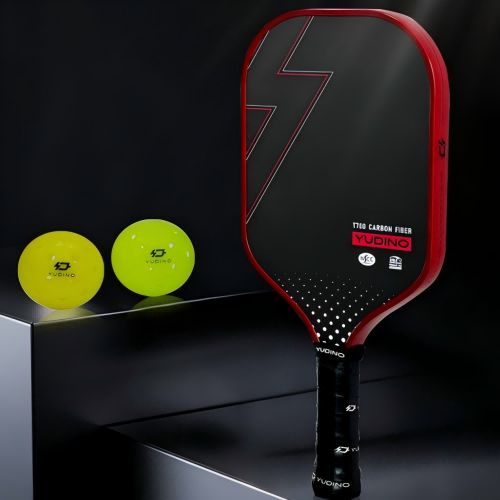
Wide Body: Why Forgiveness Is a Performance Feature
The wide-body shape's reputation as a "beginner paddle" undersells it. Many advanced doubles players, particularly those who specialize in the non-volley zone, deliberately choose wide body paddles because the enlarged face gives more margin on reflex volleys and fast-hands exchanges where setup time is near zero.
A wider face also keeps the center of gravity lower, which some players find easier to reset quickly between shots — critical for dinking sequences and reset play at the kitchen line.
A thermoformed pickleball paddle in a wide-body configuration benefits especially from single-mold construction. Because the face is wider and the stress at impact is spread across more surface area, a seamlessly thermoformed edge holds up better than a taped laminate edge on a wide body, where edge contact during aggressive lateral play happens more often.
Where Wide Body Excels
Doubles play and net-heavy game styles
Players still developing consistent contact point
Defensive play, resets, and blocking
Beginners who need a margin for error without sacrificing quality construction
Elongated: Reach, Leverage, and Power With a Learning Curve
The extra length on an elongated paddle is not just about aesthetics. It functions as a longer lever, which means more swing speed and more power generated per unit of effort — similar to how a longer bat generates more exit velocity in baseball. For players who play more from the baseline, who rely on powerful drives, or who cover court alone in singles play, that leverage is a genuine competitive advantage.
The narrower face is the honest tradeoff. Off-center contact — anything toward the toe or the edges — will telegraph more noticeably to the player and result in more error compared to a wide body. Players who choose elongated paddles are implicitly committing to consistent, well-timed contact as a baseline skill.
On a quality thermoformed pickleball paddle in an elongated shape, the mold must account for the longer flex profile — the top third of the face sees more stress concentration on toe hits, which means edge seal integrity and uniform layer compression across the full length matter more here than on any other shape. A manufacturer that hand-laminates an elongated paddle face rather than hot-pressing it as one unit is more likely to show delamination at the tip over time.
Where Elongated Excels
Singles play, where reach and power are primary
Baseline-heavy players and those with strong technique
Serves and drives where swing leverage adds real pop
Taller players who benefit from extended reach naturally
How Thermoformed Construction Changes the Equation for Both Shapes
This is worth saying plainly: a mediocre shape choice in a high-quality thermoformed pickleball paddle will outperform a theoretically ideal shape in a poorly constructed paddle. Construction sets the ceiling; shape determines how close to that ceiling the player can perform.
In a properly thermoformed pickleball paddle — where the face, core, and edge are pressed as a single unit rather than assembled in layers — both wide body and elongated shapes deliver more consistent weight distribution than their laminated equivalents. The hot-press process removes air pockets, equalizes layer adhesion, and fuses the PP honeycomb core to the carbon face more uniformly, which gives both shapes a more predictable sweet spot rather than one that varies unit to unit.
For buyers sourcing multiple shape variants, this means that a supplier managing their own in-house molding press — with shape-specific molds and controlled production tolerances — is the factor that makes the "vs" in wide body versus elongated a meaningful comparison rather than a lottery. When mold precision is inconsistent, two paddles of the same shape from the same batch can feel different in hand, which erodes trust in a product line regardless of how well the shape is marketed.
What Players Actually Ask When Choosing Between the Two
Is an elongated paddle harder to control? Yes, initially. The smaller, higher sweet spot requires more consistent contact technique. Most players find a 2–4 week adjustment period before the shape starts working for them rather than against them.
Can a wide-body paddle generate enough power for competitive play? Absolutely. Power comes from swing speed, technique, and core responsiveness — not shape alone. A wide-body thermoformed pickleball paddle with a dense carbon face and a properly tensioned PP core generates more than enough power for competitive play.
Which shape is better for singles? Elongated is the more common choice for singles given the reach advantage and power leverage, but it's not a strict rule. Player preference and technique matter more than shape alone.
Does paddle shape affect spin generation? Shape has less influence on spin than face texture and carbon weave. A 3K textured carbon face generates more spin regardless of whether it's in a wide body or elongated profile.
Which shape is easier to carry across a product line? Both. Most established product lines carry both shapes in the same material spec — same carbon grade, same core thickness — so buyers and end consumers can choose based on playstyle rather than budget.
Final Thoughts
Wide-body and elongated pickleball paddles are not competing for the same player — they're designed for fundamentally different playing styles and priorities. Wide body offers a forgiving, fast-resetting tool for net play and developing players; elongated offers reach, leverage, and power for experienced players with consistent technique. Neither shape outperforms the other across the board, and smart paddle lines carry both.
What ties them together is construction quality. A well-executed thermoformed pickleball paddle in either shape — built with a shape-specific mold, hot-pressed as a seamless unit, and made with a matched carbon face and honeycomb core — will deliver on its shape's promise reliably and repeatedly. A poorly built paddle of either shape will disappoint regardless of what the label says. For anyone evaluating paddles to carry or source at scale, the shape conversation and the manufacturing quality conversation need to happen at the same time.
FAQ
Is a wide body or an elongated paddle better for beginners?
A wide body is generally the better starting point. The larger sweet spot is more forgiving on off-center contact, which is common while players are still developing consistent timing and technique.
Do elongated paddles meet official size regulations? Yes — elongated paddles are designed to stay within the combined length-plus-width limit set by governing bodies. The shape redistributes the allowance toward length, not around it.
Can the same thermoformed pickleball paddle be offered in both shapes?
Yes. Manufacturers using shape-specific molds can produce the same material spec — same carbon grade, same PP honeycomb core — in both wide body and elongated profiles, which makes it practical to carry both as variants within a single product line.
What MOQ is typical for ordering multiple shapes?
This varies by manufacturer, but suppliers with flexible production runs can often accommodate mixed-shape orders at competitive minimums, which makes it practical to test both profiles before committing to a primary SKU.
How do I verify a supplier's mold precision across different shapes?
Request samples of both shapes and check weight consistency within the same shape across multiple units. Significant variation between paddles of the same shape from the same batch is a reliable indicator of mold or process inconsistency.