18K vs 12K vs 3K Carbon Fiber Pickleball Paddles: A Complete Buyer's Guide
When sourcing pickleball paddles at scale — whether for distribution, private label, or club supply — few specs generate more questions than carbon fiber weave count. The numbers 3K, 12K, and 18K appear across product listintice, and what the differences mean when you're making a bulk purchasing decision.
What Does the K Number Mean in Carbon Fiber?
The "K" in 3K, 12K, and 18K stands for thousands — specifically, the number of individual carbon filaments bundled together into a single tow (strand) of the weave.
1. 3K = 3,000 filaments per tow
2. 12K = 12,000 filaments per tow
3. 18K = 18,000 filaments per tow
A lower K-count means finer, more tightly packed fiber bundles. A higher K-count means larger, thicker bundles woven into a broader pattern.
In practical terms: the K-count changes how the fiber is woven across the face of the paddle, which changes the surface texture, the structural density of the carbon sheet, and — critically — how the paddle face interacts with the ball at contact.
This is not a "higher is better" scale. Each weave serves a different performance purpose.
3K Carbon Fiber: Precision Texture, Fine Control Surface
A 3K weave uses the finest bundles, producing a tight, dense surface pattern where each individual tow is narrow. Under close inspection, a 3K carbon face looks like a finely woven fabric — the texture is subtle but uniform.
Performance Characteristics
The tighter weave of a 3K face creates a surface with consistent micro-texture across the entire hitting area. That uniform roughness generates reliable contact friction, which translates to better directional spin control — the ball grips predictably across the sweet spot and edges alike.
For players focused on placement, dink precision, and third-shot drops, 3K carbon is a well-regarded choice. The face gives feedback without introducing unpredictable variation.
What It Means for Buyers
3K paddles are typically positioned at the mid-market price point. The surface finish is clean and visually distinctive — the small, regular diamond-like weave pattern photographs well and appeals to buyers who prioritize a premium appearance alongside solid performance.
3K is a practical choice for club sets, training programs, and distribution lines where consistent quality across a broad player base matters more than specialization for elite play. Minimum order runs for 3K-faced paddles tend to be more accessible, and surface printing (custom logos, brand colors via UV printing) adheres cleanly to 3K faces.
12K Carbon Fiber: Balanced Performance and Versatile Application
Moving up to 12K, the tow bundles are four times as thick as 3K, producing a more pronounced texture with a slightly coarser, larger weave pattern. The "cross-hatch" pattern is more visible, and the surface has more physical depth.
Performance Characteristics
The larger weave of a 12K face creates increased surface area at the point of contact. More texture means more ball engagement — 12K paddles typically generate higher spin potential than 3K paddles, because the coarser surface catches and grips the ball with greater friction before it leaves the face.
This comes with a trade-off: the texture is more aggressive. Players who rely on touch and soft reset shots find 12K paddles slightly less forgiving on delicate dinks, where the extra surface grip can add unintended spin to otherwise neutral balls.
For competitive players with developed technique, 12K offers a spin advantage that becomes meaningful in extended rallies and serve return situations.
What It Means for Buyers
12K carbon paddles occupy the premium tier of most retail and distribution lines. They appeal to performance-focused players who understand paddle specs and shop intentionally. Private label brands targeting the intermediate-to-advanced recreational segment find 12K a strong face material for flagship models.
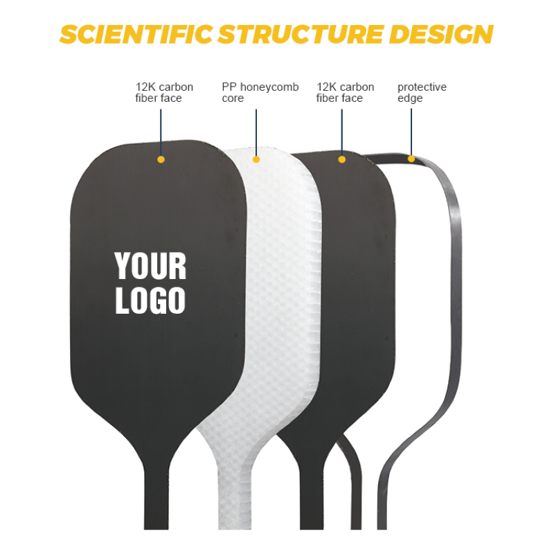
From a manufacturing standpoint, 12K carbon sheet material is readily available and cost-effective at scale, making it a practical centerpiece of a product line. Bulk orders of 12K-faced paddles offer strong margin opportunities when positioned correctly against retail competition.
18K Carbon Fiber: Maximum Texture, Engineered for Spin Specialists
18K is the most texturally aggressive carbon weave used in mainstream pickleball paddle manufacturing. The individual tows are six times the size of 3K bundles, creating a deeply pronounced surface pattern with significantly more physical relief — the peaks and valleys across the face are large enough to be felt with a fingertip.
Performance Characteristics
The coarse, high-relief texture of 18K carbon maximizes contact friction. At the moment of ball impact, the face engages more of the ball's surface with more texture depth, producing the highest spin generation of the three weaves. Players can create sharper angles, heavier topspin, and more aggressive slice with less stroke effort.
The power and spin advantages of 18K come with an important design consideration: the pronounced texture means less inherent "dampening" on touch shots. An 18K paddle is a tool for players who want to generate spin intentionally, not one that compensates for poor technique.
That said, when paired with the right core — particularly a thermoformed polypropylene honeycomb in the 14–16mm range — 18K faces produce a paddle with exceptional overall versatility: the core absorbs and controls, the face generates and spins.
What It Means for Buyers
18K pickleball paddles sit at the top of the performance and price tier. They are the right choice for serious competitive players and for distribution lines targeting the enthusiast segment rather than beginners.
For private label brands, 18K paddles provide strong positioning in a premium category. The visual texture of an 18K carbon face is distinctive and immediately communicates performance intent — it looks like a serious paddle before anyone hits a ball with it.
Titanium Carbon Fiber: A Hybrid Worth Understanding
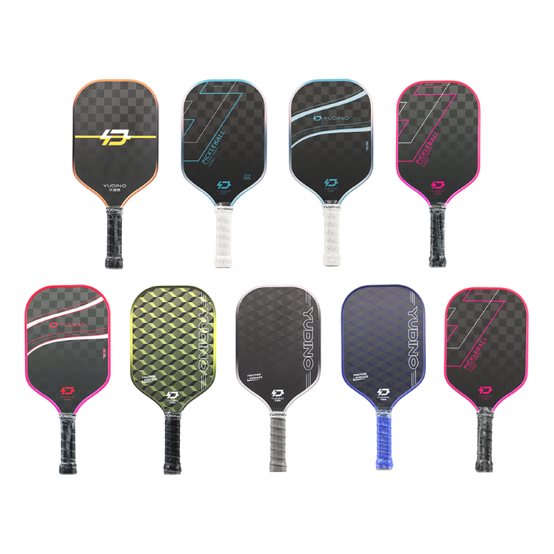
Some manufacturers — including YUDINO — offer titanium carbon fiber as a premium material variant, distinct from the standard 3K/12K/18K classification.
Titanium carbon fiber incorporates titanium alloy elements into the carbon fiber composite, enhancing structural rigidity and impact resistance. The result is a face that maintains carbon fiber's spin-generating texture while adding durability characteristics that pure carbon fiber constructions can lose over time with repeated hard impacts.
For buyers supplying competitive environments, clubs with high-frequency paddle use, or premium distribution lines where product longevity affects brand reputation, titanium carbon fiber represents a meaningful upgrade over standard carbon weaves. It is not simply a marketing designation — the material difference is measurable in the paddle's long-term consistency and structural integrity.
Side-by-Side Comparison
| Feature | 3K Carbon | 12K Carbon | 18K Carbon | Titanium Carbon |
| Filament bundle size | Fine | Medium | Large | Premium composite |
| Surface texture | Subtle, uniform | Pronounced | Coarse, deep | Variable |
| Spin generation | Moderate | High | Very high | High + durable |
| Touch/control feel | Excellent | Good | Requires technique | Excellent |
| Visual appearance | Fine diamond weave | Bold cross-hatch | Heavy weave pattern | Premium finish |
| Target player level | All levels | Intermediate–Advanced | Advanced–Competitive | Advanced–Professional |
| Typical price positioning | Mid-market | Premium | Premium–Top tier | Top tier |
| Best for bulk buyers | Club sets, training lines | Performance retail | Competitive retail | Premium private label |
Which Carbon Weave Should You Order?
There is no universally "correct" answer — the right choice depends on your buyer segment, price positioning, and brand identity.
Order 3K if: You're building a mid-market or entry performance line, supplying clubs or training programs, or want consistent quality at accessible price points. 3K gives you a clean, reliable carbon paddle that satisfies a broad audience.
Order 12K if: Your core customer is the performance-focused recreational player who shops with some knowledge of paddle specs. 12K is the workhorse of premium distribution lines and performs exceptionally well in side-by-side retail comparisons.
Order 18K if: You're targeting the competitive or enthusiast segment and want to lead on spin performance. 18K is a strong choice for brands building around measurable performance advantages.
Order Titanium Carbon Fiber if: Durability and long-term consistency are as important as initial performance — particularly relevant for club supply contracts, tournament procurement, and premium private label positioning where paddle longevity affects your brand reputation.
Working With a Manufacturer on Carbon Fiber Selection
Not all manufacturers offer all four options, and material selection is only part of the equation. The quality of the carbon sheet, the thermoforming process used to bond the face to the core, and the consistency of the surface finish across a production run matter as much as the K-count specification.
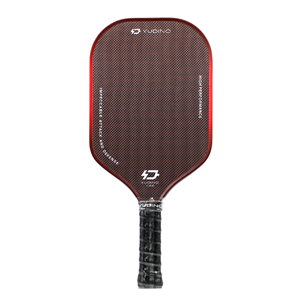
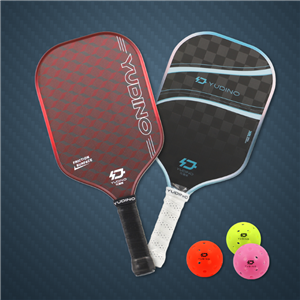
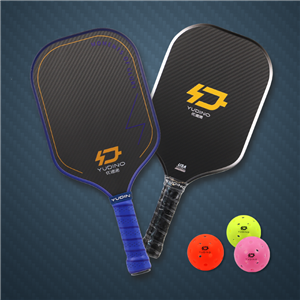
YUDINO produces paddles across all four carbon fiber variants — 3K, 12K, 18K, and titanium carbon — using a thermoformed manufacturing process where the carbon face and polypropylene honeycomb core are hot-pressed as a single integrated unit. This eliminates the adhesion variability that affects layered construction methods, and ensures the spec you approve on your sample paddle is what you receive at scale.
Customization options include face material selection, core thickness (13mm / 14mm / 16mm), paddle shape (standard, elongated, square, round), weight category, grip size and material, and full surface printing. USA Pickleball certification is available for models intended for sanctioned play and competition supply contracts.
Frequently Asked Questions
Q: Is 18K carbon fiber always better than 12K or 3K?
A: No. "Better" depends on the player's skill level and playing style. 18K generates more spin but requires technique to control. 3K and 12K are more forgiving and better suited to a wider range of players. For bulk buyers, matching the weave to your customer segment matters more than chasing the highest number.
Q: Does a higher K-count mean the paddle is more durable?
A: Not necessarily. Durability in a carbon fiber paddle is determined more by the quality of the carbon sheet material and the manufacturing process (thermoformed vs. cold-pressed) than by K-count alone. Titanium carbon fiber composite is generally the most durable option.
Q: Can I mix weave types in the same bulk order?
A: Yes. Most manufacturers — including YUDINO — can produce multiple SKUs within a single order, allowing you to build a product line with entry, mid, and premium tiers using different carbon specifications.
Q: What is the typical MOQ for carbon fiber pickleball paddles?
A: MOQ varies by manufacturer and customization level. For stock models, smaller quantities are typically available. For fully custom private label paddles with specific materials and branding, MOQ typically starts at 100–300 units per model. Contact YUDINO directly for current minimums and lead times.
Q: Are all carbon fiber pickleball paddles USA Pickleball approved?
A: No. USA Pickleball certification requires specific testing and application by the manufacturer. When sourcing for competitive or sanctioned play environments, always verify that the specific model — not just the brand — carries current certification.
YUDINO manufactures 3K, 12K, 18K, and titanium carbon fiber pickleball paddles with full OEM and private label support. Request a product sample or wholesale quote →