How to Choose the Right Pickleball Paddle Weight for Your Playing Style
Choosing the right pickleball paddle is one of the most important decisions for players of every skill level. While materials, paddle shape, and core thickness all influence performance, paddle weight often has the greatest impact on how the paddle feels during play.
Many beginners focus only on paddle appearance or surface material, but experienced players know that even a difference of 10–20 grams can significantly affect swing speed, power, control, and arm comfort.
If you're unsure which paddle weight best suits your game, this Pickleball Paddle Weight Guide explains the advantages and disadvantages of lightweight, midweight, and heavyweight paddles, helping you make an informed choice.
Why Paddle Weight Matters
Paddle weight directly influences how a paddle performs during every shot.
A heavier paddle naturally generates more momentum, making it easier to produce powerful drives and deep baseline shots. On the other hand, a lighter paddle allows faster reactions and better maneuverability, especially during fast-paced net exchanges.
Weight also affects:
Swing speed
Shot consistency
Ball control
Player fatigue
Wrist and elbow comfort
Overall playing experience
Selecting the right weight is not about choosing the heaviest or lightest option—it's about finding the best balance for your playing style.
Understanding Pickleball Paddle Weight Categories
Although manufacturers use slightly different classifications, paddles generally fall into three weight ranges.
Paddle Weight | Metric | Best For |
Lightweight | Under 220 g | Beginners, juniors, players prioritizing control and quick hands |
Midweight | 220–240 g | Most recreational and competitive players |
Heavyweight | Over 240 g | Advanced players seeking maximum power |
At YUDINO, custom paddle weights are available from 220 g to over 240 g, allowing brands and OEM customers to meet the preferences of different markets and player groups.
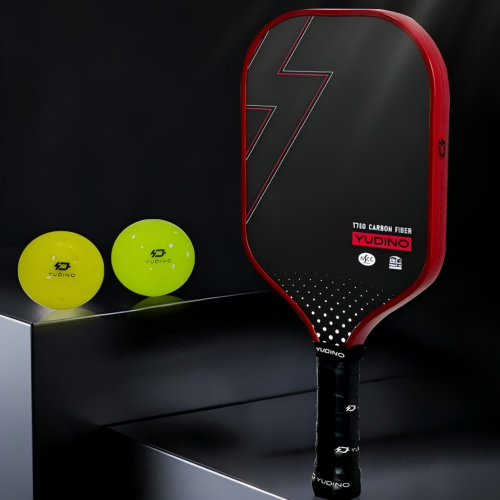
Lightweight Pickleball Paddles (Below 220 g)
Lightweight paddles are designed for speed and maneuverability.
Their reduced mass makes them easier to swing, allowing players to react quickly during rapid volleys and kitchen exchanges.
Advantages
Faster Hand Speed
Less weight means quicker reactions at the net.
Players can block, volley, and reset shots more efficiently during fast rallies.
Reduced Arm Fatigue
A lighter paddle places less stress on the wrist, forearm, and shoulder during long matches.
This makes lightweight paddles especially suitable for:
Beginners
Junior players
Senior players
Players recovering from arm injuries
Improved Control
Because lightweight paddles are easier to maneuver, many players feel they have greater precision when placing the ball.
Limitations
Since momentum is lower, players must generate more swing speed to produce powerful shots.
This can make hard drives and overhead smashes more physically demanding.
Midweight Pickleball Paddles (220–240 g)
Midweight paddles are the most popular category among players of all skill levels.
They provide an excellent balance between power and control, making them suitable for nearly every playing style.
Advantages
Balanced Performance
Midweight paddles deliver enough mass for solid power while remaining quick enough for defensive play.
Better Stability
The additional weight helps reduce paddle twisting on off-center hits, resulting in more consistent shot performance.
Suitable for Most Players
Whether you're playing doubles, singles, or recreational games, midweight paddles offer versatility across different situations.
Because of this balance, many OEM brands choose the 220–240 g range as their standard product specification.
Heavyweight Pickleball Paddles (Over 240 g)
Heavy paddles are designed for players who prioritize power.
With greater mass behind each shot, less effort is required to generate ball speed.
Advantages
Increased Power
The paddle transfers more energy to the ball, making drives, serves, and overhead shots more powerful.
Greater Shot Stability
Heavier paddles absorb impact more effectively, providing a solid feel during aggressive play.
Better Performance for Strong Players
Experienced players with developed technique often appreciate the additional power and stability.
Limitations
The extra weight can slow hand speed during fast exchanges at the kitchen.
Long matches may also cause increased wrist, elbow, or shoulder fatigue if the paddle is too heavy for the player.
How Paddle Weight Affects Arm Fatigue
Many players underestimate how paddle weight influences physical comfort.
A paddle that is too heavy requires more effort to accelerate and stop throughout every rally.
Over time, this repetitive strain can contribute to muscle fatigue and discomfort.
Conversely, a paddle that is too light may require players to swing harder to generate sufficient power, which can also increase fatigue over long playing sessions.
The ideal paddle weight minimizes unnecessary effort while matching the player's strength and swing mechanics.
How Paddle Weight Influences Power
Power comes from the combination of swing speed and paddle mass.
Generally:
Heavier paddles create more momentum.
Lighter paddles rely more on player-generated swing speed.
However, heavier is not always better.
If a paddle becomes difficult to control or slows the player's swing, the additional weight may actually reduce overall performance.
Finding the right balance is more important than simply choosing the heaviest option.
How Paddle Weight Affects Control
Control depends on how comfortably a player can maneuver the paddle.
Lightweight paddles excel during:
Soft dinks
Quick volleys
Fast defensive reactions
Midweight paddles provide a balance between precision and stability.
Heavyweight paddles often deliver better stability on hard shots but may reduce reaction speed during rapid exchanges.
Different playing styles require different priorities.
Which Paddle Weight Fits Your Playing Style?
Control-Oriented Players
If your game focuses on precision, placement, and quick reactions, a lightweight paddle may be the ideal choice.
Recommended weight:
Under 220 g
All-Around Players
Players who enjoy a balanced combination of offense and defense typically benefit from a midweight paddle.
Recommended weight:
220–240 g
Power Players
Aggressive players who rely on strong serves, drives, and put-away shots often prefer heavier paddles.
Recommended weight:
240 g and above
YUDINO's Custom Paddle Weight Solutions
As a professional pickleball paddle manufacturer, YUDINO understands that different markets and player groups have different performance requirements.
We offer customizable paddle weights ranging from 220 g to over 240 g, supporting OEM and ODM projects for brands, distributors, and sporting goods retailers worldwide.
Our engineering team can tailor paddle weight by optimizing:
Carbon fiber layup
Core thickness
Edge guard design
Balance point
Handle construction
This allows customers to create products that match their target market while maintaining consistent quality and performance.
Choosing the right paddle weight is about more than personal preference—it directly influences power, control, reaction speed, and long-term playing comfort.
Lightweight paddles offer excellent maneuverability, midweight paddles provide balanced all-around performance, and heavyweight paddles deliver greater power for aggressive players.
Whether you're developing a beginner-friendly product line or a premium performance paddle, selecting the appropriate weight is essential for meeting player expectations.
With customizable weight options from 220 g to 240 g+, YUDINO helps brands create pickleball paddles that combine performance, durability, and market appeal for players around the world.