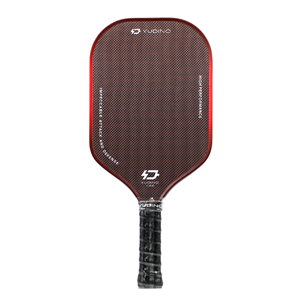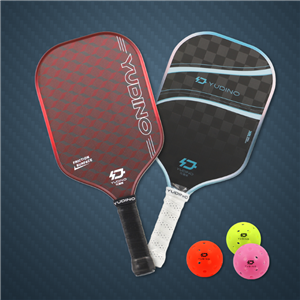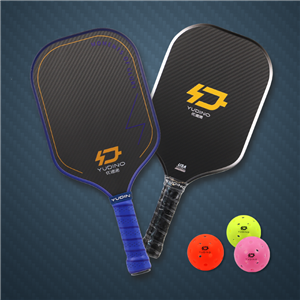
Carbon Fiber Pickleball Paddle T700 Guide
The definitive technical guide to T700 carbon fiber paddles — what the grade means, why it matters, and how to choose the right T700 paddle for your game.
Introduction: When "Carbon Fiber" Is Not Enough of an Answer
Ask any experienced pickleball player what material their paddle is made from, and "carbon fiber" is the answer you will almost always get. Ask a follow-up question — what grade of carbon fiber? — and the conversation usually stalls. Most players do not know the answer. Many manufacturers do not specify it. And the paddle market, which has largely converged on "carbon fiber" as the premium material descriptor, has allowed the enormous quality variation within that category to remain invisible to buyers.
That quality variation is real, significant, and measurable. Not all carbon fiber is the same material. The mechanical properties of carbon fiber composites differ substantially based on the specific fiber grade used in production — tensile strength, stiffness modulus, fiber diameter, surface chemistry, and manufacturing consistency all vary by grade. A paddle built with commodity-grade carbon fiber performs differently, wears differently, and feels different from a paddle built with Toray T700 standard carbon fiber — even if both are accurately labeled "carbon fiber" on the packaging.
T700 is a designation from Toray Industries, Japan — the world's largest carbon fiber manufacturer and the supplier whose grading system has become the de facto reference standard for industrial and performance carbon fiber. The T700 grade specification defines precisely controlled fiber properties: tensile strength of 711 ksi (4,900 MPa), tensile modulus of 33.4 Msi (230 GPa), and a fiber diameter that ensures consistent weave geometry in finished composites. These are not marketing numbers — they are engineering specifications that translate into measurable performance differences in the finished carbon fiber pickleball paddle.
This guide explains everything you need to know about T700 carbon fiber in pickleball applications: what the specification means in material science terms, how it translates to on-court performance, what to look for when buying a T700-grade carbon fiber pickleball paddle, what mistakes to avoid, and why the YUDINO T700 paddle range represents the application of genuine engineering discipline to performance paddle production. Whether you are an individual player ready to invest in specification-grade equipment or a wholesale or OEM buyer establishing quality standards for a performance paddle line, this guide gives you the technical foundation to make an informed decision.
Part One: Understanding T700 — The Material Behind the Label
The Toray Grading System: Where T700 Comes From
Toray Industries developed carbon fiber in the 1970s and has since built a grading system that classifies carbon fiber by tensile strength, tensile modulus, and elongation to failure. The system uses a letter-number designation — T300, T700, T800, T1000 — where higher numbers indicate higher tensile strength. The "T" prefix designates "Toray standard modulus" fiber, as distinct from intermediate modulus (IM) or high modulus (HM) grades.
In the Toray standard modulus series:
| Grade | Tensile Strength | Tensile Modulus | Primary Application |
| T300 | 529 ksi (3,650 MPa) | 33.4 Msi (230 GPa) | Early generation composites, commodity structural applications |
| T700 | 711 ksi (4,900 MPa) | 33.4 Msi (230 GPa) | Industrial, sports, moderate aerospace, pressure vessels |
| T800 | 841 ksi (5,800 MPa) | 42.1 Msi (290 GPa) | Aerospace structures, high-performance sports equipment |
| T1000 | 1,014 ksi (6,990 MPa) | 42.1 Msi (290 GPa) | Ultra-high performance aerospace, advanced military |
For pickleball paddle applications, T700 sits at the engineering sweet spot: substantially stronger and more consistent than T300 (the grade most commonly used in commodity sporting goods applications), while avoiding the cost premium of T800 and T1000 that provides diminishing returns in paddle-scale applications.
The critical point for buyers: T700 is a real engineering specification, not a marketing claim. Manufacturers who specify T700 carbon fiber are claiming their product meets Toray's documented fiber properties. Those who simply label paddles "carbon fiber" without grade specification may be using T300, mixed-grade material, or undefined industrial carbon fiber that may not consistently meet any specific grade standard.
What T700's Tensile Strength Means in a Paddle
T700's tensile strength of 711 ksi — approximately 35% higher than T300's 529 ksi — translates to the paddle face in several practical ways:
Structural integrity under impact: A paddle face made with T700 fiber resists delamination and surface cracking under the cyclic impact loading of repeated ball contact more effectively than lower-grade fiber. The higher tensile strength means the fiber-matrix bond remains intact under more extreme stress events — hard overheads, edge hits, and accidental impacts against the court or barriers.
Surface durability: The higher fiber strength contributes to better resistance against surface abrasion at the fiber level. On raw or lightly finished surfaces where the fiber is exposed to direct ball contact, T700's fiber integrity maintains surface texture and paddle performance longer than lower-strength fiber that wears more quickly.
Consistent deflection behavior: The higher strength fiber allows the composite to be designed with thinner face sheets that still meet structural requirements. Thinner face sheets, all else equal, respond more crisply to ball contact — the face deflects less under impact, which means more energy is returned to the ball rather than absorbed in face deformation.
Why Modulus Matters as Much as Strength
T700 and T300 share the same tensile modulus (33.4 Msi / 230 GPa), which is why T700 is classified as a "standard modulus" fiber despite its higher strength. The modulus — also called stiffness — determines how much the material deforms under a given load. Higher modulus materials are stiffer; lower modulus materials flex more.
For pickleball paddles, the modulus of the face material determines:
Ball dwell time: Stiffer faces deflect less under ball impact, resulting in shorter contact duration. Shorter dwell time generally means faster ball exit velocity (more power on drives) but slightly less time for the player to influence ball direction during contact.
Power transfer efficiency: Standard modulus carbon fiber (T700) provides excellent power transfer efficiency for most stroke types — stiff enough to return energy efficiently, while remaining within the range where the player retains meaningful control over shot trajectory and placement.
The intermediate modulus trade-off: Higher-modulus fibers like T800 and T1000 are stiffer but also more brittle at the same face thickness. For paddle applications, T700's standard modulus actually represents a better engineering balance than ultra-high-modulus alternatives, because the face can absorb minor impact variation without stress fracturing while still providing excellent energy return.
Manufacturing Consistency: The Invisible T700 Advantage
Beyond the strength and modulus specifications, T700 grade fiber offers a manufacturing consistency advantage that is particularly relevant for pickleball paddle production:
Tighter fiber diameter tolerance: T700 fiber is produced to tighter dimensional tolerances than commodity carbon fiber. More consistent fiber diameter means more uniform weave geometry, more predictable resin uptake during lamination, and more consistent mechanical properties across the entire paddle face.
Controlled surface chemistry: T700 fiber has a standardized surface treatment (sizing) that optimizes the adhesion between the carbon fiber and the epoxy matrix resin. Consistent fiber-matrix adhesion means the composite behaves as a unified material rather than exhibiting weak points where fibers are incompletely bonded — which would manifest as dead spots or inconsistent response on the paddle face.
Batch-to-batch consistency: Toray-grade carbon fiber is produced to specifications that are verified at the fiber manufacturing stage. This means a paddle manufacturer using genuine T700 fiber can expect consistent material properties across production batches — essential for producing paddles that perform the same way at the beginning and end of a manufacturing run.
For OEM buyers and wholesale purchasers who need their paddle product to perform consistently from unit to unit across a production order, this batch consistency is not an abstract quality parameter — it is the difference between a product line that maintains its reputation and one that generates inconsistent customer experiences.
Part Two: T700 on the Court — How Fiber Grade Affects Play
The Feel of T700: Precision Without Harshness
Players who have used multiple carbon fiber pickleball paddle types — including paddles built with commodity-grade carbon — consistently describe T700 paddles in similar terms: precise, responsive, and consistent across the face.
Precision: Because T700 fiber produces a more uniform face material with fewer dead spots and mechanical inconsistencies, the paddle face responds more predictably to every ball contact. Players report a stronger sense of knowing exactly what the ball is going to do after contact — where it will go, how hard it will leave the face, what spin it will carry. This predictability is the practical expression of the material consistency that T700 engineering provides.
Responsiveness: The higher tensile strength of T700 allows face sheets to be tuned for crisp energy return without the brittleness risk that afflicts higher-modulus alternatives. The contact feel is described as "alive" — there is clear tactile feedback from every shot, including information about whether the contact was centered, off-center, or on the edge of the sweet spot.
Consistency across the face: Lower-grade carbon fiber composites often have a noticeable sweet spot — a region where the face responds ideally — surrounded by areas where feel and performance drop off noticeably. T700's material uniformity produces a more even response across the face surface. Players who contact the ball slightly off-center on a T700 paddle experience a smaller performance penalty than on lower-grade alternatives.
A player on a Quora discussion about paddle upgrade decisions described their T700 experience: "I've been playing competitive 4.5 level for three years. When I switched to a T700 paddle, the most noticeable thing wasn't more power or more spin — it was that I had more information on every shot. I knew when I hit it perfectly and I knew when I didn't, and that information helped me fix my technique faster than anything else I'd done. The paddle felt honest."
Power Performance: Efficient Energy Return
The carbon fiber pickleball paddle T700 configuration delivers power characteristics that reflect its standard modulus construction. The face stiffness is sufficient to return impact energy efficiently without the face acting as a shock absorber, producing consistent ball exit velocities on drive shots and overheads.
In practical terms: on a hard drive from the baseline, a T700 paddle face deflects briefly under impact, stores elastic energy, and returns it to the ball as the face springs back. The efficiency of this energy return is high because the fiber-matrix bond integrity of T700 composite ensures the face structure behaves as designed — no weak bonds or fiber misalignments that would cause localized energy dissipation.
Comparison with lower-grade carbon: players who upgrade from commodity-grade "carbon fiber" paddles to genuine T700 paddles frequently report perceived improvement in drive power — not because T700 provides more energy (the energy comes from the player's swing), but because T700 returns a higher percentage of that energy to the ball instead of losing it in structural inefficiency. The ball travels farther and faster on the same swing because more of the swing energy reaches the ball.
Spin Generation: Surface and Fiber Interaction
T700 carbon fiber's surface chemistry and fiber geometry create a specific type of ball interaction that contributes to spin generation beyond what the weave pattern alone determines.
At the fiber level, T700's controlled surface treatment creates a composite face surface that maintains consistent friction characteristics. This consistency is particularly important for spin generation because topspin, backspin, and sidespin all depend on repeatable ball-surface interaction — the player needs the ball to respond the same way to a particular brushing contact every time.
On T700 paddles with raw or minimally finished surfaces (see the Raw Carbon Fiber article in this series), the fiber geometry is fully expressed. T700's tighter fiber diameter tolerance means the weave peaks and valleys — the structures that grip the ball during spin strokes — are more regularly spaced and more uniformly shaped than on commodity carbon. This geometric regularity creates more predictable spin generation: the same brushing motion produces the same spin result, allowing players to build repeatable spin patterns into their shot-making.
Players who deliberately use spin as a strategic weapon — topspin drives that dip quickly after the apex, heavy-slice drops that skid through the kitchen, sidespin dinks that pull opponents out of position — benefit specifically from this T700 consistency in the spin generation mechanism.
Durability: The Long-Game Advantage
One of the most significant practical advantages of T700 carbon fiber in paddle production is durability — both structural durability (resistance to damage) and performance durability (maintenance of performance characteristics over time).
Structural durability: T700's higher tensile strength means the fiber is more resistant to breaking under impact loading. In a paddle face that absorbs thousands of ball impacts per session, fiber micro-cracking and delamination initiation are real failure mechanisms that degrade performance over time. T700 fiber delays the onset of these degradation mechanisms relative to lower-strength alternatives.
Surface performance durability: The fiber surface treatment on T700 maintains better long-term adhesion between fiber and matrix resin. As a paddle ages and the face undergoes repeated thermal and mechanical cycling, fiber-matrix debonding can create dead spots where the composite no longer behaves as designed. T700's superior adhesion characteristics resist this degradation.
Practical implication for serious players: A T700 carbon fiber pickleball paddle from a quality manufacturer maintains its performance characteristics through months of regular competitive play. Players and coaches who invest in quality equipment and expect it to perform at the same level in month 8 as in month 1 need fiber grade consistency — which T700 delivers.
For club programs, coaching operations, and competitive players who log significant paddle hours, this durability converts directly into lower total cost of ownership: fewer paddle replacements per year, less performance-driven equipment churn, and a more stable player experience over the equipment lifecycle.
Part Three: T700 Weave Options — Choosing the Right Pattern
How Weave Pattern Interacts with T700 Grade
T700 carbon fiber is available in the same weave configurations used across the carbon fiber paddle market: 3K, 12K, and 18K. The weave pattern and the fiber grade are independent specifications — both must be chosen together to define the full face material specification.
The interaction between T700 grade and weave pattern produces a specific performance envelope for each combination:
T700 + 3K Weave: Precision Control
The 3,000-filament-per-bundle 3K weave creates the finest, most regular texture pattern of the standard pickleball paddle weaves. Combined with T700's manufacturing consistency, the 3K weave produces:
Surface appearance: Fine checkered pattern, the most "premium" looking weave in most markets
Texture level: Moderate — more texture than a coated surface, less aggressive than 12K or 18K raw
Feel character: Smooth and precise, with excellent feedback but not maximum surface aggressiveness
Spin potential: High (above coated alternatives), moderate relative to 12K and 18K
Control character: The smoothest contact feel among raw carbon options — best suited for players who prioritize placement precision over maximum spin generation
Best for: Control-oriented 4.0+ players; players transitioning from coated carbon to raw carbon who want to introduce the material incrementally; players whose primary spin tool is technique rather than surface aggressiveness.
T700 + 12K Weave: The Versatile Performance Standard
12,000 filaments per bundle creates a noticeably coarser weave than 3K — the crossover points are visible to the naked eye, and the surface texture is clearly more aggressive when felt against the palm. T700 12K is the most widely used specification in premium competitive paddle production because it balances performance categories effectively:
Surface appearance: Larger diamond or twill pattern, bold visual texture
Texture level: Medium-high — provides aggressive ball grip without being at the maximum
Feel character: Responsive and connected, with clear spin feedback on every brush contact
Spin potential: Very high — among the highest available within standard weave options
Control character: Excellent all-around control; the sweet spot is generous relative to 18K
Best for: Competitive 4.0–5.0 players who want a single paddle to serve all game situations effectively; OEM buyers targeting the serious performance retail segment; coaches who want one paddle specification for all advanced players in a program.
T700 + 18K Weave: Maximum Surface Engagement
18,000 filaments per bundle creates the coarsest weave surface of the three standard options. On T700 fiber, the 18K pattern's fiber geometry is expressed with the dimensional consistency that the T700 grade provides — the crossover peaks are regular, consistently shaped, and reliably spaced:
Surface appearance: Very pronounced, textured surface with high visual impact
Texture level: Maximum within standard weave options
Feel character: Highly engaged — the surface grips the ball noticeably on every contact, including soft dinks
Spin potential: Maximum achievable with standard weave construction, approaching USAPA surface limits
Control character: Requires good technique — the high surface engagement amplifies all contact, including imperfect ones
Best for: Elite 4.5–5.0 players who have built their game around spin-heavy patterns; players who play aggressively in all zones of the court and want maximum spin capability in every situation; OEM buyers targeting the elite performance segment.
Part Four: T700 Paddle Selection Guide — Parameters That Matter
Core Thickness and Its Effect on T700 Performance
The T700 carbon fiber face does not function in isolation — its performance is shaped by the core material and thickness it is bonded to. Understanding this interaction is essential for matching T700 paddle selection to playing style.
T700 Face on 14mm Core: Maximum stiffness and power response. The thin core transmits contact energy efficiently with minimal absorption. Combined with T700's high-integrity face construction, this produces the most direct, unfiltered connection between player input and ball output. Demanding and rewarding — best for technically advanced players who can exploit precision without needing forgiveness.
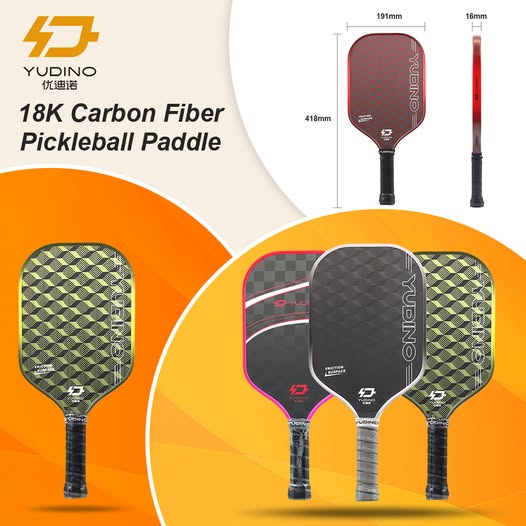
T700 Face on 16mm Core: The most popular configuration for competitive performance paddles. The 16mm polypropylene honeycomb core provides a degree of ball dwell that slightly moderates the contact — still responsive and precise, but with enough core give to make the paddle accessible to a wider range of 4.0+ players. This is the configuration YUDINO has optimized for its T700 performance line based on player feedback from multiple competitive environments.
T700 Face on 16–21mm Core: Counterintuitively, pairing the T700's precision face with a thicker core creates a paddle that excels in the kitchen game. The thick core extends dwell time, giving players more contact with the ball during drops and dinks — while the T700 surface still delivers superior spin generation compared to graphite or fiberglass paddles of equivalent core thickness. This configuration is increasingly valued as the game's elite level shifts toward kitchen dominance, where dwell-time control and spin precision in small-motion exchanges determine point outcomes.
Weight and Balance
Weight range for T700 carbon fiber pickleball paddle options typically spans 7.3–8.5 oz, with balance varying by construction.
For power-oriented players: 7.8–8.3 oz with slight head-heavy balance. The added weight in the hitting zone increases momentum on drives and overheads — on T700's efficiently transferring face, this additional momentum translates to noticeably harder ball exit velocity.
For control and kitchen players: 7.3–7.7 oz with balanced to handle-heavy weighting. Lighter overall weight enables faster hand speed at the net — critical for react-speed dink exchanges where 4.5+ players are making contact in fractions of a second. T700's surface precision allows even lighter paddles to generate effective spin because the surface grip compensates for lower mass.
For all-around players: 7.5–8.0 oz with neutral balance. The compromise range that serves the broadest player profile without compromising in either direction.
Paddle Shape: Standard vs. Elongated
Standard shape (wider, shorter): Larger sweet spot, more forgiving on off-center contact, faster hand speed due to lower moment of inertia. On a T700 face, the standard shape's forgiveness combines with the fiber grade's face consistency to produce a paddle that plays very well across the full face surface — making the most of T700's even response characteristics.
Elongated shape (narrower, longer): Higher moment of inertia, more reach for groundstrokes, more leverage for spin generation on full swings. On a T700 face, the elongated shape concentrates the paddle's mass in the hitting zone, which — with the T700 face's efficient energy return — produces maximum drive velocity. The tradeoff is a smaller sweet spot that rewards consistent contact point.
Handle Specifications for T700 Paddles
The handle is often treated as secondary to face material in paddle selection discussions — a mistake, because handle fit affects how effectively a player can exploit the T700 face's precision.
Handle length: For players who emphasize two-handed backhand drives and topspin in their game, longer handles (5.5–6 inches) provide the leverage to generate maximum swing speed — which, on a T700 raw or semi-raw face, translates to maximum spin. For players who prioritize the kitchen game and quick hand exchanges, standard handles (4.5–5 inches) allow faster wrist action and more compact stroke patterns.
Grip circumference: Smaller grip (4–4.25 inches) maximizes wrist and finger involvement in the stroke — helpful for spin generation techniques that rely on brush contact and face angle manipulation. Larger grip (4.25–4.5 inches) provides stability and reduces the tendency to over-rotate the wrist, which benefits players whose consistency is affected by excessive grip manipulation.
USAPA Compliance: Non-Negotiable for Competition
All T700 carbon fiber paddles intended for competitive tournament use must carry current USAPA approval. T700 paddles — particularly those with raw or lightly finished surfaces — approach the regulatory ceiling on surface texture, making compliance verification especially important. A T700 raw 18K paddle that exceeds USAPA surface limits would fail equipment inspection at a sanctioned tournament regardless of its other qualities.
Verify USAPA approval status for the specific paddle model and current production version through the official USA Pickleball approved paddle database before purchasing for competitive use.
Part Five: Buyer's Guide — T700 Paddles for Different Use Cases
Individual Players Upgrading to T700
The typical pathway to a T700 carbon fiber pickleball paddle goes through two or three prior paddle generations: recreational fiberglass or graphite → standard carbon fiber → T700. Players who reach this stage are serious about their game, play regularly, and have developed technique that allows them to exploit the material's precision.
Signs you are ready for T700:
You are playing 4.0 or above consistently
You regularly attend competitive club sessions or tournaments
Your spin game is intentional and reliable — you do not generate spin accidentally, you apply it deliberately
You have experimented with multiple paddles and can articulate specifically what you want to change about your current equipment
You are prepared to go through the brief adjustment period that always accompanies an upgrade to more precise equipment
Signs you are not yet ready:
Your primary equipment concern is reducing unforced errors, not maximizing performance ceiling
You have been playing for less than 6–12 months
Your game is predominantly recreational with no competitive objectives
Expected investment: Quality T700 carbon fiber paddles from manufacturers with genuine grade certification and consistent production quality range from $120–200 USD at retail. Below this range, "T700" labeling without material documentation should be viewed skeptically. Above this range, you may be paying for brand premium rather than material quality.
Club and Recreational Program Buyers
Programs purchasing T700 paddles for club use — competitive training groups, high-level recreational programs, travel teams — face considerations beyond individual player preference:
Durability across multiple users: T700's structural integrity makes it the right choice for equipment that will see intensive use from multiple players. The fiber quality maintains performance longer than commodity carbon under heavy-use conditions.
Consistency within the fleet: When a training program buys 20 T700 paddles, players need to be able to use any paddle in the fleet interchangeably without adjusting technique. T700's manufacturing consistency — both at the fiber level and in production from a quality manufacturer — is the technical foundation of fleet consistency.
Documentation for procurement programs: Larger club and institutional buyers increasingly require material documentation for equipment purchases — fiber grade certification, compliance testing results, quality system documentation. Manufacturers with genuine T700 production support this requirement; those without verifiable sourcing cannot.
Recommended specification for club programs: T700 12K, 16mm core, 7.6–8.0 oz, standard shape, USAPA approved. This specification serves the widest range of 3.5–5.0 players in a competitive club environment without requiring player-specific fitting.
OEM and Wholesale Buyers
For sports brands, distributors, and retailers sourcing T700 paddles for private-label or wholesale distribution, the decision framework extends beyond performance to include supply chain reliability, documentation standards, and customization capability.
Why T700 matters in OEM positioning: In the premium paddle segment, T700 designation has become a recognized quality signal among informed buyers — particularly in the US and European markets where performance paddle knowledge is most developed. OEM buyers who can accurately label their product "T700 carbon fiber" with supporting material certification are selling an honest, differentiable quality claim. Those who use the T700 label without verifiable sourcing are creating a liability when customers who know the difference investigate.
Documentation requirements for OEM T700: A complete T700 OEM order should include: fiber grade certification from the carbon fiber supplier (Toray or equivalent with comparable specifications), composite material test results confirming fiber-matrix properties in the finished paddle face, dimensional inspection records for face thickness and uniformity, USAPA compliance documentation for models designated for competition use, and ISO 9001 quality system compliance records from the manufacturer.
Customization scope for T700 OEM orders: With a manufacturer like YUDINO, T700 OEM orders support full face graphics customization (embedded in the carbon weave for a premium visual result), color treatment on edge guard and handle wrap, core thickness specification, handle length and grip size configuration, and custom packaging. The lead time for OEM T700 orders with structural customization (core thickness changes, handle modifications) is typically 6–8 weeks from sample approval to production completion.
Part Six: YUDINO T700 Carbon Fiber Paddle — Engineering Details
The T700 Product in YUDINO's Lineup
YUDINO's T700 carbon fiber paddle represents the application of material science discipline to a specific market need: serious competitive players and OEM buyers who require verified material quality, consistent production, and documented specifications — not marketing language.
The YUDINO T700 paddle is built on the following engineering decisions:
Fiber sourcing: T700 grade carbon fiber with documented fiber properties. YUDINO maintains material traceability from fiber sourcing through finished paddle production — a quality practice that commodity producers cannot support because they cannot verify their fiber grade at the purchase level.
Resin system: Aerospace-compatible epoxy matrix selected for T700 carbon fiber's specific surface chemistry (sizing). Correct resin-fiber matching is essential for achieving the adhesion quality that determines composite mechanical properties and long-term performance stability.
Curing parameters: Controlled temperature and pressure curing profiles that ensure complete and uniform resin cure across the paddle face. Incomplete or non-uniform curing creates localized weak zones in the composite — a quality failure mode that only manifests in play as dead spots or inconsistent feel, and that cannot be detected by visual inspection alone.
Face thickness control: The T700 face sheet thickness is controlled to tolerance across the paddle face surface, ensuring that the deflection behavior under ball impact is consistent from edge to edge. Face thickness variation — common in lower-quality production — creates feel variation across the face that players experience as an inconsistent sweet spot.
Surface options: YUDINO's T700 paddle is available in both raw surface and lightly finished surface configurations, allowing buyers to select the surface treatment that matches their target player profile without changing the underlying fiber grade. The raw T700 surface is produced under the surface handling protocols described in the Raw Carbon Fiber guide in this series.
Quality Assurance for T700 Production
YUDINO's quality system for T700 paddle production includes specific inspection steps not present in commodity carbon production:
Incoming fiber verification: Each batch of T700 fiber is verified against grade specification before entering production. This prevents grade substitution — the use of lower-grade fiber under a T700 material label — which is the most common quality failure mode in the carbon fiber paddle market.
In-process lamination monitoring: The fiber layup and resin impregnation steps are monitored for consistency. Variation in resin content (fiber-volume fraction) affects the mechanical properties of the finished composite — too much resin reduces stiffness; too little compromises adhesion. The target fiber-volume fraction is controlled and verified during production.
Post-cure mechanical verification: Finished face sheets are tested for mechanical properties before assembly. This step validates that the curing process achieved the designed composite properties — not just assumed them.
Final paddle inspection: Assembled paddles undergo dimensional inspection, visual inspection under appropriate lighting, weight verification, and balance measurement. T700 paddles are held to tighter tolerances than commodity paddles because the precision of the material demands precision in the finished product.
This quality system is the manufacturing foundation that allows YUDINO to provide material certification documentation to OEM buyers — documentation that requires actual verification, not just accurate labeling.
YUDINO's Export Market Experience with T700
YUDINO has supplied T700 carbon fiber paddles to customers in the United States, Canada, Europe, and Southeast Asia — markets with varying levels of material knowledge and quality requirements. This export experience has shaped the product development and quality system in ways that purely domestic manufacturers may not achieve:
US market requirements: American pickleball buyers, particularly in the competitive segment, are among the most technically informed in the world. USAPA compliance documentation, USAPA-approved surface specifications, and accurate material labeling are baseline requirements for this market. US-focused OEM buyers have driven YUDINO's investment in T700 material verification and documentation capability.
European market requirements: European sports retail increasingly demands supply chain documentation including material certificates, quality system records, and environmental compliance. YUDINO's ISO 9001 certification and material traceability documentation meet these requirements.
The quality pressure of experienced markets: Supplying to technically demanding markets creates the production discipline that benefits all buyers. A manufacturer who has satisfied quality audits from US performance brands and European sports retailers has demonstrated quality capabilities that catalog claims alone cannot verify.
Part Seven: Common Mistakes When Buying a T700 Carbon Fiber Paddle
Mistake 1: Accepting T700 Claims Without Material Documentation
The most significant risk in the T700 paddle market is the proliferation of T700 labeling from manufacturers who cannot substantiate the claim. The label "T700 carbon fiber" on a paddle package creates a performance expectation that an uncertified product cannot reliably meet.
This is not a hypothetical concern — it is a well-documented pattern in sporting goods manufacturing. A carbon fiber grade designation that is not backed by fiber sourcing documentation and composite testing is a marketing claim, not an engineering specification. Buyers who pay T700 prices for commodity-grade carbon fiber are receiving neither the material quality nor the performance they purchased.
Corrective approach: Request material documentation before finalizing any T700 purchase at significant volume. At minimum: the fiber supplier name and grade certification, and composite mechanical test results (tensile strength and modulus of the face panel) from the finished production. A manufacturer who cannot provide this documentation within a reasonable timeframe (1–2 weeks) almost certainly does not have verifiable T700 sourcing.
Mistake 2: Choosing Weave Pattern Without Considering Your Game's Priority
As established in Part Three, the choice between T700 3K, 12K, and 18K weave produces meaningfully different paddles. Buyers who default to 18K because "more texture means more spin" without considering whether their technique and game style can exploit that texture are making a specification error that costs them performance.
A control-style player who buys a T700 18K paddle because it is the highest-spec option may find that the surface's aggressiveness creates unintended spin on their dinks and drops — adding variability to shots that should be precise and consistent. The same player on a T700 3K or 12K would have better control outcomes because the surface engagement level matches their contact style.
Corrective approach: Choose weave based on your spin game's current level and your primary performance priority. If spin generation is your primary objective and your technique can apply it intentionally, 18K. If you want spin capability without surface dominance, 12K. If you are introducing T700 material to your game for the first time and control is your priority, 3K.
Mistake 3: Ignoring Core Specification When Evaluating T700 Paddles
Players who focus exclusively on the T700 face label and ignore core specification are missing half the specification that determines how the paddle actually plays. Two T700 paddles with identical face specifications but different core thickness (14mm vs. 21mm) will play as differently as paddles from completely different design categories.
This mistake appears frequently in online paddle discussions where players compare "T700 paddles" based on face material alone and are confused when the paddles feel completely different from each other. The confusion resolves immediately when core specifications are compared — but the comparison is often not made because core specification is not prominently featured in paddle marketing.
Corrective approach: Always ask for and document the complete specification: T700 grade and weave, face thickness, core material, core thickness, total paddle thickness, weight, and balance. Evaluate the complete package when comparing paddles, not the face material in isolation.
Mistake 4: Buying for the Brand Name Rather Than Verified Specifications
The premium paddle market includes brands whose T700 paddles are genuinely built to specification, and brands whose T700 paddles are marketed at premium prices on the strength of brand equity rather than verified material quality. The player who pays $200 for a branded T700 paddle from a marketing-first company may receive a paddle that performs identically to a $90 commodity paddle — because the material behind the label was never independently verified.
Corrective approach: Evaluate manufacturers based on their quality evidence, not their marketing presence. Ask: Does this manufacturer have ISO 9001 certification? Can they provide fiber grade documentation? Have they supplied to quality-auditing brands or organizations (national oil companies, USAPA-recognized competitive programs, major retail buyers)? A manufacturer whose quality credentials are verifiable has earned trust in a way that advertising cannot replicate.
Need Custom Pickleball Paddles for Your Brand?
OEM & ODM Services | Factory Direct Pricing | Fast Sample Production | Worldwide Shipping
Get a Free Quote Within 24 Hours