How to Choose a Carbon Fiber Pickleball Paddle
When selecting a carbon fiber pickleball paddle, attention should be given to the carbon fiber grade, weight, core material, sweet spot size, and grip comfort. Beginners are advised to choose lightweight models with a large sweet spot, while intermediate players may opt for carbon fiber paddles that balance power and control.
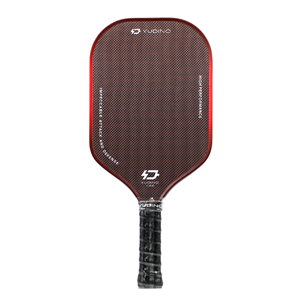
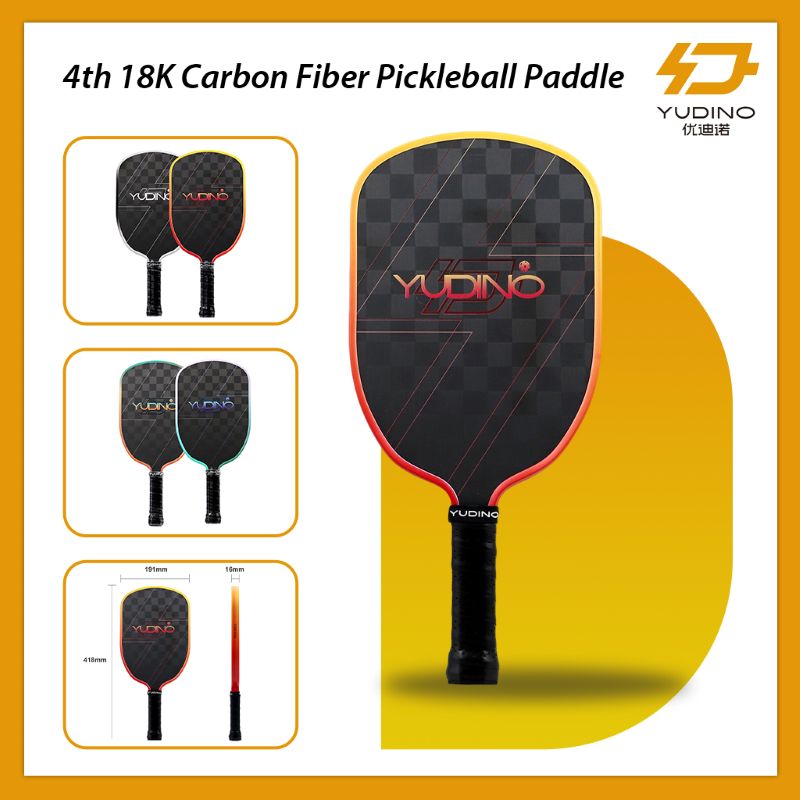
The 18K Power Pro Pickleball Paddle, featuring an 18K carbon fiber face, PP honeycomb core, and 16mm thick core structure, has gradually become a product of interest for players seeking a balance between power and control.
Why Traditional Pickleball Paddles Often Have Performance Limitations:
1、Insufficient Hitting Power and Limited Offensive Pressure
Many entry-level paddles tend to feel "unresponsive" during fast returns and consecutive attacks. This is especially evident during baseline rallies and third-shot drives, where insufficient ball speed can disrupt offensive rhythm.
The 18K Power Pro Pickleball Paddle, with its high-density 18K carbon fiber face, delivers more direct energy feedback upon impact compared to standard fiberglass composite or low-density carbon fiber structures.
For players who favor fast attacks, smashes, and baseline pressure play, this type of high-density carbon fiber structure provides more consistent ball speed during high-speed drives and repeated power shots.
2、Small Sweet Spot and Lack of Consistent Control in Extended Rallies
Lower-end paddles tend to produce noticeable deviation on off-center hits, leading to unstable shot placement. For long-term training users, this issue directly affects control efficiency during extended rallies.
Advantages of the PP honeycomb core structure include:
·Dispersing impact force.
·Improving overall face stability.
·Enlarging the sweet spot.
·Reducing vibration from off-center hits.
Compared to traditional EVA filler structures, the PP honeycomb core delivers more stable feedback during continuous defense, fast net blocks, and high-frequency rallies.
Why the 18K Carbon Fiber Structure Has Become an Important Direction for High-End Paddles
1、18K Carbon Fiber Emphasizes Overall Feedback and Structural Stability
Carbon fiber paddles currently on the market mainly include 3K, 12K, 18K, and T700, each with different material and weave specifications. Their characteristics generally manifest as:
·3K carbon fiber: lighter weight, softer feel.
·12K: greater emphasis on balance between power and control.
·18K carbon fiber: higher fiber density, offering advantages in structural stability and power feedback.
·T700: often used to emphasize face toughness and overall response speed.
The 18K Power Pro Pickleball Paddle, with its high-density carbon fiber texture, ensures more uniform force distribution across the face, maintaining stable rebound performance during high-speed shots.
For intermediate to advanced players, this structure offers clear advantages in power shots, fast drives, net pressure, and transition play.
The 16mm Thick Core Structure Is Better Suited for All-Around Play
Many power-oriented paddles suffer from excessively stiff face feedback, which can lead to wrist and arm fatigue after extended training sessions.
The 16mm thick core structure achieves a more balanced state between power output and shock absorption:
·Enhanced ball pocketing feel;
·More stable shot placement;
·Reduced vibration during prolonged training;
·Higher fault tolerance on defensive returns.
Compared to the 13mm thin-core structure, 16mm paddles are generally more suitable for:
·Control-oriented play;
·Long training sessions;
·Consecutive defensive counterattacks;
·Club-level competitive matches;
·The 13mm structure, in contrast, leans more toward fast shot release and offensive rhythm.
How to Choose a Pickleball Paddle for Different Usage Scenarios
Training-Oriented Players Prioritize Durability and Consistent Feedback
For high-frequency training users, a paddle must not only provide stable shot feedback but also possess strong impact resistance and long-term stability.
During extended rallies, daily club training, and frequent defensive play, insufficient structural stability can lead to face deformation, uneven rebound, or a reduced sweet spot.
The combination of high-density carbon fiber and PP honeycomb core further enhances overall product durability and long-term stable performance.
Competition-Oriented Players Focus on the Balance Between Power and Control
In competitive matches, pursuing pure power alone is no longer sufficient for high-level exchanges. Players pay more attention to:
·Fast counterattack ability;
·Precise shot placement;
·Stability in net blocking;
·Fault tolerance in consecutive returns.
Transition efficiency between offense and defense:
Compared to traditional fiberglass paddles, the 18K Power Pro Pickleball Paddle offers a more balanced performance between power output and control stability.
Many consumers mistakenly believe that "stiffer face means higher quality," but overly stiff structures tend to reduce control and increase fatigue during extended training.
When selecting a paddle, it is recommended to focus on face material type, carbon fiber weave density, thickness structure, and surface texture.
Common Mistakes When Buying a Pickleball Paddle:
Some users prioritize low-priced products while overlooking key factors such as carbon fiber grade, core structure, and manufacturing processes. Such products are prone to unstable face feedback, a small sweet spot, and a short service life over long-term use.
When purchasing a pickleball paddle, users should choose a configuration appropriate to their skill level, playing style, and frequency of use—prioritizing paddles with stable feel, a large sweet spot, and good durability, avoiding low prices that compromise user experience and lifespan.
The 18K Power Pro Pickleball Paddle, through its 18K carbon fiber face, PP honeycomb core, and 16mm thick core structure, achieves a well-balanced combination of power output, stability, spin performance, and comfort.
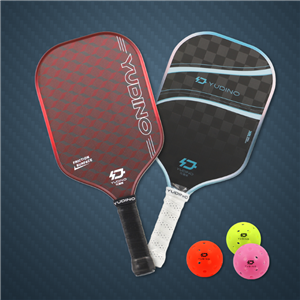
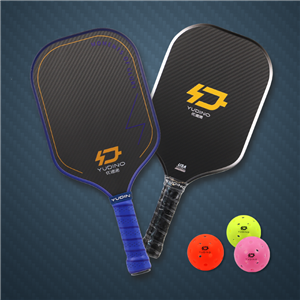
Yudino (liaoning) Sports Goods Co., Ltd. specializes in the R&D and manufacturing of pickleball paddles and balls, offering OEM/ODM customization services for brand owners, clubs, e-commerce platforms, and sports goods buyers. The company supports customization of different carbon fiber structures, face textures, weight configurations, surface finishes, and appearance designs, and provides full-process support from product development and batch production to export delivery.