How to Choose a T700 Thin Core Pickleball Paddle for Your Brand
1. Introduction: Why the T700 Thin Core Pickleball Paddle Matters
The T700 thin core pickleball paddle is currently one of the most sought-after premium paddles in competitive and recreational markets. For B2B buyers, including distributors, sports clubs, and brand owners, understanding how to select the right T700 paddle is critical. Choosing the wrong configuration can lead to poor market acceptance, higher inventory costs, and reduced profit margins.
In 2026, the market emphasizes material performance, player preference, and ROI. This guide will help you evaluate all necessary factors and make informed purchasing decisions.
2. Material Matters: Understanding T700 Carbon Fiber
2.1 T700 vs Standard 3K Carbon Fiber
T700 carbon fiber offers higher tensile strength, better energy transfer, and superior durability.
Standard 3K paddles are lower-cost, more forgiving, and better suited for mass-market beginners.
Brands targeting premium players or performance-driven clubs should focus on T700 thin core paddle selection for consistent quality and player satisfaction. Lower-grade substitutes reduce market credibility and risk customer complaints.
2.2 Core Material and Density
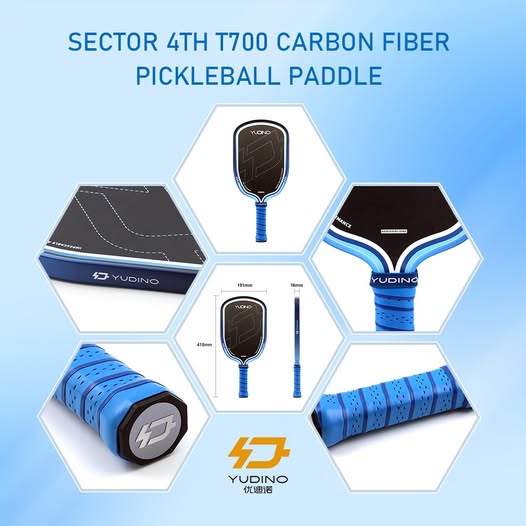
The thin core structure of T700 paddles (13–14mm) provides faster rebound and power. Core density affects:
| Core Type | Performance | Durability | Market Impact |
| Low-density polymer | Moderate | Medium | Budget segment |
| High-density polymer | High | High | Premium segment |
Decision Tip: For brand-focused buyers, high-density thin core paddles provide higher perceived value and reduce long-term replacement costs.
3. Weight and Balance: Meeting Player Preferences
T700 thin core pickleball paddle weight typically ranges 225–230g.
Lightweight (220–225g): faster swings, suitable for advanced players
Medium (225–230g): balance between power and control, best for mixed markets
Heavy (230–240g): increased stability, less agile
Brands must choose weight distributions that match their target audience. Clubs may prefer mid-weight for all-around usability, while competitive brands should offer light variants for power play.
4. Paddle Surface and Spin Control
Surface texture affects player spin, control, and market appeal:
Raw T700 carbon fiber → maximum power, professional appeal
Grit-enhanced surface → better spin, wider appeal
Coated/printed surfaces → brand customization, aesthetic differentiation
Surface selection directly affects resale and profit margins. Premium markets demand texture for spin performance, while general clubs prioritize durability and cost.
5. Price Analysis for B2B Buyers
5.1 Factory Pricing
| Order Quantity | T700 Paddle Cost | Notes |
| 50–100 pcs | $35–$55 | Small distributors |
| 100–300 pcs | $28–$45 | Medium volume buyers |
| 500–1000 pcs | $25–$40 | Brand owners with OEM plans |
Key Observation: High MOQ reduces unit cost, but smaller orders allow market testing with minimal risk.
5.2 OEM and Customization Costs
Logo printing: $0.5–$1.5 per unit
Packaging customization: $1–$4 per unit
Core density adjustment: $2–$5 per unit
Shape modification: variable tooling cost
B2B Recommendation: Start with standard T700 thin core paddle configurations and gradually introduce customization after market validation.
6. Market Target and Player Segmentation
Understanding your customer base is critical:
| Target Segment | Paddle Recommendation | Rationale |
| Advanced competitive players | T700 thin core paddle, 13–14mm, lightweight | Maximum power and spin |
| Recreational / club players | T700 mid-core or 3K paddle | Balanced control and accessibility |
| Brand Premium Line | T700 thin core paddle OEM | Higher perceived value, differentiates brand |
7. Quality Assurance and Supplier Selection
When sourcing T700 thin core pickleball paddles, check:
Material certification → Confirm T700 carbon fiber authenticity
Core uniformity → Avoid voids or density inconsistencies
Manufacturing process → CNC precision molds improve consistency
Defect rate → Keep below 3% to reduce replacement costs
Suppliers with verified quality control protocols minimize risk and strengthen your brand reputation.
8. Risk Assessment for Brand Owners
Inventory risk: Thin core paddles are higher cost; unsold inventory ties up capital
Market mismatch: Too advanced for beginner segments reduces turnover
Shipping & import duties: Air freight adds 10–30% to total cost
Seasonal fluctuations: Competition spikes during tournaments; plan production accordingly
Decision Tip: Align inventory strategy with sales forecasts and seasonal demand.
9. Profit Margin Analysis
| Cost | Wholesale Price | Retail Price | Profit Margin |
| T700 paddle cost $25–$40 | $50–$80 | $100–$180 | 30–60% |
Recommendation: Pricing must reflect market positioning, avoiding underpricing that undermines brand value.
10. Step-by-Step T700 Paddle Selection Guide
Identify target audience (clubs, distributors, competitive players)
Determine core thickness and density (thin core 13–14mm, high-density polymer)
Select weight range (220–230g based on player type)
Choose surface texture (raw carbon, grit-enhanced, or coated)
Evaluate supplier options (material quality, defect rate, delivery reliability)
Calculate ROI and margin potential
Decide on customization (OEM logo, design, packaging)
11. Combining T700 and 3K Paddle Lines
For most B2B brands:
T700 thin core paddle → premium segment, high-margin product
3K paddle → mass-market, volume-driven product
Strategy: Use the combination to cover all player levels, maximizing both revenue and brand positioning.
12. Frequently Asked Questions
Q: Can I mix T700 and 3K paddles in the same order?
A: Yes, allows testing premium product acceptance while maintaining volume sales.
Q: How to reduce unit cost for T700 paddles?
A: Increase order quantity, use standard cores initially, avoid excessive customization.
Q: What is the ideal weight range for a club market?
A: 225–230g provides balance between power and control.
13. Final Recommendation
Selecting a T700 thin core pickleball paddle is a strategic decision:
Prioritize performance, brand positioning, and player segment
Balance cost vs margin
Start with standard configurations and scale customization with market feedback
A structured selection approach ensures optimal inventory turnover, brand credibility, and profitability.