How to Source Custom Pickleball Paddles from a Manufacturer: A Complete OEM Guide
The pickleball equipment market has grown faster than almost any other racket sport category in the past five years, and with that growth has come a surge of brands, distributors, and retailers looking to bring their own paddle lines to market. If you're evaluating manufacturers for the first time — or switching suppliers — the process of sourcing custom pickleball paddles can feel opaque.
This guide walks through the full OEM sourcing process from initial inquiry to production run, covering what decisions to make early, what to ask manufacturers, and what separates a reliable supply partner from one that will cost you later.
Step 1: Define Your Product Before You Contact Anyone
The most common mistake first-time buyers make is approaching manufacturers without a clear product specification. Manufacturers can accommodate a wide range of requirements — but "I want a good carbon fiber paddle" is not a specification.
Before you reach out, define the following:
Face material. Carbon fiber (3K, 12K, or 18K weave), fiberglass, or a hybrid? Each produces different performance characteristics and sits at a different price point. If you're uncertain, read a comparison of the available options first — your material choice will anchor your product's market positioning and cost structure.
Core thickness. The industry range runs from 11mm to 16mm. Thinner cores (11–13mm) favor power and speed. Thicker cores (14–16mm) favor control and forgiveness. Most performance-focused lines use 14mm or 16mm cores. Your choice here affects who your paddle appeals to.
Paddle shape. Standard, elongated, square, and round are the main options. Each shape profile affects the sweet spot size and reach. Elongated paddles are popular for competitive play; standard shapes serve a broader recreational audience.
Weight range. Lightweight (under 220g), mid-weight (220–235g), or heavy (240g+). Weight affects feel and target player type.
Grip specifications. Grip circumference (4" or 4¼" are the most common), grip length, and grip material (cushion vs. perforated).
Order size and frequency. How many units in your first run? Is this a one-time procurement or are you establishing a recurring supply relationship?
Certification requirements. Do you need USA Pickleball approved models? If you're supplying tournaments, retail chains, or club programs in the US, this may be non-negotiable.
Having clear answers to these questions before your first supplier conversation gives you the ability to evaluate quotes accurately, compare manufacturers like-for-like, and avoid paying for revision cycles that result from undefined specs.
Step 2: Understand What OEM and ODM Mean — and Which You Need
These two terms are used interchangeably by many buyers, but they describe different relationships with your manufacturer:
OEM (Original Equipment Manufacturer): You provide the design — shape, materials, graphic specifications, brand identity. The manufacturer produces exactly what you specify. You own the design. OEM is the right model if you have a defined product vision and want full creative control over what goes to market under your brand.
ODM (Original Design Manufacturer): The manufacturer provides an existing or semi-custom design that you brand with your logo and colors. You modify rather than create from scratch. ODM is the practical choice for first-time buyers, smaller brands, or distributors who want a quality product without the cost and time investment of custom tooling.
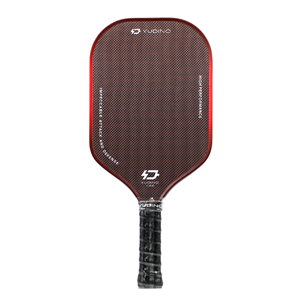
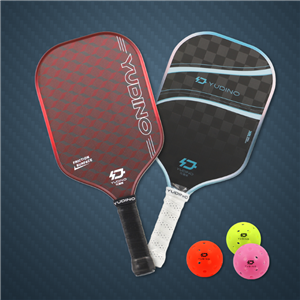
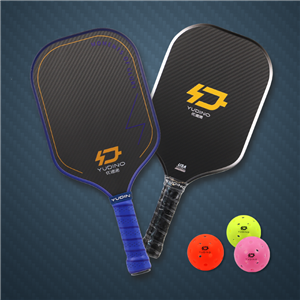
Most established pickleball manufacturers — including YUDINO — offer both. For a first order, ODM using an existing paddle shape with your branding applied via UV printing is typically faster, lower-risk, and available at lower minimum order quantities. Once you understand your market and have sales data, moving to a fully custom OEM model with proprietary shapes and specifications becomes a more informed investment.
Step 3: Request and Evaluate Samples Properly
Never place a bulk order without holding and playing with a physical sample. This sounds obvious, but the specific way you evaluate a sample matters.
Request samples in your target spec. If your final order will use 16mm 12K carbon, your sample should be the same spec — not a "representative" paddle at different thickness or weave. Performance variation between specs is significant enough that a 13mm sample tells you almost nothing about how your 16mm product will feel.
Test across multiple play conditions. A sample evaluated in one practice session will miss issues that emerge over time. If possible, have multiple players — including players whose skill level matches your target customer — test the sample across dinking, driving, and serving scenarios.
Check the finish quality carefully. Look at the edges (edge guard alignment and adhesion), the grip wrap (consistent tension, clean overlap at the end), the face surface (uniform texture with no bubbles or low spots), and the printing registration (sharp lines, accurate colors, no bleed). These details reveal manufacturing process quality better than the paddle's performance on day one.
Weigh multiple units from the same batch. If your supplier sends three sample units, weigh all three. Weight variation within a batch is a leading indicator of production consistency issues. For a mid-weight spec of 230g ±5g, all samples from the same production run should fall within that range.
Step 4: Understand the Customization Options Available
A quality manufacturing partner can accommodate a significant range of customization. Here are the main variables typically available:
Face Material
· Carbon fiber: 3K, 12K, 18K weave counts
· Titanium carbon fiber composite (enhanced durability)
· Fiberglass (lower cost, more flex, more power)
· Hybrid constructions (carbon face + fiberglass core layers)
Core Specifications
· Core material: Polypropylene (PP) honeycomb is standard; quality varies significantly
· Core thickness: 13mm / 14mm / 16mm (main options)
· Thermoformed vs. cold-pressed construction (see note below)
Shape and Dimensions
· Standard (16" × 8" hitting surface)
· Elongated (17"+ length, narrower width)
· Square (wider body, shorter handle)
· Round (larger face, shorter handle)
· Custom shapes require tooling investment
Weight
· Lightweight: under 220g
· Mid-weight: 230g ±5g
· Heavy: 240g+
Handle and Grip
· Handle length (standard 5" vs. extended 5.5")
· Grip circumference (4" / 4¼" / 4½")
· Grip material options
Branding and Printing
· UV printing on face and handle area
· Full-color custom designs
· Custom edge guard colors
· Custom bag and packaging options
A note on thermoformed construction: Thermoformed paddles — where the carbon face and PP honeycomb core are hot-pressed together as a single unit under heat and pressure — produce significantly better performance consistency than cold-pressed layered construction. For serious distribution lines and any product targeting intermediate or advanced players, specifying thermoformed construction is worth the additional per-unit cost. It is how YUDINO manufactures its carbon fiber paddle range.
Step 5: Know Your MOQ and Lead Time Expectations
Minimum order quantities in the pickleball paddle manufacturing market have shifted as the sport has grown. General benchmarks as of 2026:
| Order Type | Typical MOQ | Typical Lead Time |
| Stock model (no customization) | 10–50 units | 3–7 days |
| ODM with logo/color printing | 50–150 units per model | 15–30 days |
| Full OEM custom shape | 300–500 units per model | 45–75 days (includes tooling) |
| Full OEM with USA Pickleball certification | 300+ units + certification timeline | 60–90 days |
These figures are general benchmarks. Specific MOQ and lead time vary by manufacturer capacity, current production schedule, and the complexity of your specifications. Always confirm current figures directly — lead times in particular fluctuate with seasonal demand.
For first orders, prioritize getting a production run completed over getting the absolute lowest price. Understanding your manufacturer's production discipline — on-time delivery, batch consistency, responsive communication — is more valuable data than saving 5% per unit on a first run.
Step 6: Verify Certifications Before You Commit
If your product will be sold into the US market or used at sanctioned pickleball events, USA Pickleball equipment approval is a significant asset — and in some distribution channels, a prerequisite.
USA Pickleball (the governing body for the sport in the United States) maintains an approved equipment list. Paddles on this list meet specific performance standards including surface roughness limits, edge guard specifications, and deflection characteristics. Being on the approved list:
· Allows use in sanctioned recreational and tournament play
· Signals credibility to informed buyers at retail
· Is often required by clubs and recreation programs purchasing in bulk
Ask any manufacturer whether their paddle models hold current USA Pickleball approval and request the approval documentation — not just a verbal confirmation. Approvals are model-specific, not brand-wide, and they expire and require renewal.
YUDINO holds multiple USA Pickleball certifications covering its carbon fiber paddle range. Buyers sourcing for competition supply, club programs, or US retail distribution should confirm which specific models in your order carry current certification.
Step 7: Ask These Questions Before Signing Off on a Supplier
The final step before committing to a production run is a direct conversation with your manufacturer. Ask:
1. What is your annual production capacity? (Relevant if you're planning for scale — a manufacturer maxed out at 50,000 units per year may not be able to grow with you)
2. What quality control checkpoints are in your production process? (Ask for specifics — weight tolerance testing, surface inspection, edge guard adhesion testing)
3. What is your defect rate and how do you handle defective units post-shipment?
4. Can I visit your facility or see a factory walkthrough? (Video is acceptable; flat refusal is a red flag)
5. What is your experience with export documentation for my target market? (Critical for customs clearance — experienced exporters handle this smoothly)
6. Do you offer sample paddles before production approval? (If not, do not proceed)
7. What is your packaging and labeling capability? (Custom retail packaging vs. bulk shipping without branding has significant distribution implications)
Working With YUDINO as Your OEM/ODM Partner
YUDINO operates a vertically integrated facility in Liaoning, China, covering R&D, manufacturing, and quality inspection under one roof. Current capacity is 50,000 units per year, with a manufacturing process that includes hot pressing, beading, drilling, and UV printing performed in-house.
The paddle range covers all major carbon fiber specifications (3K, 12K, 18K, titanium carbon), multiple core thickness options (13mm, 14mm, 16mm), all mainstream paddle shapes, and three weight categories. Full OEM and ODM support is available, and several models carry current USA Pickleball certification.
Sample paddles for evaluation are available on a 3-day delivery timeline. For bulk orders, production scheduling and lead times are confirmed at the inquiry stage.
Frequently Asked Questions
Q: What is the minimum order quantity for custom pickleball paddles?
A: It depends on the customization level. Stock models are available in smaller quantities. ODM orders with logo printing typically start at 50–150 units per model. Full custom OEM production generally starts at 300+ units. Contact us for current minimums.
Q: Do I need to use the same manufacturer for paddles and balls?
A: No. Paddles and balls have completely different manufacturing requirements. Many brands source paddles from a specialist paddle manufacturer and balls separately. Sourcing from a paddle-specialist manufacturer typically produces better results than a single-source supplier trying to do both.
Q: Can I order multiple models at different carbon fiber specifications in one production run?
A: Yes. Building a product line with 3K, 12K, and 18K tiers in a single order is common and practical. Each model within the run maintains its individual specification.
Q: How does thermoformed construction affect pricing compared to cold-pressed?
A: Thermoformed paddles cost more per unit than cold-pressed equivalents in the same material spec. The premium is typically 15–30% depending on materials and order volume. For performance product lines, the quality and consistency difference justifies the cost.
Q: Is USA Pickleball certification transferable to a private label brand?
A: No. Certification is registered to the manufacturer and applied to specific model numbers. If you are creating a new branded model, it needs its own certification application. Some manufacturers can support this process as part of an OEM agreement.
YUDINO offers full OEM and ODM support for pickleball paddle brands, distributors, and retailers worldwide. Get in touch to request samples or a wholesale quote