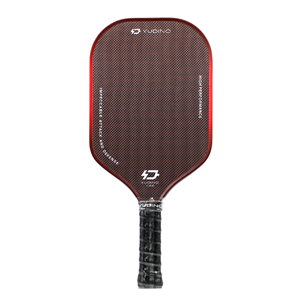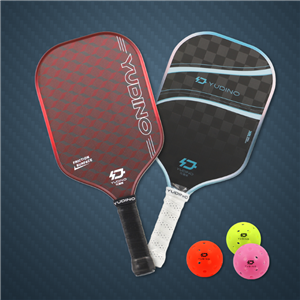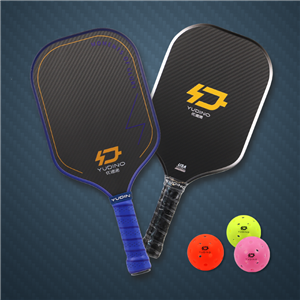
Thermoformed and Non-Thermoformed Pickleball Paddles? 5 Key Factors Affecting Performance.
What advantages does thermoforming technology offer over traditional manufacturing processes? How do the two differ in terms of strength, control, durability, and user experience?
As a professional pickleball paddle manufacturer, YUDINO breaks down the key differences between thermoformed and non-thermoformed paddles across three areas: manufacturing process, structural design, and actual performance.
What is a Thermoformed Pickleball Paddle?
A thermoformed pickleball paddle is a high-performance paddle manufactured using a high-temperature, high-pressure, integrated molding process.
During production, the carbon fiber face, honeycomb core, and edge structure undergo precisely controlled temperature and pressure treatments, creating a tighter bond between the different materials.
Compared to traditional assembly methods, thermoforming technology enables:
A tighter bond between the paddle face and the core structure;
Reduced risk of material delamination;
Enhanced overall structural stability;
Optimized energy transfer efficiency upon impact.
Currently, high-end thermoformed pickleball paddles typically feature:
Carbon fiber face;
PP honeycomb core;
Foam-injected edges;
Unibody construction.
These technologies collectively enhance the paddle's power output and durability.
What is a Non-Thermoformed Pickleball Paddle?
Non-thermoformed pickleball paddles—also known as traditional construction paddles—represent a widely used manufacturing method in the current market.
The production process typically involves:
1. Processing composite materials (such as carbon fiber or fiberglass) into paddle faces;
2. Bonding the faces to the honeycomb core using adhesives;
3. Securing the structure via cold pressing;
4. Installing edge guards to complete production.
This manufacturing method has evolved over many years and relies on mature, stable technology.
Non-thermoformed paddles offer:
Softer impact feedback;
Good control performance;
Comfortable vibration dampening;
Greater flexibility in product design.
Consequently, they remain popular among recreational players, trainees, and the mass market.
Thermoformed vs. Non-Thermoformed Pickleball Paddles: 5 Key Differences
1. Different manufacturing processes
| Compare items | Thermoformed Pickleball Paddle | Non-thermoformed pickleball paddle |
| Manufacturing method | Integrated molding under high heat and pressure | Cold-pressed assembly of multi-layer materials |
| Structural features | Tighter bonding between the face, core, and edge | Individual assembly of components |
| Production difficulty | Higher manufacturing standards | Mature and stable technology |
| structural consistency | Superior performance | Relies on manufacturing process control |
The thermoforming process alters the way materials are bonded, resulting in a racket with a more integrated structure.
2. Differences in Power Output
One of the defining characteristics of thermoformed pickleball paddles is their superior power performance.
Due to their higher structural rigidity, there is less energy loss during impact, enabling players to achieve:
Faster ball speeds;
Greater offensive power;
More pronounced impact feedback.
For players who favor baseline attacks and high-speed rallies, thermoformed paddles offer enhanced explosive power.
In contrast, non-thermoformed paddles typically provide a softer power response, making them better suited for playing styles that prioritize control and rhythm changes.
3. Differences in Control Performance
Pickleball requires precision control alongside power.
Because non-thermoformed paddles have a relatively softer structure, they often offer superior feel in areas such as:
Handling soft shots (dinks);
Net-area control;
Fine-tuning shot placement.
While thermoformed paddles excel in power, a balance between power and control can still be achieved through smart weight distribution, core material optimization, and surface texturing.
4. Differences in Durability and Structural Stability
Durability is a key metric for professional-grade paddles.
Thermoforming technology uses high heat and pressure to create a tighter bond between materials, effectively reducing issues such as:
Edge splitting;
Material delamination;
Performance degradation over time.
For brands requiring long-term training use or commercial sales, thermoformed construction offers more consistent product quality.
While non-thermoformed paddles rely on established construction methods, long-term use requires greater attention to material bonding quality and manufacturing process control.
5. Differences in Hitting Feel
One of the most significant differences between the two manufacturing processes is the hitting experience.
Thermoformed Pickleball Paddles:
Characteristics:
More direct feel;
Faster response speed;
More pronounced impact feedback;
Suited for power-oriented playstyles.
Non-Thermoformed Pickleball Paddles:
Characteristics:
Softer feel;
Better vibration dampening;
More comfortable ball-control experience;
Suited for technique-oriented playstyles.
No single manufacturing process suits every player; the choice depends on specific needs and preferences.
Who are thermoformed pickleball paddles for?
Thermoformed pickleball paddles are best suited for:
Intermediate players
Those who have mastered basic techniques and wish to enhance power and match performance.
Competitive players
Those requiring faster reaction speeds and more consistent performance output.
Professional brand buyers
Those looking to develop high-performance paddles and boost market competitiveness.
Who are non-thermoformed pickleball paddles for?
Non-thermoformed paddles are suitable for:
Beginners
They offer easier control and a more user-friendly experience.
Control-oriented players
Those who prioritize shot precision and tactile feedback.
Mass-market products
Suitable for brand clients seeking cost-effective product solutions.
YUDINO: A Professional Manufacturer of Thermoformed Pickleball Paddles
As a professional pickleball paddle manufacturer, YUDINO specializes in the R&D and production of high-performance paddles.
By combining advanced composite material technology with precision manufacturing processes, we offer global clients:
Thermoformed Pickleball Paddles
Carbon fiber face design;
One-piece (unibody) construction;
High-strength honeycomb core;
Excellent power output.
Non-Thermoformed Pickleball Paddles
Proven manufacturing processes;
Consistent performance;
Flexible product solutions.
Additionally, YUDINO supports:
OEM customization;
ODM development;
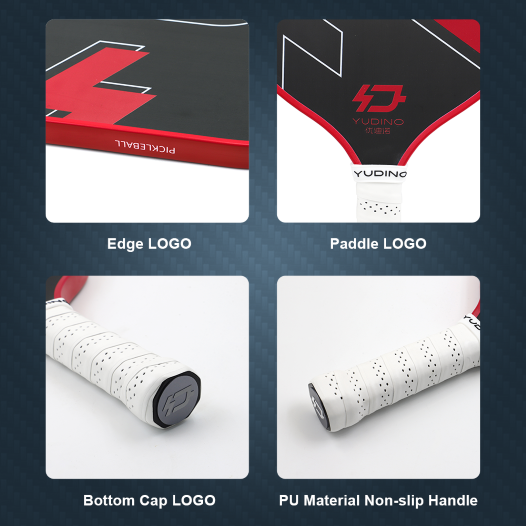
Logo printing;
Aesthetic design;
Mass production.
Whether you are a sporting goods brand, an importer, or a professional distributor, we can provide pickleball paddle solutions that meet market demands.
How do you choose between thermoformed and non-thermoformed pickleball paddles?
When choosing a racket, you should not focus solely on manufacturing technology but instead consider your actual needs:
| Needs | Recommended Choice |
| Seeking greater power | Thermoformed Pickleball Paddle |
| Preferring a fast-paced attack | Thermoformed Pickleball Paddle |
| Prioritizing control and feel | Non-thermoformed Paddle |
| Requiring soft feedback | Non-thermoformed Paddle |
| Seeking competitive performance | Thermoformed Paddle |
| Needing great value for money | Non-thermoformed Paddle |
FAQ
Are thermoformed pickleball paddles better than standard ones?
Thermoformed paddles are not inherently "better" in every respect; rather, they offer distinct advantages in terms of power, structural stability, and durability. The right choice depends on the player's specific style of play.
Why are thermoformed pickleball paddles more expensive?
Thermoformed paddles typically incur higher production costs due to complex manufacturing processes, high-performance materials, and rigorous manufacturing standards.
Are thermoformed paddles suitable for beginners?
While beginners can certainly use them, thermoformed paddles offer more noticeable performance benefits to intermediate and advanced players looking to elevate their game.
Does YUDINO offer custom pickleball paddles?
Yes. YUDINO provides OEM/ODM services, covering everything from material selection and weight design to aesthetic customization and mass production.
Conclusion
There is no simple "better or worse" distinction between thermoformed and non-thermoformed pickleball paddles; they represent two different approaches to paddle development.
Thermoformed technology leverages advanced manufacturing processes to enhance power, stability, and durability, making these paddles ideal for players and brand clients who prioritize high performance.
Traditional non-thermoformed paddles retain a significant position in the mass market thanks to their proven manufacturing techniques and comfortable feel.
As a professional pickleball paddle manufacturer, YUDINO continuously refines its production technology to deliver high-quality paddles and customized solutions to global clients, helping partners build a competitive edge in the rapidly growing pickleball market.