What Is a Thermoformed Pickleball Paddle and Is It Worth It?
Pickleball has moved from backyard hobby to a certified competitive sport in under a decade, and paddle engineering has moved just as fast. If you've compared spec sheets from a handful of manufacturers this year, you've probably noticed one term showing up everywhere: thermoformed. It's not just a buzzword — it's arguably the single biggest shift in paddle construction since carbon fiber faces became standard. So what actually makes the best thermoformed pickleball paddle in 2026, and why does the manufacturing method matter as much as the material?
This article breaks down what thermoforming actually is, what separates a genuinely well-built thermoformed pickleball paddle from a marketing label, and the questions players — and the businesses that supply them — actually need answered before committing to a paddle line.
What Does "Thermoformed" Actually Mean in Paddle Construction?
Traditional pickleball paddles are typically built by laminating a carbon or fiberglass face onto a foam or honeycomb core, then sealing the edges separately with tape or an edge guard. It works, but it leaves seams — and seams are where paddles crack, delaminate, and lose consistency over hundreds of games.
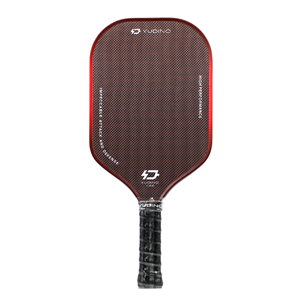
A thermoformed pickleball paddle is molded as a single piece under heat and pressure. The face, core, and edge are fused together in one continuous shell, rather than assembled from separate layers. The result is a paddle with:
No visible seam or edge guard to peel or crack
More even weight distribution across the face
A noticeably larger, more consistent sweet spot
Better shock absorption and a more stable rebound off-center
This single-mold approach is exactly why thermoformed construction is now considered the benchmark for serious players, and why it dominates the "best paddle" conversations across forums, review sites, and pro-shop counters heading into 2026.
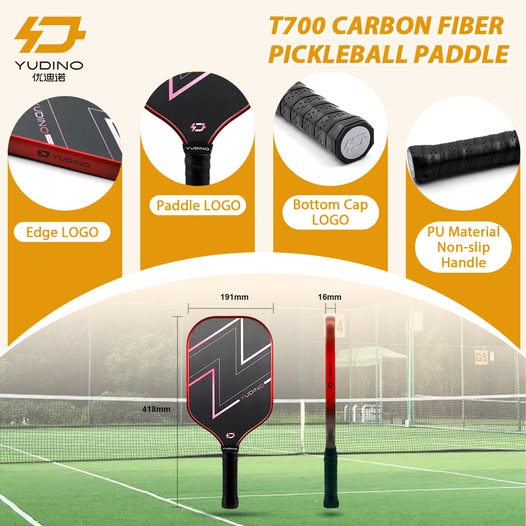
What Separates a Good Thermoformed Pickleball Paddle From a Great One
Not every thermoformed pickleball paddle performs the same, even with similar-sounding specs. The real differentiators come down to three things: face material, core density, and manufacturing precision.
Carbon Fiber Weave and Face Density
Carbon weave density (commonly labeled 18K, 12K, or 3K) determines how tightly woven the face fabric is, which directly affects tensile strength, ball feel, and spin potential. An 18K carbon face with a high-density weave gives a firmer, more powerful response, while a lower-K weave tends to feel softer with slightly more control-oriented touch. A well-engineered thermoformed pickleball paddle pairs the weave density with a matched core so power and control stay balanced rather than fighting each other.
Honeycomb Core Thickness
Inside a quality paddle sits a polypropylene (PP) honeycomb core — the layer that absorbs impact and generates rebound. Thicker cores, often in the 14–16mm range, tend to produce softer, more forgiving contact with better shock absorption, which matters over long tournament days. Thinner cores trade some comfort for a crisper, more responsive pop.
Manufacturing Precision
This is where thermoforming really earns its reputation. Because the paddle is hot-pressed as one unit rather than glued in stages, tolerances between individual units are tighter. For buyers sourcing in volume, that consistency — paddle to paddle, batch to batch — is often more valuable than any single spec on paper.
Is a Thermoformed Pickleball Paddle Tournament Legal?
A fair and common question. Legality isn't about the manufacturing method itself — it's about surface texture, thickness, and materials meeting the governing body's approved equipment list. A thermoformed pickleball paddle built to standard specifications and certified by recognized sporting bodies (such as international pickleball federations) is fully sanctioned for competitive play. Reputable manufacturers list their certifications openly rather than making vague "tournament-ready" claims — that transparency is one of the clearest signals of a trustworthy supplier.
Questions Buyers Actually Ask Before Choosing a Paddle
Does thermoforming make a paddle more durable? Generally yes. Because there's no seam to peel or edge tape to lift, a properly thermoformed pickleball paddle tends to hold up better against edge chipping and delamination over time compared to traditionally laminated paddles.
Is a heavier or lighter paddle better? It depends on play style. Heavier paddles (around 8oz+) generate more natural power; lighter paddles favor quick hands and net play. Most thermoformed paddle lines offer a small weight range within the same mold to accommodate both.
Does core thickness affect control? Yes — thicker honeycomb cores generally soften ball contact and improve control on drops and dinks, while thinner cores trade some of that touch for a faster, more explosive response.
How do I know if a paddle is genuinely thermoformed and not just labeled that way? Look for a seamless edge with no visible tape or glue line, and ask the supplier directly about their hot-press molding process. Manufacturers with vertically integrated production — meaning they control hot pressing, beading, drilling, and finishing in-house — are far more likely to deliver consistent, genuinely thermoformed builds.
What This Means for Importers, Wholesalers, and Brand Owners
For businesses sourcing paddles rather than just buying one for personal play, the calculus shifts slightly. A thermoformed pickleball paddle is easier to sell downstream because it aligns with what players are already searching for — but the manufacturing consistency that thermoforming provides matters just as much for quality control as it does for on-court feel.
Buyers building a private-label line, testing a new SKU, or evaluating a factory for OEM production typically prioritize a few practical things: whether the supplier can provide verifiable samples before committing to a production run, whether certifications (equipment compliance, business licensing) are documented rather than just claimed, and whether the factory manages its own molding and finishing process end-to-end instead of outsourcing key steps. A manufacturer with an integrated production chain — from R&D and mold pressing through drilling, beading, and UV printing — is generally in a stronger position to hold tight tolerances across a full production order, which reduces the return and complaint rate once paddles reach retail shelves. Low minimum order quantities and flexible customization on graphics or grip specs also make it considerably easier for smaller importers and emerging brands to test a thermoformed pickleball paddle line before scaling up.
Final Thoughts
The shift toward thermoformed construction isn't a marketing trend — it's a genuine manufacturing upgrade that produces a more durable, more consistent, and better-performing paddle than older laminated builds. Whether you're a player comparing specs before a tournament season or a buyer evaluating suppliers for a new product line, the same fundamentals apply: check the weave density, understand the core thickness, confirm the certifications, and favor manufacturers who control their own molding process rather than outsourcing it. A well-built thermoformed pickleball paddle should feel — and perform — noticeably different from a taped-edge paddle the moment it makes contact with the ball, and that difference is exactly why it has become the standard to beat heading into 2026.
Frequently Asked Questions
What is the main advantage of a thermoformed pickleball paddle over a traditional laminated paddle?
A single-mold thermoformed build eliminates seams and edge tape, which improves durability, weight consistency, and sweet-spot size compared to paddles assembled in separate glued layers.
Can I request paddle samples before placing a bulk order?
Most established manufacturers offer sample units so buyers can test hitting feel, weight balance, and build quality before committing to a full production run — a standard step for wholesale and private-label orders.
What core thickness should I look for in a thermoformed pickleball paddle?
Cores in the 14–16mm range are common for a balanced mix of power and control; thicker cores lean softer and more forgiving, thinner cores lean faster and more responsive.
Are thermoformed pickleball paddles suitable for OEM or private-label branding?
Yes. Many manufacturers offer customizable graphics, grip specifications, and packaging on their thermoformed paddle lines, often with minimum order quantities low enough for smaller brands to enter the category.
How can I verify a supplier's quality control before ordering in volume?
Ask for documented certifications, request production samples, and confirm whether the factory manages molding, drilling, beading, and finishing in-house — vertically integrated production is one of the strongest indicators of consistent quality at scale.