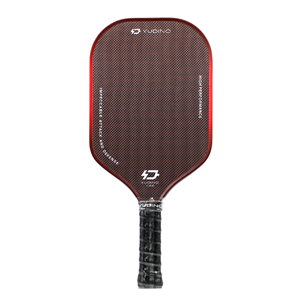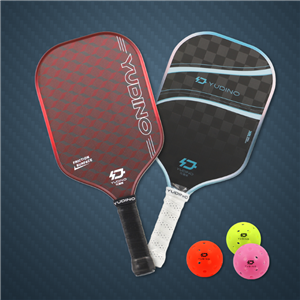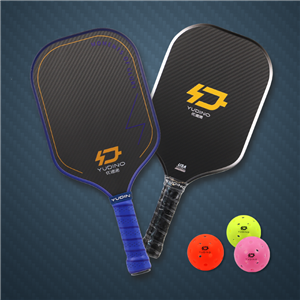
18k carbon fiber pickleball paddle
-
Choosing a high-quality 18K carbon fiber pickleball paddle requires evaluating more than just the paddle face material. While 18K carbon fiber is known for its exceptional power, durability, and responsiveness, the overall performance of a paddle also depends on core construction, paddle thickness, weight distribution, surface texture, manufacturing quality, and certification standards. For players, distributors, and private-label buyers, understanding these factors can help ensure the paddle delivers the right balance of power, control, spin, and long-term durability. As pickleball continues to expand globally, premium carbon fiber paddles have become one of the fastest-growing product categories. However, not all 18K carbon fiber paddles are manufactured to the same standard. Knowing what to look for can help buyers avoid low-quality products and make a more informed purchasing decision.
-
When choosing an 18K carbon fiber pickleball paddle, the paddle core is just as important as the carbon fiber face. For most players, a polypropylene honeycomb core is considered the best match for 18K carbon fiber because it provides an ideal balance of power, control, vibration reduction, durability, and consistency. While other core materials, such as Nomex and aluminum honeycomb are available, polypropylene honeycomb cores generally deliver the most well-rounded performance for modern pickleball players.
-
As pickleball continues to grow worldwide, players are paying closer attention to paddle materials and performance. Among the many options available today, the 18K Carbon Fiber Pickleball Paddle has become increasingly popular among competitive and power-focused players. Its combination of lightweight construction, explosive power, durability, and premium feel makes it a preferred choice for advanced players seeking an edge on the court. Compared with fiberglass paddles, standard carbon fiber paddles, and even some 12K carbon fiber models, an 18K carbon fiber paddle typically offers greater stiffness, faster energy transfer, and stronger shot-making potential. For players who rely on aggressive drives, deep serves, and attacking play styles, the advantages can be significant.
-
"18K" typically refers to carbon fiber tow bundles containing 18,000 individual carbon fiber filaments per bundle, classifying it as a type of high-density carbon fiber material. When considered alongside the general characteristics of carbon fiber pickleball paddles, the advantages and disadvantages of these high-density carbon fiber paddles can be summarized as follows:
-
Pickleball paddles have evolved from basic equipment into a core factor affecting shot quality. In high-frequency training and high-intensity matches, material and structure directly determine stability, power transfer efficiency, and consistency of control. 18K carbon fiber pickleball paddle, based on a combination of high-density carbon fiber surface layer and PP honeycomb core, is seeing increased adoption in intermediate to advanced training and club-level competitions.
-
1301-2026
12K vs. 18K Carbon Fiber Pickleball Paddles Performance Comparison & Professional Buying Guide
As the global pickleball market matures, players and buyers are shifting their focus from simple aesthetics to technical specifications that directly impact on-court performance. Within the carbon fiber paddle segment, 12K and 18K carbon fiber have emerged as the two most discussed material options.