Best Pickleball Paddle for Doubles
Doubles pickleball is a different game from singles — not just in the number of players, but in what the sport actually demands from your equipment. Singles rewards reach, power, and baseline control. Doubles punishes hesitation. At the non-volley zone, where most points in doubles are actually won and lost, success comes down to quick hands, consistent resets, and the ability to redirect fast incoming shots with minimal setup time. The paddle that suits that game is often not the one that looks best on a spec sheet.
This guide breaks down what actually separates a good doubles paddle from a great one — including why construction method, not just material, matters when contact points happen at speed and with little margin for error.
Why Paddle Choice Matters More in Doubles
In singles, you have time. You cover your half of the court, you set up your shots, and you generate most of your power through full swings. In doubles, especially at the kitchen line, you're often reacting rather than initiating — blocking drives, resetting dinks, and defending angles you didn't see coming.
That context changes what you need from a paddle:
Sweet spot size becomes critical because there's no time to adjust for off-center contact
Shock absorption matters because the ball is arriving faster, with more spin, from shorter distances
Maneuverability counts because you're redirecting motion rather than generating it from scratch
A paddle optimized for singles — typically longer, narrower, and stiffer — can become a liability in doubles if it punishes the off-center hits that are simply unavoidable in fast net exchanges.
Paddle Shape: Why Wide Body Has the Advantage in Doubles
The wide-body paddle shape — typically 8.25 to 8.5 inches wide with a balanced length — was practically designed for doubles play. The enlarged face gives more surface area to work with on reflex volleys, the lower center of gravity helps with quick resets, and the generous sweet spot forgives the inevitable mishits that come with high-speed exchanges at the net.
This doesn't mean elongated paddles don't work in doubles. Players who anchor the back of the court in a two-up, two-back formation still benefit from an elongated paddle's reach and drive power. But for most doubles players — particularly those who spend the majority of points at or near the kitchen — a wider face is the more practical choice.
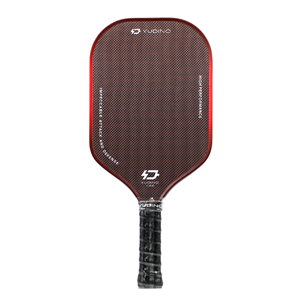
A thermoformed pickleball paddle in a wide-body configuration has a meaningful edge here over traditionally laminated alternatives: the seamless, hot-pressed edge seal holds up better when the paddle makes contact with the court surface or another paddle during close-quarters play, which in doubles happens more often than most players expect.
Core Thickness and Why It Matters for Doubles
If there's one specification that separates a usable doubles paddle from a genuinely good one, it's core thickness. Thicker polypropylene honeycomb cores — in the 14 to 16mm range — absorb more impact energy at contact, which produces a softer, more controlled ball flight and reduces the "hot" response that causes hard drives to sail long when you're trying to reset them at the net.
A 16mm PP honeycomb core in a quality thermoformed pickleball paddle effectively slows the ball down on defensive contacts while still allowing full power on offensive drives when you want it. That dual capability — soft when you need soft, powerful when you need power — is harder to achieve in thinner-core builds, which tend to play consistently fast regardless of how the shot is intended.
The combination of a thick, high-density core with a carbon fiber face that provides enough texture for spin control, without being too stiff to absorb pace, is what defines the better end of the doubles paddle market in 2026.
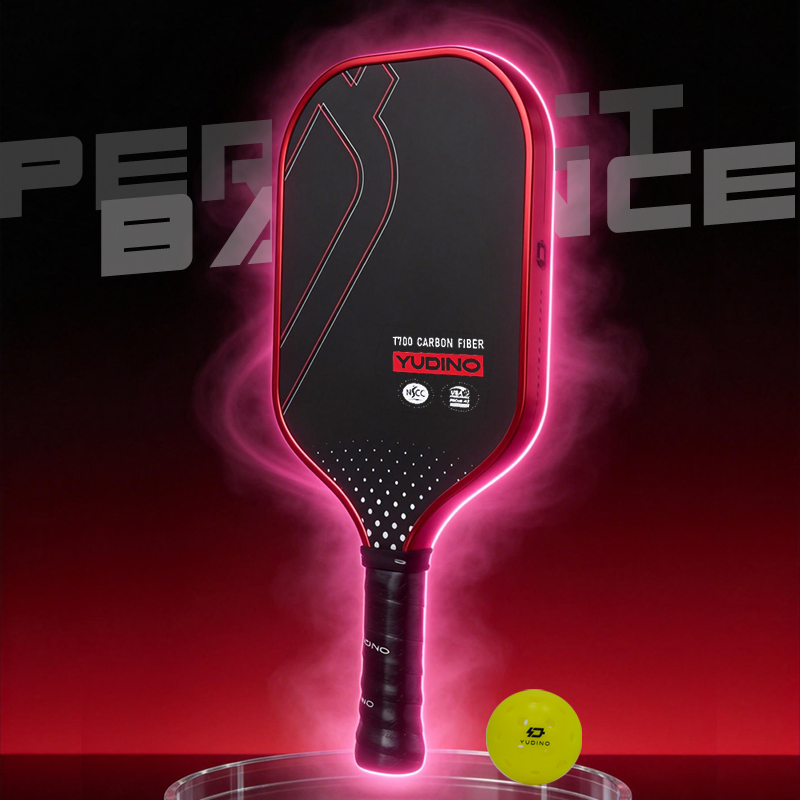
Face Material: Carbon Fiber Specs for Doubles Play
Not all carbon fiber performs the same in a doubles context. Face density — indicated by the K-rating of the weave — affects how energy transfers at contact.
An 18K carbon fiber face with high weave density provides more power and a firmer, crisper response. This suits players who want explosive pop on their drives and can manage the firmer ball feel at net. The 18K structure also has outstanding tensile strength, which means the face maintains its performance characteristics over heavy use without softening or becoming inconsistent.
A 12K carbon fiber face sits slightly softer in response, which can feel more forgiving for control-oriented doubles play — particularly on the quick exchange shots at the non-volley zone where touch matters more than raw output.
A 3K textured carbon face, with its slightly rougher surface, generates more friction at contact and is the strongest choice for spin production — a real asset in doubles when a well-placed spinning dink can force errors from the opposing team.
In all three cases, what separates a dependable doubles paddle from an inconsistent one is how well the face bonds to the core. In a genuinely thermoformed pickleball paddle, hot-press molding fuses these layers into a single continuous unit. Paddles assembled from separately glued components are more likely to develop subtle delamination over time — which changes ball feel in ways the player may not immediately identify as a paddle problem.
Weight and Maneuverability
Most effective doubles paddles land in the 7.6 to 8.2 oz range. Lighter paddles are faster to maneuver at net but generate less natural power on drives; heavier paddles produce more momentum but slow down quick-hands exchanges slightly.
For most doubles players, the middle of this range — around 7.8 to 8.0 oz — offers the best balance between maneuverability and drive power. Players who favor an aggressive, offensive style at the net often prefer the upper end; players focused on defense and ball control tend toward the lower end.
Questions Doubles Players Ask Before Buying
Does paddle shape actually affect how quickly I can react at the net? Yes. A wider, balanced paddle is generally faster to redirect in reflex situations than a long, narrow one. The difference isn't large, but at high-level doubles play, it's noticeable over the course of a match.
Is a softer or harder paddle better for dinking? Softer — meaning a thicker core with more shock absorption — generally performs better for dink control. Harder paddles can make touch shots harder to calibrate because the ball leaves the face faster.
Should I use a different paddle for doubles than singles? Many serious players do. A wide body, thicker-core paddle for doubles and a longer, stiffer paddle for singles is a common two-paddle setup among players who compete in both formats.
Does grip length matter more in doubles? Not dramatically, but a standard grip length is generally more versatile for the two-handed backhand reset that many doubles players rely on in pressure situations.
Can thermoformed construction actually affect ball feel in doubles-specific situations? Yes. The consistency of a thermoformed pickleball paddle — where face-to-core adhesion is uniform across the whole surface — means the sweet spot behaves predictably on reflex shots, not just on full, composed swings. That predictability at net is harder to achieve in a laminated build.
What This Means for Buyers Sourcing Doubles-Oriented Paddles
Doubles is currently the dominant format in recreational and club pickleball globally, which means a paddle line built around doubles performance specifications — wide body shapes, thicker honeycomb cores, softer carbon face options — addresses the largest slice of the addressable market. Importers and brand owners building out a first catalog often find that doubles-optimized specs anchor their core SKU more reliably than a singles-oriented profile, simply because the majority of recreational players default to doubles play.
When evaluating a manufacturer for a thermoformed pickleball paddle line targeting doubles players specifically, the questions worth asking include: what core thickness options are available within the same mold, whether face texture variants (smooth versus textured carbon) are accessible on the same paddle body, and whether samples can be tested across the weight range before committing to a production spec.
Final Thoughts
The best pickleball paddle for doubles is the one that performs when you don't have time to think — fast to maneuver, forgiving on off-center contact, and consistent enough to be trusted in a reflex situation you didn't fully set up. That typically means a wide body shape, a thick PP honeycomb core in the 14 to 16mm range, a carbon face matched to your preferred control-power balance, and construction quality that keeps all those specs stable over time.
A well-built thermoformed pickleball paddle addresses most of those requirements from the foundation up. The seamless mold eliminates the weak points that tend to emerge in high-contact doubles play, and the consistency of hot-press construction means the paddle performs the same on game fifty as it did on game one. For players and buyers serious about doubles performance, construction quality isn't secondary to the spec list — it's what makes the spec list meaningful in the first place.
FAQ
What paddle weight is best for doubles pickleball?
Most doubles players find the 7.6 to 8.2 oz range works well. Lighter paddles favor quick net play and maneuverability; heavier paddles add natural drive power. The 7.8 to 8.0 oz midpoint suits the widest range of playing styles.
Is a thermoformed pickleball paddle better for doubles than a traditional laminated one?
In most cases, yes — particularly for the consistency of the sweet spot under pressure. A thermoformed build eliminates seam and delamination issues that tend to show up in laminated paddles after heavy doubles use.
What core thickness is recommended for doubles-focused paddles?
14 to 16mm PP honeycomb cores are widely preferred for doubles play. The added thickness absorbs more impact energy, which helps with dink control and resetting hard-driven shots at the non-volley zone.
Can I order double-specific paddle specs for private label or wholesale?
Yes. Most manufacturers can supply paddles with specified core thickness, face texture, and shape within the same production run, making it practical to build a doubles-optimized SKU as part of a broader catalog.
Does the carbon fiber K-rating affect doubles performance?
It does, but not in isolation. A 12K or 18K face will perform differently depending on core pairing and overall paddle weight. The K-rating is one input in a system — not a single deciding factor — and the best approach is to test samples across the relevant specs before finalizing a production order.