Carbon Fiber Pickleball Paddle Cleaning Guide
Introduction
You just dropped $120—maybe even $250—on a carbon fiber pickleball paddle. You've put in the hours on the court, the muscle memory is building, and the spin performance feels exactly right. Then one day you pick it up and notice the surface feels slick. Your dinks are sailing. Your third-shot drops have lost their bite.
What happened?
Sweat. Dirt. Skin oils. Ball fuzz. Chalk dust from the court surface. Over time, every one of these works its way into the microscopic texture of your carbon fiber face—and once that happens, the paddle that cost you serious money starts performing like a budget alternative.
Here's what most players miss: carbon fiber pickleball paddles are not maintenance-free. The very property that makes them so attractive—that tight, raw-texture weave—is also what makes them surprisingly susceptible to contamination. The 3K, 12K, and 18K weave patterns that manufacturers like Yudino engineer for maximum grip and spin generation can become clogged, compressed, or degraded if you don't maintain them properly.
This guide was built for serious players, coaches, and equipment resellers who want to know exactly how to clean, maintain, and extend the life of a carbon fiber pickleball paddle. We've pulled from player discussions on Reddit and Quora, combined the most-tested techniques across pickleball communities, and layered in manufacturer-level technical knowledge about what carbon fiber actually is and why it behaves the way it does.
Whether you own an entry-level 3K, a mid-range 12K tournament paddle, or a premium titanium carbon fiber model—this is the guide you've been looking for.
Why Cleaning a Carbon Fiber Pickleball Paddle Matters More Than You Think
Most racquet sports players understand that strings need replacing and grips need rewrapping. But paddle face maintenance? That's an area where even experienced pickleball players fall behind.
The paddle face on a carbon fiber pickleball paddle is not a smooth painted surface. It is a woven composite material—thousands of individual carbon fiber strands interlocked at precise angles. Manufacturers engineer these angles deliberately. A 3K weave (3,000 filaments per bundle) creates a tighter, more uniform texture. An 18K weave (18,000 filaments per bundle) produces a looser, more aggressive surface that grabs the ball differently. Titanium-infused carbon fiber faces add an additional layer of surface tension that enhances both friction and durability.
That texture is your spin. That texture is your control. And that texture is exactly what dirt, oils, and ball residue destroy.
In Reddit's r/Pickleball community, this comes up constantly. One player wrote: "I noticed my carbon fiber paddle started feeling like plastic after about two months. Turns out I had never cleaned it once. The difference after a proper cleaning was night and day."
On Quora, a certified pickleball instructor explained: "Players often blame their technique when their third-shot drop starts failing—but half the time, the real culprit is a contaminated paddle face. Carbon fiber textures clog up just like a kitchen sponge. Clean them and suddenly their technique is 'fixed.'"
The stakes are real:
Performance degradation: A dirty paddle face reduces friction, killing spin and control.
Permanent surface damage: Some contaminants, if left long enough, can embed permanently into the carbon weave—damage that cannot be reversed.
Voided warranties: Many manufacturers specify that paddles must be kept clean for warranty coverage to apply, especially regarding delamination claims.
Premature replacement: A $200 paddle that lasts 8 months due to neglect is a worse investment than a $100 paddle maintained for two years.
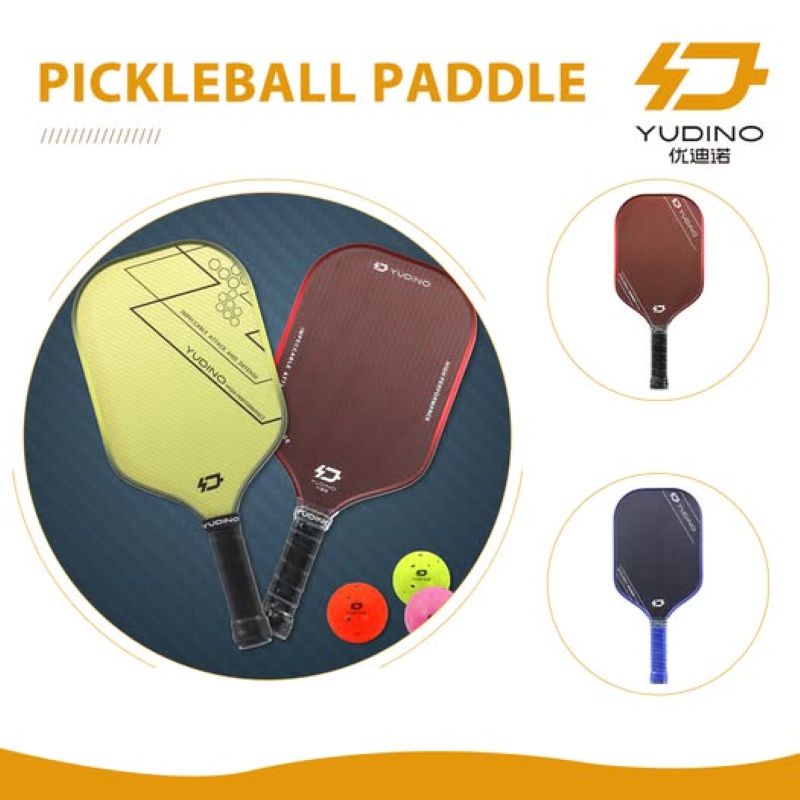
Understanding Your Carbon Fiber Paddle Face: A Technical Foundation
Before you clean anything, you need to understand what you're working with. This is where most cleaning guides fall short—they tell you what to do without explaining why, and that leads to players making preventable mistakes.
The Carbon Fiber Weave System
Carbon fiber composite paddles use different weave densities, and each one has different maintenance implications:
3K Carbon Fiber: Three thousand filaments are bundled together in each tow. The resulting weave is tight and relatively smooth compared to higher-K counts. 3K paddles provide a balanced feel and are popular for control-oriented players. From a cleaning standpoint, the tighter weave means contaminants tend to sit more on the surface than in it—making them somewhat easier to remove.
12K Carbon Fiber: Twelve thousand filaments per bundle create a more textured, visually distinctive surface. Yudino's 12K tournament paddle series uses thermoformed construction that pressurizes the face during manufacturing, resulting in a consistent, high-friction surface ideal for spin players. The more open texture of 12K weaves means dirt and oils can penetrate slightly deeper, requiring a bit more attention during cleaning.
18K Carbon Fiber: This is where things get interesting. With 18,000 filaments per tow, the 18K weave produces a noticeably aggressive surface texture that generates exceptional spin. Yudino's 18K Power Pro paddle combines this face with a PP (polypropylene) honeycomb core and a 16mm interior thickness—the result is a face that grips the ball aggressively but also collects contamination faster than finer weaves. Players using 18K paddles need to clean more frequently.
Titanium Carbon Fiber: Yudino's premium line integrates titanium alloy into the carbon fiber construction. The titanium component reinforces structural resilience while preserving the natural carbon fiber texture. This slightly coarse surface is specifically engineered for spin production and touch feedback. Because the texture is intentionally rougher, it requires careful cleaning—you want to preserve the texture, not sand it down.
What Accumulates on Your Paddle Face
Understanding the enemy is half the battle. Here's a breakdown of what actually accumulates on a carbon fiber pickleball paddle face:
Ball residue and polymer transfer: Outdoor pickleballs are made from hard plastic (HDPE or similar polymers). Indoor balls are typically softer. Every time you strike the ball, microscopic polymer particles transfer to your paddle face. Over hundreds of impacts, this builds up into a visible, slightly shiny film.
Skin oils and sweat: Players transfer body oils every time they touch the paddle face. Sweat from your hands, if it migrates up the grip and onto the face, carries salt and organic compounds that can chemically interact with some surface coatings.
Court dust and chalk: Outdoor courts—especially those that haven't been resurfaced recently—generate fine particulate dust. This gets onto the ball, then onto your paddle face with every hit. Chalk lines, if disrupted during play, leave fine calcium carbonate powder that fills in carbon fiber texture grooves.
Grip wax and overspray: Some players apply grip enhancers or paddle sprays to their handles. Overspray migrating to the face is a common and underappreciated source of contamination.
Bag friction: Simply sliding your paddle in and out of a bag or case generates abrasion and transfers lint, fabric particles, and debris onto the face.
What You Should Never Do: Common Cleaning Mistakes That Destroy Paddles
This section exists because some of the most common paddle cleaning advice circulating online is actively harmful. We've seen these mistakes repeatedly in community forums, and they are preventable.
Mistake #1: Using Abrasive Scrubbers or Steel Wool
This one seems obvious in hindsight, but it happens. Players who notice stubborn buildup on their paddle face reach for a scrub pad, a scouring sponge, or even steel wool to "cut through" the residue.
Carbon fiber weaves are strong—but they are not impervious to mechanical abrasion. Aggressive scrubbing with abrasive materials does not clean the surface; it sands it down. You are physically removing the texture that makes your paddle perform. You are grinding away the microscopic ridges that generate friction. After a single session with an abrasive pad, your paddle face may feel "cleaner"—but it will never perform the same way again.
Mistake #2: Soaking the Paddle in Water
Carbon fiber itself does not absorb water. However, the adhesive layers, edge guard seals, and core materials inside your paddle absolutely can. Prolonged water exposure causes:
Edge guard separation
Core delamination (the paddle face physically peeling away from the core)
Internal moisture accumulation, which permanently changes the paddle's weight and sound characteristics
Even on paddles with quality construction, soaking is never recommended. Quick surface contact with water during cleaning is fine. Submersion or prolonged dampness is not.
Mistake #3: Using Harsh Chemical Solvents
Acetone, isopropyl alcohol at high concentrations (above 70%), bleach, vinegar, and most household cleaning sprays are all inappropriate for carbon fiber pickleball paddles. These chemicals can:
Strip protective surface coatings
Degrade the polymer binding agents in the composite matrix
Discolor or permanently alter the surface texture
Damage any printed graphics or edge seal materials
When a player on Reddit reported their paddle's surface "turning gray and chalky," the likely culprit was a strong cleaning agent. Once carbon fiber surface coatings are stripped by solvents, the damage is cosmetic and sometimes structural—and always permanent.
Mistake #4: Wiping With Paper Towels
Paper towels feel soft, but their cellulose fibers are surprisingly abrasive at a microscopic level—and they shed lint that embeds into the carbon fiber weave. Over time, using paper towels consistently will leave fine scratches on the paddle face and fill the texture with paper fibers. Use microfiber cloths exclusively.
Mistake #5: Cleaning Only When Performance Drops
By the time you notice that your spin has degraded or your shots feel different, contamination has already been building for a while. Reactive cleaning is less effective than preventive cleaning. The ideal approach is to clean after every session—or at minimum, after every two to three playing sessions.
The Right Tools: What You Actually Need to Clean a Carbon Fiber Paddle
Good news: proper paddle maintenance does not require expensive or hard-to-find products. Here is your complete cleaning toolkit.
Essential Tools
Microfiber cloths (multiple): These are non-negotiable. The ultra-fine fibers of a quality microfiber cloth lift contamination without scratching or abrading the surface. Keep one dedicated dry cloth and one for damp cleaning. Wash them regularly—a dirty microfiber cloth simply redistributes contamination.
Lukewarm water: Plain water handles a surprising amount of light contamination, especially fresh ball residue and surface dust. Lukewarm (not hot) water is safe for carbon fiber faces and edge guards.
Mild dish soap: A single drop of gentle, non-degreasing dish soap (Dawn or equivalent) in a small bowl of water creates an effective cleaning solution for moderate buildup. Avoid soaps with added moisturizers, antibacterial chemicals, or strong fragrances.
Soft-bristle toothbrush (optional): For textured faces—especially 18K and titanium carbon fiber surfaces—a soft-bristle toothbrush allows you to gently work cleaning solution into the deeper grooves of the weave. The key word is soft. Hard bristles can scratch. Use gentle circular motions with minimal pressure.
Paddle eraser: Several paddle care brands sell specialized rubber erasers designed for pickleball paddle faces. These can be effective for removing polymer transfer and ball scuff marks—the rubber gently mechanically dislodges surface contamination without scratching. They are particularly useful for maintaining 3K and 12K surfaces between deep cleans.
Isopropyl alcohol (50% or lower): For stubborn polymer buildup that won't respond to soap and water, a very diluted isopropyl alcohol solution (50% or less, applied sparingly to a microfiber cloth—never directly to the paddle) can be effective. Do not use this as a regular cleaning method, and never use concentrations above 70%.
Tools to Avoid
Steel wool, scouring pads, Brillo pads
Paper towels
High-concentration alcohol (above 70%)
Acetone or nail polish remover
WD-40 or oil-based products
Abrasive toothpastes
Step-by-Step: How to Clean a Carbon Fiber Pickleball Paddle Properly
For Regular Maintenance (After Every 1-3 Sessions)
This process takes less than five minutes and handles the vast majority of normal court contamination.
Step 1: Remove loose surface debris
Before introducing any moisture, take a dry microfiber cloth and gently wipe both faces of the paddle in smooth, overlapping strokes. This removes loose chalk dust, fine particulate, and any light debris that would otherwise get worked into the surface when wet cleaning begins.
Step 2: Prepare your cleaning solution
In a small bowl, combine lukewarm water with one small drop of mild dish soap. Stir gently. You want just the faintest hint of suds—not a bubble bath.
Step 3: Dampen your microfiber cloth
Dip a clean microfiber cloth into the solution, then wring it out thoroughly. The cloth should be damp but not dripping. Excess water is your enemy here.
Step 4: Wipe the paddle face
Working from the center of the paddle outward, use gentle circular motions to clean the surface. Apply minimal pressure. You are not scrubbing—you are lifting. Make multiple passes, refolding the cloth to expose clean sections as needed.
Pay particular attention to the area around the edge guard junction, where dirt tends to accumulate in the small gap between the face and the guard.
Step 5: Rinse
Dampen a separate clean microfiber cloth with plain water (no soap) and wipe the paddle face again to remove any soap residue. Soap left on the surface can attract new contamination faster than a clean face would.
Step 6: Dry immediately
Use a dry microfiber cloth to thoroughly dry both faces and the edge guard. Then stand the paddle vertically or place it face-up in open air for 15-20 minutes before bagging it. Never place a damp paddle directly into a sealed case.
For Deep Cleaning (Every 2-4 Weeks for Active Players)
When regular maintenance hasn't been consistent, or when you notice persistent performance degradation despite routine cleaning, a deeper approach is needed.
Step 1: Assess the contamination type
Hold the paddle under good lighting and examine the face closely. Look for:
Shiny, slightly reflective patches (polymer transfer from balls)
Slightly darker areas near the sweet spot (compressed skin oils)
Gritty or grainy texture that doesn't wipe off easily (embedded chalk or court dust)
Dull or worn-looking sections (early-stage surface wear)
Step 2: Start with the paddle eraser (if available)
Before introducing water, use a paddle eraser on areas of visible polymer transfer. Work in small circles with light pressure. You should see residue lifting onto the eraser surface. Brush off eraser debris with a soft brush or dry microfiber cloth.
Step 3: Apply mild soap solution with soft-bristle toothbrush
For 18K, titanium carbon fiber, or any paddle with an aggressive surface texture, dip a soft-bristle toothbrush lightly into your cleaning solution and work it gently across the paddle face in small circular sections. The goal is to lift contamination from the deeper weave grooves. Do not press—let the bristles do the work.
Step 4: Wipe clean with microfiber
Use a damp (not wet) microfiber cloth to wipe away the loosened contamination and cleaning solution. Work quickly and methodically. Rinse the cloth frequently.
Step 5: Targeted treatment for stubborn spots
If polymer transfer spots remain after soap cleaning, apply a small amount of diluted isopropyl alcohol (50% maximum) to a microfiber cloth corner and gently dab—not rub—the affected area. One or two careful passes is enough. Do not flood the area.
Step 6: Full rinse and dry
Wipe the entire face with a water-dampened microfiber cloth to remove all cleaning agent residue. Dry thoroughly. Allow 30 minutes of open-air drying before storing.
Cleaning the Handle and Grip
The grip and handle are often overlooked, but they matter for overall paddle hygiene and longevity. Sweat, chalk, and skin oils accumulate on grip tape at a far higher rate than on the paddle face—and a saturated grip affects control just as much as a dirty face.
For standard cushion grips: Wipe down with a barely-damp microfiber cloth after each session. Avoid soaking—most cushion grips are foam-based and will deteriorate if repeatedly saturated. Allow to air dry completely before storage.
For overgrip tape: If you use overgrip, replace it regularly. Overgrip is inexpensive and absorbs contamination at high rates. Trying to clean overgrip tape beyond basic wiping is rarely worth the effort—just replace it. Most competitive players change overgrip every 8-12 hours of play.
For the butt cap and handle throat: Use a dry toothbrush to dislodge dirt from the seam between the handle and the paddle body. This area collects grime that, while it doesn't affect performance directly, can migrate toward the paddle face over time.
Storage Best Practices: How You Store Your Paddle Is Part of Maintenance
Proper cleaning means nothing if your storage habits immediately re-contaminate the paddle. These are the storage practices used by serious players and equipment resellers who need their inventory in consistent, peak condition.
Use a Dedicated Paddle Case
Generic bags and backpack side pockets allow direct contact between your carbon fiber pickleball paddle face and abrasive materials—ball zippers, other equipment, bag linings. A dedicated paddle cover or case with a smooth interior lining protects the face between sessions.
Hard cases provide the best protection for travel and transportation. Neoprene sleeves are practical for regular gym-to-court use. Avoid rough canvas or unlined fabric pouches that can abrade the surface with every insertion.
Never Store While Damp
A paddle sealed in a case while still damp creates a microclimate that can:
Encourage adhesive weakening along the edge guard
Promote surface oxidation on certain carbon fiber treatments
In extreme cases, allow mold or mildew growth on grip materials
Fully dry your paddle before storage. When in doubt, add 15 minutes.
Store Away From Extreme Temperatures
Carbon fiber paddles can tolerate a wide temperature range during play, but extended exposure to extreme conditions in storage is a different matter. The adhesive compounds, edge guards, and polypropylene core materials can be affected by:
Extreme heat (car trunks in summer): adhesive softening, delamination risk, potential warping
Extreme cold (outdoor storage in winter): brittleness in composite materials, edge guard cracking
Store your paddle in a temperature-stable indoor environment. A climate-controlled closet is ideal. The back seat of your car between sessions is fine. The trunk over a weekend in August is not.
Keep Paddles Separated
Players who own multiple paddles or coaches who maintain player sets know this one well: when paddles are stored face-to-face or stacked together, they abrade each other. Even with protective covers, the weight and pressure of paddles resting against each other cause micro-scratching over time. Store paddles with faces separated, ideally in individual sleeves.
How Often Should You Replace a Carbon Fiber Paddle?
Even with perfect maintenance, all paddles eventually reach the end of their performance life. Knowing the signs helps you make an informed decision about replacement rather than replacing prematurely or—more commonly—playing with a degraded paddle longer than you should.
Signs Your Paddle Face Has Reached End of Life
Visible surface wear: If you can see areas where the carbon fiber texture has visibly smoothed out, thinned, or changed in appearance compared to areas near the edge (which receive less impact), the sweet spot texture is worn. Cleaning cannot restore what has been physically removed.
Persistent performance loss despite cleaning: If you've done a thorough deep clean and the spin and touch performance still doesn't feel right, the texture degradation is mechanical—not contamination-based. Time for a new paddle.
Delamination: You can hear this as a "dead" sound on impact, or feel it as a slightly soft, uneven surface where the carbon fiber face has separated from the core. Delamination cannot be repaired meaningfully and significantly affects both performance and safety.
Edge guard failure: If the edge guard is cracking, splitting, or pulling away from the paddle body, internal moisture and contamination can accelerate rapidly. Replacement is recommended once edge guard integrity is compromised.
Typical Lifespan for a Carbon Fiber Paddle
For players who clean and maintain their paddle correctly:
Recreational players (1-3 sessions/week): 12-24 months of consistent performance
Intermediate players (4-6 sessions/week): 8-14 months
Competitive/intensive players (daily play): 4-8 months for peak performance, up to 12 months with careful maintenance
Premium construction—like thermoformed 12K paddles or titanium carbon fiber models—tends to maintain surface integrity slightly longer than standard construction, because the denser manufacturing process produces a more wear-resistant face from the start.
Maintaining Spin Performance: Advanced Techniques From Competitive Players
Beyond basic cleaning, serious players have developed specific techniques for maintaining and maximizing the spin performance of their carbon fiber pickleball paddle over time.
The "Spin Test"
Before each session, do a quick spin test: hold the paddle face-up and tap a ball onto it at a slight angle, observing how much the ball grips and deflects. A well-maintained surface will produce a visible grip effect. A contaminated surface will feel slick and the ball will deflect with minimal engagement. This 10-second test tells you whether you need a quick clean before playing.
Texture Restoration with a Paddle Eraser
Some manufacturers produce paddle erasers—small rubber or rubber-compound blocks specifically designed for carbon fiber faces. These work similarly to a pencil eraser: the rubber compound mechanically grips and lifts surface contamination without abrading the carbon fiber itself. Used before a session, a paddle eraser can restore significant texture engagement, especially on 12K and 18K surfaces where the texture depth allows for effective mechanical cleaning.
Many players in pickleball communities report that a 30-second paddle eraser treatment before play is more effective than a full wash for intra-session maintenance, because it doesn't require drying time.
The Community Debate: Light Abrasion vs. Pure Cleaning
In Reddit's r/Pickleball and r/PickleballEquipment communities, there's an ongoing debate about whether very light abrasion—using ultrafine sandpaper (above 2000 grit) to "refresh" a worn carbon fiber face—is legitimate maintenance or surface damage.
The nuanced answer: this practice can briefly restore tactile sensation on a surface that has been polished smooth by wear, but it is not equivalent to the original surface texture and it removes material permanently. It also sits in a gray area regarding USAPA paddle certification—certified paddles are certified with their original surface specifications, and any material alteration could affect that certification status.
Our recommendation: do not use abrasive refreshing techniques on competition-grade paddles. If the surface has worn to the point where abrasion seems necessary, the paddle has reached its performance end-of-life, and replacement is the appropriate response.
A Note on Paddle Certification and Cleaning Products
For players who compete in USAPA-sanctioned tournaments, there is an important compliance dimension to paddle care that is rarely discussed.
USAPA paddle certification covers the paddle as manufactured. The surface roughness, texture specifications, and friction characteristics are part of what gets tested and approved. When you apply:
Surface coatings or sprays
Waxes or grip-enhancing compounds to the paddle face
Texture-altering treatments of any kind
…you may be modifying a certified paddle in ways that push it outside its certified specifications—which technically makes it non-compliant, even if the paddle itself was originally certified.
This is not a theoretical concern. USAPA rules explicitly prohibit applying substances to the paddle face that alter its surface properties. Stick with cleaning methods—removing contamination rather than adding anything. Plain water, mild soap, and a clean microfiber cloth are always compliant. Stick with these for tournament play.
Yudino's certified products—which hold USA Pickleball certification across multiple friction and performance parameters—are engineered to perform correctly when the surface is maintained in its original, clean state. The manufacturing process, not post-purchase treatments, is what produces compliant spin characteristics.
Cleaning for Coaches and Equipment Resellers: Managing Multiple Paddles
Coaches who maintain paddle sets for lessons and equipment resellers who handle inventory have a different maintenance challenge than individual players: volume and consistency across a range of paddle conditions.
Establishing a Cleaning Protocol
For a paddle set of 10 or more paddles, a consistent protocol reduces maintenance time and ensures every paddle performs at the same level for students or customers.
After each use cycle:
Wipe all faces and handles with dry microfiber cloths immediately after the session. Do this before paddles go back in storage, while contamination is fresh and easiest to remove.
Stack paddles with faces separated (individual sleeves or separated in a rack).
Note any paddles that need deeper attention (visible buildup, sticky spots, edge guard issues).
Weekly deep clean for active sets:
Process paddles one at a time with mild soap solution and soft-bristle toothbrush.
Allow full drying before returning to storage.
Inspect for surface wear or delamination while cleaning—this is when you'll catch problems earliest.
Monthly assessment:
Conduct spin tests on all paddles in the set.
Compare performance against baseline (how they felt when new or after the last full deep clean).
Retire paddles that show irreversible performance degradation.
Tracking Paddle Condition
For resellers and coaches managing inventory, a simple condition tracking system pays dividends. Even a basic spreadsheet with paddle model, date of entry into service, estimated session count, and condition notes allows you to anticipate replacements and maintain consistent inventory quality.
Customers and students notice when equipment is well-maintained. A carbon fiber pickleball paddle in excellent condition communicates professionalism and care. A degraded, dusty paddle with a worn face communicates neglect—and it leads to worse experiences that ultimately reflect on your brand, not just your equipment supplier.
Conclusion
A high-performance carbon fiber pickleball paddle—whether it's a precision-engineered 18K model, a thermoformed 12K tournament paddle, or a premium titanium carbon fiber construction—represents a real investment in your game. That investment pays dividends only if you protect it.
The core principles are straightforward: clean regularly with gentle tools and mild solutions, store properly in a dedicated case away from temperature extremes, never use abrasives or harsh chemicals, and recognize the difference between contamination that can be cleaned and surface wear that signals end of life.
Players who build paddle maintenance into their post-session routine consistently report better spin performance, longer paddle lifespan, and more consistent on-court results. The 10 minutes you invest in proper cleaning and storage saves you from buying a replacement paddle three months earlier than necessary—and more importantly, it ensures the equipment you've chosen to play with performs the way it was designed to perform.
Carbon fiber paddle technology has advanced dramatically in the past five years. The textures, weave densities, and surface engineering that manufacturers are achieving now produce paddle performance that would have been considered tournament-grade even by professional standards. Maintaining that engineering is your responsibility as the player. Do it well, and your paddle will reward you.
FAQ
Q: Can I use a magic eraser to clean my carbon fiber pickleball paddle?
A: No. Magic erasers are micro-abrasive—they work by physically abrading surfaces at a microscopic level, which is why they remove marks so effectively on hard surfaces. On a carbon fiber pickleball paddle face, that same abrasive mechanism will remove the texture you rely on for spin and control. Use a dedicated paddle eraser (designed specifically for paddle faces) or a soft-bristle toothbrush instead. They achieve contamination removal without surface degradation.
Q: How do I remove the black ball marks from my paddle face?
A: Ball marks—the dark scuff lines left by ball impact—are polymer transfer deposits from the ball's surface onto your paddle. For fresh marks, a paddle eraser or a gentle wipe with a slightly damp microfiber cloth will usually remove them. For older, set-in marks, apply a very small amount of diluted isopropyl alcohol (50% or below) to a microfiber cloth corner and dab gently at the mark. Never rub aggressively. If marks remain after treatment, they may have slightly embedded into the surface texture—subsequent regular cleaning will gradually reduce their appearance, but some level of staining can be permanent on lighter-colored carbon fiber faces.
Q: My paddle face feels smooth even right after cleaning. Is it worn out?
A: If the smoothness persists after a thorough cleaning—including toothbrush treatment and paddle eraser work—and the paddle has significant hours of play on it, the surface texture has likely been mechanically worn through impact and friction. This is irreversible through cleaning. Compare the texture near the edge guard (which receives much less impact) to the sweet spot area. If there's a clear difference in texture between those zones, the sweet spot has worn down. Time to evaluate a replacement.
Q: Is it safe to use a UV sanitizing wand on my carbon fiber paddle?
A: UV sanitizing wands are generally safe for a quick surface pass on carbon fiber paddle faces—UV light does not chemically alter carbon fiber or standard polymer composite materials under normal exposure durations. However, UV sanitizing does not remove physical contamination (polymer transfer, oils, dust). It only addresses microbial surface contamination. For performance maintenance, physical cleaning with a microfiber cloth and mild soap solution remains essential. Use UV sanitizing as a supplementary hygiene measure, not as a replacement for regular cleaning.
Q: How do I know if my Yudino carbon fiber paddle is still within its performance specifications?
A: The most reliable field test is the spin comparison: compare how much spin you can generate on controlled third-shot drops and dinking exchanges against your performance when the paddle was new (or after a thorough cleaning). If performance has noticeably degraded and does not recover after deep cleaning, the paddle surface may have worn beyond its original specifications. For competition use, Yudino's paddles are designed and certified to perform to USAPA standards in their original, properly maintained surface state. If you're competing in sanctioned events, a paddle that no longer meets your performance expectations should be replaced rather than modified. Contact Yudino's team directly for guidance on specific models and their expected lifespan under your play intensity.
Yudino (Liaoning) Sports Goods Co., Ltd. specializes in the research, development, and production of professional pickleball paddles—including 18K, 12K, 3K, fiberglass, and titanium carbon fiber models—designed for players and brands worldwide. All competition-grade models carry USA Pickleball certification. For wholesale inquiries, custom design, or sample requests, contact our team directly.