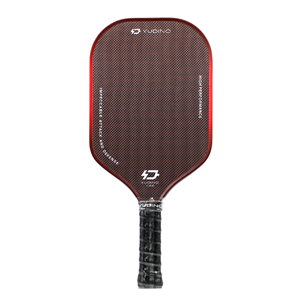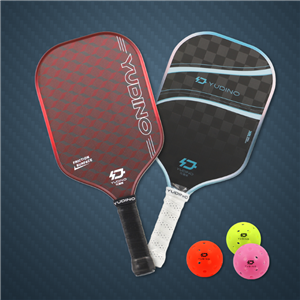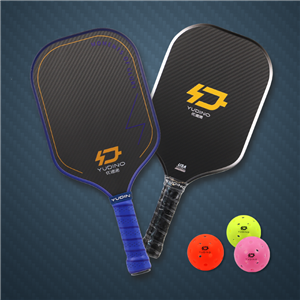
Four Shapes of Pickleball Paddles
In pickleball, the choice of racket shape is often more important than the brand. Many players spend $200 on pickleball paddles only to find that their error rate actually increases due to a mismatch in shape.
To help you avoid these pitfalls, we've conducted in-depth research into current professional trends, breaking down racket shapes into four core categories and revealing the "physical rules" behind them.
I. Quick Decision Matrix: Which Shape Suits Your Playing Style?
Shape Names: | Typical dimensions (inches) | Sense of power | Forgiveness (Dessert Section) | Flexibility (Net Play) | Recommended for: |
Standard | 16" x 8" | Balance | High | Excellent | Beginners, All-rounders |
Elongated | 16.5" x 7.5" | Extremely high | Lower | Average | Singles, Former Tennis Players |
Widebody | 15.5" x 8.5" | Low | Top | Very Good | Defensive Players, Kitchen Masters |
Hybrid | 16.2" x 7.8" | Excellent | Excellent | Excellent | Intermediate Players, Indecisive Players |
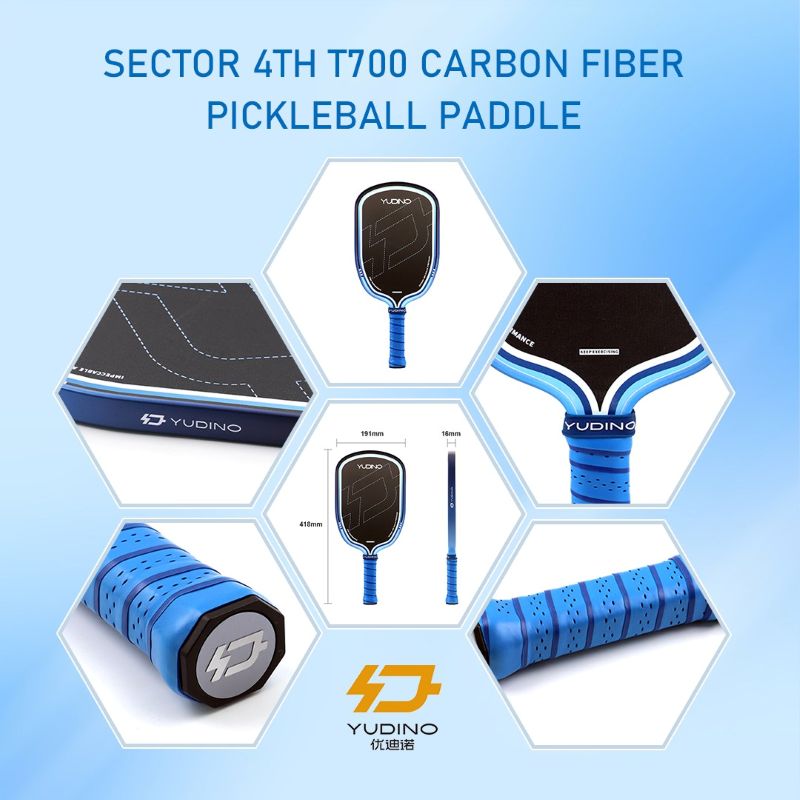
II. In-Depth Analysis of the Four Shapes: More Than Just Length
1. Standard: The Reliable "Golden Ratio."
The standard racket face is typically 16 inches long and 8 inches wide. It is the cornerstone of most top brands.
Expert Perspective: If you're unsure which to choose, choose the standard. Its center of gravity is closest to the hand, providing the most intuitive feel for the ball.
Suitable for: Beginners just starting out who want to build a solid foundation.
2. Elongated: The "Lever" of Power and Spin
It sacrifices width (usually reduced to 7.5 inches) for length (reaching the 16.5-inch or even 17-inch limit).
Physical Essence: A longer lever arm means greater swing weight. This allows you to generate more explosive power and topspin when hitting from the baseline.
Fatal Flaw: Its sweet spot is higher and narrower. If your shot isn't accurate enough, the racket will twist violently, causing the return to go into the net.
3. Widebody: The "Bulletproof Shield" of Forgiveness
Its width exceeds 8.25 inches. Its core value lies in maximizing twist weight.
Practical Experience: In fast rallies at the net, the widebody racket is like a wall. Even if you miss the ball, the racket won't wobble easily.
Suitable for: Players who previously played table tennis, or older players who want to reduce arm strain.
4. Hybrid:
The hybrid shape combines the length of a long racket (approximately 16.2 inches) with the curved edges of a standard racket.
Why is it so popular? Its rounded head design reduces air resistance, retaining the offensive feel of a long racket while improving reaction speed at the net.
III. Besides Shape, Two Essential Metrics You Must Know
Swing Weight: Two rackets with identical shapes will feel much heavier when swung if one has added weight to the head (thermoforming technology). Long rackets tend to have a higher swing weight, meaning greater power but also faster muscle fatigue.
Handle Length:
5.5 inches and above: Specifically designed for tennis players transitioning to a two-handed backhand grip.
Under 5 inches: Suitable for players who prefer one-handed control, increasing the effective hitting area.
IV. Targeted Recommendations: Choose Based on Your "Athletic Genes"
If you were a tennis player: Choose Elongated. You'll get used to the leverage, and the longer handle allows for beautiful two-handed backhands.
If you were a table tennis player: Choose Widebody. You're used to close-range reactions and quick wrist movements; the low swing weight of a widebody racket complements your feel.
If you're aiming for a higher competitive win rate: Try Hybrid. Currently, most players at the 4.5+ level are switching to hybrid rackets to balance baseline power and net speed.
Summary: The final step before ordering
Don't just look at the racket's color and brand. First, ask yourself: "Am I dropping long balls that I can't reach, or am I dropping easy balls that I catch but don't hit accurately?"
If it's the former (short reach), choose Elongated;
If it's the latter (inaccurate), choose Standard or Widebody.