How Long Does Pickleball Paddle Grit Last?
If you are wondering how long pickleball paddle grit lasts, there is no single number that applies to every paddle. Surface texture can gradually change with playing frequency, repeated ball contact, surface construction, cleaning, and manufacturing quality.
For players and paddle buyers, the more useful question is not simply “How many months does the grit last?” but “How long can the paddle maintain useful surface friction and consistent spin performance?”
For brands, distributors, and OEM buyers, this distinction is even more important because surface durability can affect product positioning, customer experience, and the consistency of future production batches.
What Does Grit Mean on a Pickleball Paddle?
In pickleball, “grit” generally refers to the texture or friction characteristics of the paddle face that affect how the ball interacts with the surface during contact.
A textured surface can increase the interaction between the paddle face and the ball, helping players generate spin while maintaining control.
However, grit is not necessarily a separate material. A paddle can achieve surface texture through different construction methods, including carbon fiber weave patterns, textured surfaces, or other surface treatments.
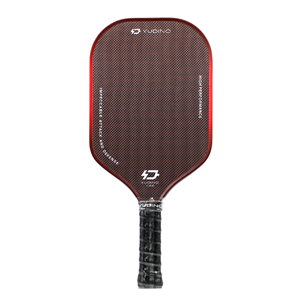
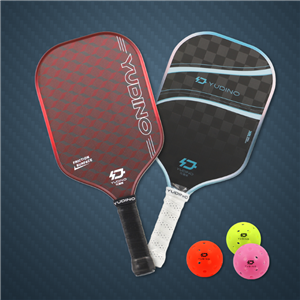
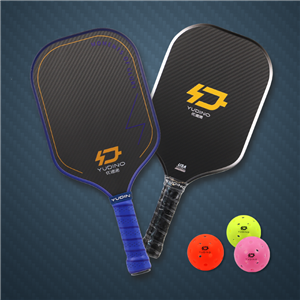
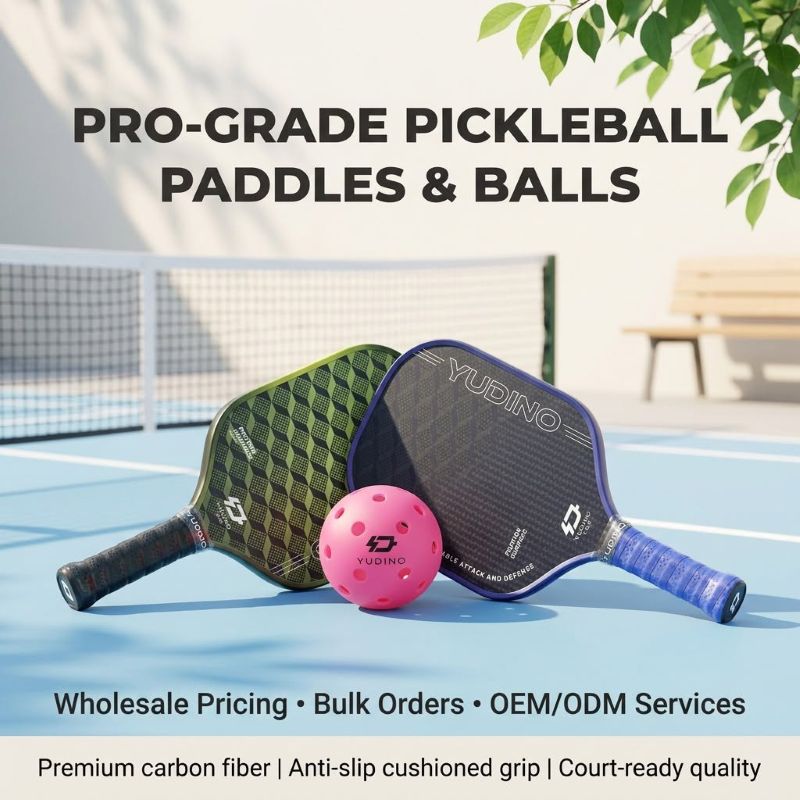
YUDINO, for example, offers textured carbon fiber paddle constructions. Its 3K Textured Carbon Fiber Pickleball Paddle uses a slightly rough surface designed to increase friction and support spin and control. The product can also be customized with different carbon fiber materials, thicknesses, shapes, weights, graphics, logos, and packaging.
How Long Does Pickleball Paddle Grit Usually Last?
There is no universal service life for paddle grit.
Two paddles that look similar in a product catalog can experience very different surface wear because their materials, surface structures, manufacturing processes, and usage conditions may be different.
The main factors include:
1. Playing Frequency
A player who uses a paddle several times a week will expose the surface to much more repeated ball contact than someone who plays occasionally.
More frequent use generally means more opportunities for surface abrasion and texture changes.
For this reason, calendar time alone is not enough to evaluate surface durability.
2. Playing Intensity
Heavy training sessions and frequent high-speed rallies create more repeated contact between the ball and paddle face.
The total number and intensity of impacts can therefore be more meaningful than simply measuring how many months the paddle has been used.
3. Surface Construction
Raw carbon fiber, textured carbon fiber, coated surfaces, and other surface constructions can behave differently during repeated use.
A surface should therefore be evaluated based on its actual construction rather than simply its product name.
4. Ball and Court Conditions
The condition of the ball and the playing environment can also affect surface wear.
Repeated contact with contaminated or heavily worn balls may introduce additional particles into the paddle-ball contact area and influence surface condition over time.
5. Cleaning and Maintenance
Aggressive cleaning methods may affect the surface texture.
Players should follow the manufacturer's care instructions rather than using abrasive materials or unapproved cleaning methods.
What Are the Signs That Paddle Grit Is Wearing?
A reduction in useful surface texture does not always happen suddenly.
Players may notice several gradual changes:
The paddle face feels smoother than when it was new.
The ball does not seem to “bite” the surface as consistently.
Brushing shots produce less predictable spin.
The contact feel changes during spin-oriented shots.
The surface appears visibly smoother in areas that receive frequent ball contact.
These signs do not automatically mean that the entire paddle has reached the end of its service life.
A paddle can remain structurally usable while its surface performance has changed.
This is why surface durability and overall paddle durability should be evaluated separately.
Does Raw Carbon Grit Last Forever?
No.
Raw carbon is a surface construction approach, not a permanent texture.
Because the carbon fiber surface is directly involved in ball contact, its texture and friction characteristics can also change after repeated use.
This is why buyers should not assume that a Raw Carbon paddle will maintain exactly the same surface performance throughout its entire service life.
The actual result depends on the carbon fiber construction, resin system, surface structure, manufacturing process, and usage conditions.
How Can Manufacturers Evaluate Grit Durability?
For manufacturers, the most useful approach is to evaluate both the surface condition and the resulting performance.
A practical testing process can include:
Record the initial surface condition.
Establish a controlled repeated-use or impact test.
Inspect the surface at defined intervals.
Compare texture and visual changes.
Evaluate whether spin-related performance changes under the same testing conditions.
Compare results between different surface constructions.
The purpose is not simply to produce one “grit lifespan” number.
Instead, manufacturers should understand how surface performance changes during repeated use.
For OEM and wholesale buyers, this information can be more useful than a simple statement such as “long-lasting grit.”
What Should OEM Buyers Ask a Pickleball Paddle Manufacturer?
If you are sourcing paddles for a brand or wholesale business, ask the manufacturer:
What is the actual surface construction?
Is the surface raw, textured, coated, or a hybrid construction?
What carbon fiber materials are available?
What paddle thicknesses can be supplied?
How is surface consistency controlled during production?
Does the manufacturer conduct repeated-use or performance testing?
Can the supplier provide inspection or test documentation?
Can the same surface specification be reproduced consistently in future batches?
These questions help buyers move from marketing descriptions to measurable product specifications.
How YUDINO Approaches Paddle Surface Production
YUDINO's carbon fiber pickleball paddle production includes material preparation, precision cutting, hot-press forming, core assembly, finishing, inspection, and final testing.
YUDINO operates an approximately 3,000 m² production facility with more than 20 hot-press machines and an annual paddle production capacity of approximately 50,000 units.
The company offers multiple carbon fiber configurations, including 3K, 12K, 18K, and T700, as well as titanium-carbon-fiber hybrid constructions. Paddle designs can also be developed with different thicknesses, shapes, weights, handles, graphics, logos, and packaging requirements.
This type of manufacturing capability is important for OEM buyers because surface performance is not determined by material selection alone. Production consistency, forming conditions, assembly, finishing, and final inspection can all influence the finished paddle.
How to Extend the Useful Life of Your Paddle Surface
Players can reduce unnecessary surface wear by:
Using the paddle according to its intended application.
Avoiding unnecessary contact with abrasive surfaces.
Keeping the paddle and balls reasonably clean.
Following the manufacturer's cleaning instructions.
Avoiding aggressive scraping or sanding of the paddle face.
Storing the paddle properly when it is not being used.
Good maintenance cannot make a surface permanent, but it can help reduce avoidable damage.
FAQ
Does pickleball paddle grit have a fixed lifespan?
No. Surface durability depends on the paddle construction, usage frequency, playing conditions, maintenance, and other factors.
Does more grit always mean more spin?
Not necessarily. Surface texture is only one part of paddle performance. Carbon fiber construction, core thickness, paddle weight, shape, and player technique can also affect spin and control.
Does a paddle need to be replaced when the grit decreases?
Not necessarily. A paddle can remain structurally usable even when its surface performance has changed.
Can manufacturers test spin retention?
Yes. A manufacturer can establish controlled repeated-use testing and compare initial and later performance under consistent conditions. The testing method and conditions should be clearly defined.
Is Raw Carbon more durable than every coated surface?
There is no universal answer. Durability depends on the specific surface construction, materials, manufacturing process, and usage conditions.
Conclusion
The useful life of pickleball paddle grit depends on more than time.
For players, the important question is how the surface feels and performs after repeated use.
For brands and wholesale buyers, the more important question is how consistently a manufacturer can control surface construction, evaluate performance, and reproduce the same specification across production batches.
If you are developing a pickleball paddle line and need help comparing surface materials, paddle thickness, core construction, shapes, weights, or OEM customization options, YUDINO can support product development from material selection and sample production to customized manufacturing and inspection.