Most Recommended Pickleball Paddles of 2026
In today’s highly homogenized pickleball equipment market, if you are still asking “Which brand makes the best paddle?”, you may already be falling into a marketing trap.
The current industry reality is that top-tier paddles are produced by a highly concentrated group of OEM manufacturers. The real difference is not the logo, but the combination of performance parameters.
Based on feedback from thousands of players across different skill levels, we have summarized a formula that currently delivers the best balance between performance improvement and injury prevention.
1. The Core Thickness “Sweet Spot”: Why 16mm Is the Industry Standard
In professional paddle reviews, 16mm core paddles account for nearly 80% of recommended models.
A 16mm core provides a physical forgiveness buffer. When ball speeds exceed 60 mph, thinner paddles (around 13mm) tend to produce strong vibrations, while a 16mm core absorbs and distributes the impact energy more evenly, converting it into better tactile feedback.
This thickness is recommended for all intermediate and beginner players. It significantly reduces high rebound errors and helps protect your wrist and elbow from chronic injuries caused by high-frequency vibration, such as tennis elbow.
2. The Truth About Surface Materials: The Dominance of Raw Carbon Fiber
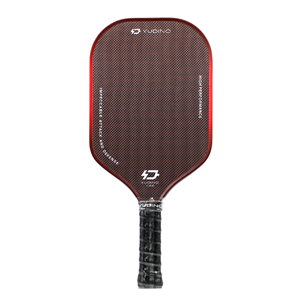
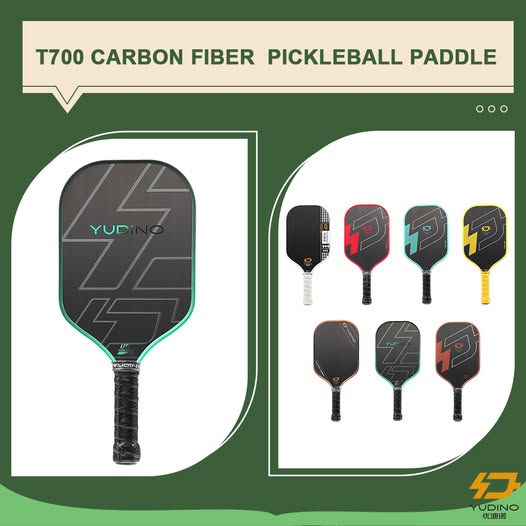
The most widely recommended paddle surface material remains T700 Raw Carbon Fiber.
Avoid paddles that rely on spray-textured or coated grit surfaces. These coatings often wear down within just a few weeks. Raw carbon fiber generates friction through its woven texture, resulting in a much longer spin performance (RPM) lifespan.
If your paddle cannot generate strong topspin from the baseline, the ball will struggle to drop inside the court at high speed. Look for a paddle face that feels like woven fabric when touched, rather than a sandpaper-like gritty surface.
3. Structural Technology: Thermoformed vs. Traditional Construction
The most advanced paddle construction today is thermoformed technology.
Technical advantage:
Thermoforming wraps carbon fiber around the paddle edge, creating a unibody structure. Compared with traditional two-piece bonded construction, thermoformed paddles provide significantly stronger perimeter strength.
Performance benefit:
This design reduces the risk of handle breakage and significantly improves paddle pop. Even if you choose a 16mm control-oriented paddle, thermoforming helps restore the explosive power needed for aggressive shots and putaways.
Choosing a “Recommended Paddle” Based on Your Biomechanics
Instead of recommending specific brands, we recommend matching your paddle with the following performance parameters:
| Your Problem | Recommended Parameter | Physical Logic |
|---|---|---|
| Numb feel, frequent mishits | High Twist Weight (>6.5) | Improves paddle stability during off-center hits, preventing twisting. |
| Slow reaction to fast volleys | Low Swing Weight (<115) | Reduces rotational inertia, allowing quicker paddle acceleration at the net. |
| Weak smashes or soft baseline shots | Hybrid Shape (16.2") | The extended leverage improves ball speed and power generation. |
Pitfall Guide: “Recommendations” That Are Actually Traps
The Myth of Ultra-Light Paddles
Many advertisements promote ultra-light paddles under 7.2 oz. Avoid them.
Physics tells us that lighter mass absorbs less impact energy. Ultra-light paddles transmit most of the shock directly to your elbow, increasing injury risk.
The Myth of “Permanent Spin”
No paddle surface maintains friction forever.
The most realistic recommendation is this:
If you play frequently (3+ times per week), expect to replace your paddle every 6–9 months, because carbon fiber surfaces also experience material fatigue over time.
FAQ
Q1: Why do many professional players recommend elongated paddles (16.5")?
A: Because they possess elite core strength and exceptional shot accuracy. Elongated paddles have a smaller sweet spot positioned higher on the face, which often causes edge mishits for recreational players.
For 90% of amateur players, a hybrid shape (16.2" × 7.8") is the more scientifically balanced choice.
Q2: Should beginners start with wooden paddles or go straight to carbon fiber?
A: Go directly with carbon fiber.
Wood or low-end plastic paddles produce poor ball feedback, which can lead to bad habits such as over-swinging to compensate for insufficient rebound.
Q3: How should I choose paddle grip size?
A: Smaller is better than larger.
A slightly thinner handle can always be adjusted by adding overgrip tape, but a handle that is too thick will restrict your ability to rotate your wrist and generate spin.
Final Recommendation
A truly “most recommended” pickleball paddle should follow this formula:
16mm core + Thermoformed construction + T700 Raw Carbon Fiber surface + Hybrid shape
If a paddle meets these criteria, its performance will be excellent regardless of the brand printed on it.