What Size Paddle Is Most Popular in Pickleball?
What Size Paddle Is Most Popular in Pickleball?
Walk into any pickleball store or browse online, and you’ll quickly notice one design dominating the shelves: the long and narrow paddle.
Although the USA Pickleball Association (USAP) requires that the combined length and width of a paddle cannot exceed 24 inches, and the maximum length cannot exceed 17 inches, manufacturers still have plenty of room to innovate within these limits.
Within this framework, paddle shapes are undergoing a quiet evolution. The sport has moved from traditional teardrop designs to elongated paddles, and now toward a new generation of hybrid shapes.
The popularity of certain paddle sizes is not random. Behind these trends lies a deeper relationship between physics and athletic performance.
1. The Professional Standard: 16.5" × 7.5" (Elongated Paddles)
Today, approximately 70% of professional pickleball players use paddles measuring around 16.5 inches in length and 7.5 inches in width.
The reason comes down to physics—specifically the lever effect.
The longer the paddle, the farther the paddle head is from the player’s hand. According to basic physics principles, when the swing speed remains the same, a longer lever produces a higher tip speed.
This means players can generate more power and stronger topspin when hitting drives from the baseline.
An elongated paddle also provides additional reach. During singles matches or when defending fast body shots in doubles, even half an inch of extra reach can determine whether you successfully return the ball.
However, elongated paddles also come with a potential drawback known as the swing weight trap.
Because the center of mass sits farther from the hand, the paddle can feel heavier during quick exchanges. Players without strong forearms or a tennis background may find that elongated paddles slow down their reaction time at the net. Over long periods of use, they may even contribute to conditions like tennis elbow.
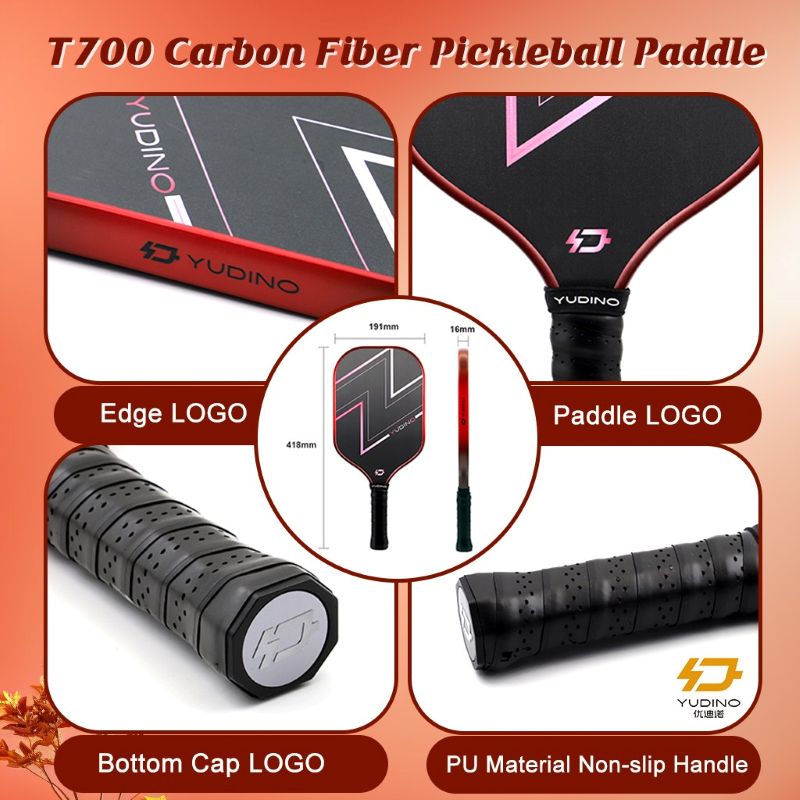
2. The Fastest-Growing Trend (2024–2025): 16.2" × 7.8" Hybrid Paddles
Hybrid paddles are currently the fastest-growing paddle category in Google search trends, and many professional players are quietly switching to this shape.
As professional pickleball becomes faster—especially during rapid net exchanges—the traditional elongated paddle can sometimes feel slightly cumbersome due to higher swing weight and air resistance.
Hybrid paddles typically measure between 16 and 16.25 inches in length. By shortening the lever arm slightly, they bring the sweet spot closer to the player’s hand.
This design offers several advantages. Players can transition more quickly between forehand and backhand during fast-paced net rallies, while still maintaining a strong balance between power and control.
Expert advice suggests that if elongated paddles feel difficult to maneuver, but standard paddles lack power, a hybrid paddle around 16.2 inches is currently one of the best compromises between power and reaction speed.
3. The Underrated Choice: Wide-Body Paddles (15.5"–16" × 8.1")
Although they rarely receive the same attention on social media, wide-body paddles are often the top recommendation from professional coaches.
Their primary advantage lies in twist weight and stability.
A wider paddle distributes mass further toward the sides, which reduces the tendency of the paddle to rotate when the ball hits off-center.
For players who frequently engage in soft dinking exchanges at the kitchen line, paddle width often matters more than length.
Wide-body paddles provide the largest sweet spot available in the industry, offering greater forgiveness and improved stability during off-center hits.
If you frequently mishit the ball or struggle with shot consistency, sacrificing half an inch of length in exchange for an extra inch of width can significantly reduce unforced errors.
How to Choose Paddle Size with the “Arm Test”
Instead of simply copying what top-ranked professionals use, try these simple self-tests.
Reaction Speed Test
Stand at the kitchen line and perform ten rapid forehand and backhand exchanges. If using a 16.5-inch paddle causes noticeable drag on your wrist or feels difficult to maneuver, the swing weight may be too high for your current strength level. In that case, switching to a 16-inch paddle or a hybrid design may improve your reaction speed.
Sweet Spot Accuracy Test
Look at the wear pattern on your old paddle. If most of the wear appears near the top edge of the paddle face, it suggests that you naturally benefit from the leverage of elongated paddles. If the wear pattern is scattered across different areas of the paddle, a wide-body paddle may provide better stability and forgiveness.
FAQ
Q1: Why aren’t 17-inch paddles popular?
Although USAP rules allow paddles up to 17 inches long, the combined length and width cannot exceed 24 inches. This means that a 17-inch paddle would only be about 7 inches wide. Such a narrow face creates an extremely small sweet spot with almost no forgiveness, which is why this design is rarely used in modern competitive play.
Q2: Should beginners choose elongated paddles or standard paddles?
Beginners should generally start with a standard paddle size around 16 inches by 8 inches. New players benefit most from a larger sweet spot, which helps them hit the ball more consistently and build confidence. Elongated paddles can amplify control mistakes and make it harder for beginners to manage power.
Q3: Are elongated paddles unsuitable for shorter players?
Not necessarily. Shorter players may actually benefit from elongated paddles because the additional reach effectively increases their wingspan on the court. The key factor is not height, but whether the player’s wrist strength can handle the paddle’s swing weight.
Final Recommendation
The current market trend is clear. Elongated paddles remain the king of power, while hybrid paddles are quickly becoming the new standard in competitive play.
If your goal is maximum power and reach, a 16.5-inch elongated paddle is still the best choice.
However, if you want faster reactions and better balance between power and control, the new generation of hybrid paddles around 16.1 to 16.2 inches may be the future of the sport.