What Is Spin Retention in a Pickleball Paddle?
When players talk about a pickleball paddle with “good spin,” they are usually talking about how much spin the paddle can generate at a certain moment.
But there is another question that is just as important:
How long can the paddle continue to generate that level of spin?
This is where spin retention comes in.
Spin retention describes a pickleball paddle’s ability to maintain its spin-generating performance as the paddle is used over time. A paddle may produce excellent spin when it is new, but if its surface texture wears down quickly, its ability to grip the ball can gradually change.
For players, this affects how the paddle feels after months of use. For brands, distributors, and product developers, spin retention is also an important part of understanding product durability and long-term customer satisfaction.
What Does Spin Retention Actually Mean?
Spin retention is not simply a measurement of how much RPM a paddle produces.
It is better understood as the stability of spin performance over the usable life of the paddle.
Imagine two paddles that both generate strong spin when they are new.
Paddle A produces strong spin initially, but its surface texture becomes smoother after extended play.
Paddle B maintains a similar surface interaction for much longer.
The difference between their original spin performance and their performance after repeated use is where spin retention becomes important.
In simple terms:
Good initial spin tells you what a paddle can do today.
Good spin retention tells you how well it can continue doing it over time.
This distinction is especially important for performance-oriented pickleball paddles.
Why Does Spin Performance Change Over Time?
The paddle face is the part of the paddle that directly interacts with the ball.
Every shot creates some level of mechanical contact between the ball and the paddle surface. During drives, serves, topspin shots, slices, and other brushing motions, the ball interacts with the texture of the face.
Over time, repeated contact can affect that surface.
The changes may come from several sources:
Surface texture gradually wearing down
Abrasion caused by repeated ball contact
Dirt, sweat, and oils filling microscopic surface irregularities
Contact with the court or other hard surfaces
Changes in the paddle surface caused by extended use
When the effective texture of the face changes, the way the ball interacts with the paddle can change as well.
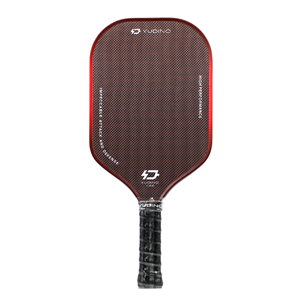
YUDINO's carbon fiber paddle materials are designed around textured surfaces that increase friction between the ball and paddle face. Its Textured Carbon Fiber Paddle, for example, uses a slightly rough surface specifically to increase friction and support spin and control.
That means surface condition is an important part of understanding spin retention.
Spin Retention Starts With the Paddle Surface
A common mistake is to think of spin as being determined only by the player's technique.
Technique is obviously important, but the paddle surface also plays a major role in how effectively the ball interacts with the face.
When a player brushes the ball across the paddle face, the surface texture helps create friction during contact.
A textured surface can provide more mechanical interaction between the ball and paddle.
This is why two paddles with similar dimensions and weight can feel different when producing topspin or slice.
The difference may not be immediately obvious when simply looking at the paddle.
However, after repeated use, surface durability becomes much more noticeable.
A paddle that relies heavily on a surface treatment or texture that wears quickly may show a more obvious change in spin behavior.
A paddle where the texture is integrated more deeply into the paddle-face structure can approach spin retention differently.
This is one reason why paddle manufacturers pay close attention not only to the initial texture of the face, but also to how that texture behaves after repeated play.
Spin Generation vs. Spin Retention
These two terms are closely related, but they are not the same.
Spin Generation
Spin generation describes the paddle's ability to create spin during a shot.
It is influenced by factors such as:
Paddle-face texture
Surface friction
Ball contact
Swing speed
Paddle angle
Player technique
Spin Retention
Spin retention describes how consistently that spin-generating ability remains after the paddle has been used repeatedly.
For example:
A new paddle may feel extremely grippy and produce strong spin.
After hundreds of hours of play, however, the surface may feel different.
If the surface texture has changed significantly, the paddle may no longer interact with the ball in exactly the same way.
Therefore, a paddle can have high initial spin but poor spin retention.
Conversely, a paddle designed with a more durable physical texture may aim to provide more consistent surface performance over a longer period.
Why Surface Texture Matters So Much
The surface of a pickleball paddle is not simply a cosmetic feature.
Its texture affects how the ball interacts with the paddle during contact.
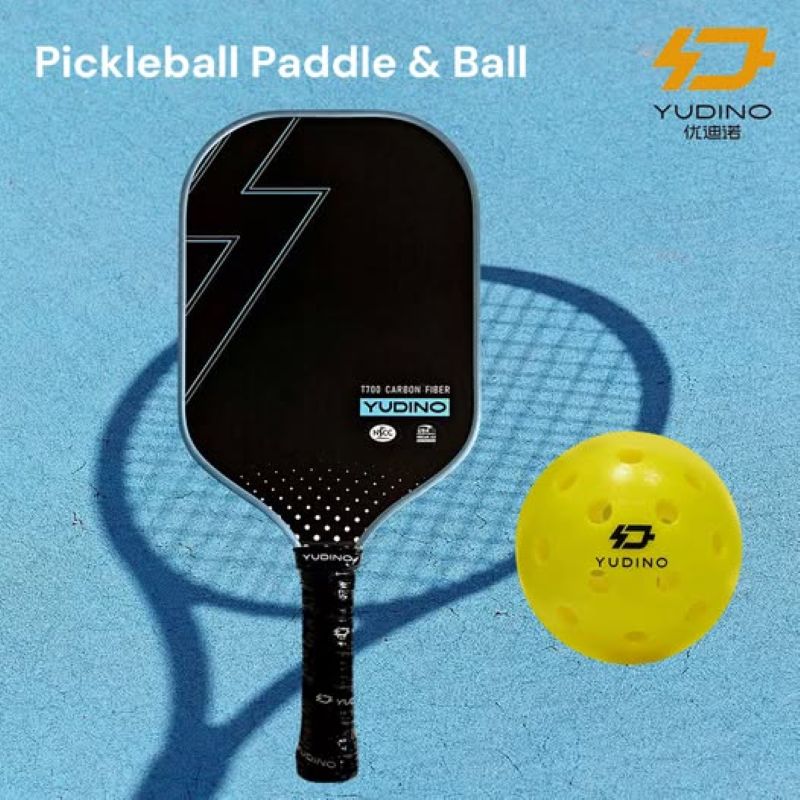
YUDINO's Textured Carbon Fiber Pickleball Paddle uses a slightly rough carbon fiber surface to increase friction and improve spin and control.
The important point is that texture needs to remain functional.
A paddle may look almost unchanged to the eye while its surface interaction has already started to change.
Likewise, a small amount of visible wear does not automatically mean that a paddle has lost most of its spin performance.
This is why spin retention should be considered as a performance characteristic rather than simply a visual measurement.
What Can Reduce Spin Retention?
Several factors can affect how quickly spin performance changes.
1. Surface Abrasion
Repeated ball contact can gradually affect the paddle face.
The more frequently a paddle is used, the more important surface durability becomes.
Players who train or compete several times per week will naturally put more stress on the face than someone who plays occasionally.
2. Surface Contamination
Not every reduction in spin comes from permanent wear.
Dirt, sweat, skin oils, ball fuzz, and other contaminants can accumulate on the paddle surface.
These materials can fill or cover parts of the texture and make the surface feel smoother.
This means that a paddle can sometimes feel like it has lost spin even when the underlying surface has not been seriously damaged.
Cleaning and maintenance therefore matter when evaluating spin retention.
3. Contact With Hard Surfaces
Paddle faces can also be damaged by accidental contact with the ground, fences, bags, or other hard objects.
A paddle designed for long-term use still needs to be handled carefully.
4. Construction and Surface Design
The way texture is created also matters.
A surface texture that exists mainly as a superficial layer may behave differently from a texture that is integrated into the paddle's physical structure.
YUDINO's T700 Composite Pickleball Paddle, for example, uses titanium filaments embedded into T700 carbon fiber and describes the resulting surface as providing “structural friction.” The product page specifically positions the physical texture as highly abrasion-resistant and states that the paddle can maintain high-RPM spin performance for more than 500 hours of play. This is a YUDINO product performance claim, not a universal industry benchmark.
How Can You Tell If a Paddle Is Losing Spin?
There is no single simple test that can tell you exactly how much spin retention a paddle has.
However, players can look for several practical changes.
The Paddle Feels Smoother
A surface that originally felt noticeably textured may gradually feel smoother after extended use.
This does not automatically mean the paddle is finished, but it is a useful sign to monitor.
Brushing Shots Feel Different
If topspin drives, rolls, or slices begin to feel different even though your technique has not changed, the surface condition may be one factor worth checking.
Ball Grip Feels Reduced
Some players notice that the ball seems to slide across the face more easily.
This can be especially noticeable during slower, high-spin shots.
Cleaning Changes the Feel
If cleaning the paddle restores some of the original grip sensation, contamination may have been contributing to the perceived reduction in spin.
If cleaning makes little difference and the texture itself has visibly changed, permanent surface wear may be involved.
Spin Retention Is Not the Same as Paddle Lifespan
This is an important distinction.
A paddle can remain structurally usable even after its spin performance has changed.
For example, the core, handle, edge guard, and overall frame may still be in good condition.
However, the player may notice that the paddle does not produce the same surface response as it did when new.
Therefore:
Paddle lifespan and spin-performance lifespan are not necessarily the same thing.
For performance-oriented products, this distinction can be particularly important.
A customer may not replace a paddle because it is physically broken. They may replace it because the way it plays has changed.
That makes spin retention a meaningful part of the overall product experience.
Why Spin Retention Matters to Paddle Brands
For consumers, spin retention affects how a paddle performs over time.
For brands, it affects something bigger: whether the customer continues to feel that the product delivers the performance they originally paid for.
Imagine a customer purchases a paddle because of its strong spin performance.
If the paddle feels significantly different after a relatively short period, the customer may perceive the product as less durable—even if the paddle is still structurally intact.
For a paddle brand, this can influence:
Customer satisfaction
Product reviews
Repeat purchases
Warranty discussions
Product positioning
Perceived value
This is why manufacturers developing performance paddles need to consider both initial performance and performance retention.
How Paddle Construction Can Influence Spin Retention
Spin retention should not be evaluated by looking at the surface alone.
The paddle is a complete system.
Surface material, texture, core thickness, construction method, face stability, and overall durability can all influence how the paddle behaves during extended use.
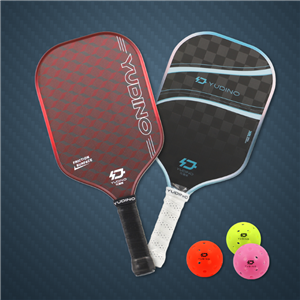
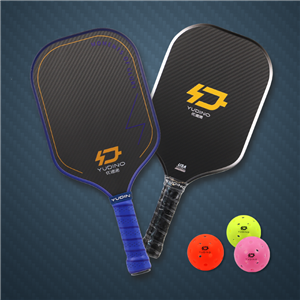
For example, YUDINO offers textured carbon fiber paddles with different surface and construction options. Its product range includes 3K carbon fiber, 12K, 18K, hybrid textures, and titanium-integrated designs.
The important point is not that one material automatically guarantees better spin retention.
Instead, brands should evaluate how the complete paddle construction performs after repeated use.
That is a much more useful approach than judging a paddle only by its new-product spin performance.
How to Maintain Spin Performance for Longer
Players cannot completely prevent surface wear, but good maintenance can help preserve the paddle's intended surface condition.
Keep the Face Clean
Regularly remove dirt, sweat, oils, and other contamination from the paddle face.
A contaminated surface can feel less grippy even when the underlying texture is still functional.
Avoid Abrasive Cleaning
The purpose of cleaning is to remove contamination—not to aggressively alter the paddle's surface.
Using inappropriate abrasive materials can damage the texture you are trying to preserve.
Protect the Paddle During Transport
Avoid placing the paddle face directly against rough or hard surfaces.
A protective cover can also help prevent unnecessary contact during transportation.
Monitor Performance, Not Just Appearance
Do not judge paddle condition only by looking at it.
Pay attention to how the paddle feels during topspin, slice, serves, and other shots that rely on surface interaction.
This provides a more useful picture of actual performance.
How Manufacturers Evaluate Spin Retention
For paddle manufacturers and brands, evaluating spin retention requires more than simply testing a paddle once.
A useful evaluation process can include:
1. Initial performance testing
Measure or document the paddle's surface and spin performance when new.
2. Repeated-use testing
Expose the paddle to repeated ball contact and realistic playing conditions.
3. Surface inspection
Check whether the texture changes after extended use.
4. Performance comparison
Compare the paddle's spin-related performance before and after the test period.
5. Customer-use validation
Collect feedback from players using the paddle under real playing conditions.
The goal is not simply to prove that a paddle can generate high spin.
The goal is to understand how consistently it can maintain its intended surface performance over time.
What Should Buyers Ask About Spin Retention?
If you are buying paddles for your own use, you can ask:
What type of surface texture does the paddle use?
Is the texture part of the paddle structure or an applied surface treatment?
How was the surface durability tested?
Was spin performance tested after extended use?
How should the paddle be cleaned?
What type of surface damage is covered by the warranty?
For brands and distributors, the questions should go further:
What testing data is available for surface durability?
How is spin performance evaluated before and after repeated use?
Is the test method consistent between production batches?
Can the manufacturer provide inspection or testing documentation?
Does the production process control surface texture consistently?
These questions can help distinguish between a paddle that simply has strong marketing claims about spin and one that has a documented approach to long-term surface performance.
Spin Retention Should Be Viewed as a Long-Term Performance Metric
A paddle's spin performance should not be judged only on the day it comes out of the box.
For serious players, the more useful question is:
How does the paddle perform after months of actual use?
That is the basic idea behind spin retention.
A durable paddle surface should not only create effective ball friction when new. It should also be designed to maintain its intended surface characteristics as the paddle experiences repeated use.
YUDINO's product development reflects this approach in several of its textured carbon fiber and titanium-integrated paddle designs. Its product information emphasizes surface texture, friction, durability, and long-term spin performance as connected aspects of paddle design.
For players, understanding spin retention makes it easier to evaluate long-term paddle performance.
For brands, it provides another useful way to think about product quality: not just how good the paddle is on day one, but how consistently it performs after repeated play.
FAQ
What is spin retention in a pickleball paddle?
Spin retention is the ability of a pickleball paddle to maintain its spin-generating performance over time as the paddle is repeatedly used.
Does more surface texture always mean better spin retention?
Not necessarily. A highly textured surface may generate strong initial friction, but spin retention depends on how well the effective texture remains functional during repeated use.
Can cleaning improve spin retention?
Cleaning can restore surface interaction when dirt, sweat, oils, or ball residue are affecting the face. However, cleaning cannot reverse permanent surface wear.
How long does pickleball paddle spin last?
There is no single lifespan that applies to every paddle. It depends on the surface design, construction, playing frequency, playing conditions, maintenance, and the way the paddle is used.
Is spin retention important for pickleball paddle brands?
Yes. For performance-oriented paddles, long-term spin performance can influence how customers perceive durability, consistency, and overall product value.
Does a paddle need to be replaced when spin decreases?
Not necessarily. A paddle can remain structurally usable even when its surface performance has changed. Replacement depends on the player's performance requirements and the overall condition of the paddle.