What Is the Sweet Spot? A Guide to Choosing a Pickleball Paddle Based on Its Sweet Spot
The paddle represents the single largest investment you will make in your pickleball journey. Let's begin by discussing one of the most frequently encountered technical terms: the "sweet spot." We will explore the core metrics of a paddle, uncover the mysteries behind the sweet spot, and provide a comprehensive guide to paddle selection—suitable for everyone from absolute beginners to aspiring professional players.
Seven Core Indicators:
1. Materials: The Cornerstone of Feel. The material used in a pickleball paddle is the core factor determining its performance, feel, durability, and price. Currently, the predominant materials found on the market include composite materials, carbon fiber, and fiberglass.
Carbon Fiber: Offers high strength and a lightweight profile; it enhances shock absorption and increases the density of the sweet spot.
Composite Materials: A cost-effective choice that strikes a balance between elasticity, durability, and vibration dampening.
Fiberglass: Relatively soft, providing superior tactile feedback and ball control.
Carbon Fiber (Aerospace Grade): Varieties such as those similar to Kevlar produce a distinct metallic "ping" sound upon impact; furthermore, the textured surface grain facilitates excellent spin generation for effective slicing.
2. Weight: The Balancing Act Between Power and Control. Racket weight is typically measured in "U" units, ounces (oz), or grams. Generally, a heavier racket generates greater hitting power, while a lighter racket significantly enhances agility for volleys and counter-attacks. For those looking to make a definitive choice right from the start, a racket weighing between 230 and 260 grams is recommended—often referred to as the "golden range" for weight.
3. Balance Point:A Compass for Offensive and Defensive Styles. Standard rackets typically feature a 50:50 balance design; however, methods exist to adjust a racket's balance point to suit specific requirements. Controlling the balance during the manufacturing process allows for effective management of the racket's overall weight; if you choose to modify the racket's weighting later on, it is crucial to remain mindful of the resulting total weight.
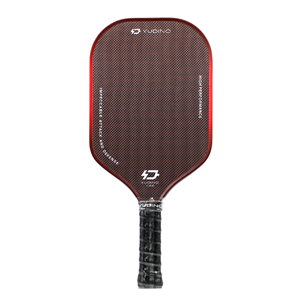
4. Racket Head Size: The Choice Between Sweet Spot Size and Forgiveness. At this point, we finally arrive at the "Sweet Spot"—the specific area of the racket face that enables a player to execute returns, interceptions, and technical shots most effectively. Manufacturers typically offer three racket head sizes—oversized, wide-body, and standard—to accommodate various hitting styles. Rackets with larger head areas possess larger sweet spots, thereby reducing the margin for error on shots; however, this often comes at the cost of reduced agility. This is one of the reasons why professional players often opt for rackets with relatively smaller sweet spots. Racket thickness is another critical metric; a thicker racket face enhances shot rebound power—specifically, for every 1mm increase in thickness (using carbon fiber as a benchmark), shot power increases by approximately 15%. Professional players typically use rackets with a thickness of 13–15mm, allowing for precise control over their shots.
5. Elasticity and Strength:The Feel of the Shot and Power Feedback. High elasticity boosts hitting power—much like punching a sandbag: a sandbag with greater elasticity is actually more resilient and less likely to be damaged. Modern racket manufacturers are increasingly incorporating advanced materials into the racket's core structure—for instance, utilizing a composite design featuring a 55-degree hardness on the surface layer and a 45-degree hardness in the core. Rackets with moderate elasticity effectively store and release energy during a shot while simultaneously providing excellent protection for the player's wrist.
6. Grip Size: Ensuring Comfort and Control. There is no single universal standard for measuring grip size; however, when selecting a racket, players can rely on a simple formula: Grip Size = Palm Length × 0.8. When holding the racket, the ideal fit is achieved when there is a gap of approximately 1 cm between your thumb and your middle finger. Shock Absorption System: Protecting the Arms and Enhancing Comfort. The shock absorption system is an integrated, systemic design built directly into the racket; a superior design can effectively reduce the incidence of "pickleball elbow." Comprehensive injury prevention—encompassing everything from materials, elasticity, and structural strength to the grip, overgrip, and the use of protective gear—is essential to avoid sports-related injuries and physical ailments.
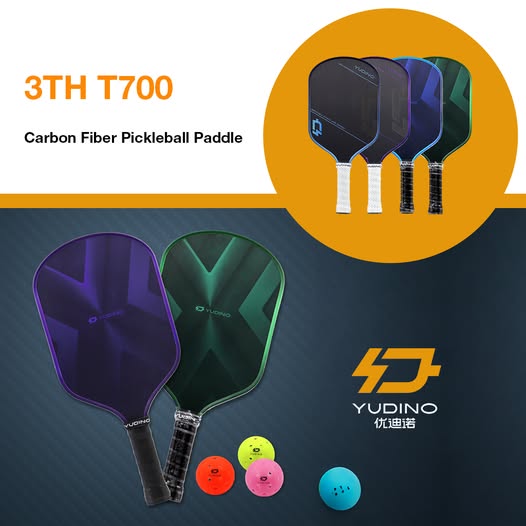
What is the Sweet Spot?
The "Sweet Spot" is the area on a pickleball paddle where the impact produces the optimal result. Striking the ball within this zone yields the most stable control, maximum power transfer, and minimal vibration feedback. The sweet spot on a pickleball paddle is not a fixed entity; rather, it is a dynamic zone influenced by several factors:
1. Center of Impact Theory: When the ball strikes the paddle face, if the point of impact coincides with the paddle face's center of mass, the reactive force transmitted from the handle back to the hand is minimized, resulting in the most comfortable feel. This constitutes the fundamental physical principle underlying the existence of the sweet spot.
2. Vibration Node Effect: Striking the ball generates mechanical vibrations within the paddle. These vibration waves exhibit their lowest amplitude—known as "nodes"—at specific locations. When the point of impact aligns with a node, the force of the vibration transmitted to the hand is minimized, thereby reducing discomfort and enhancing shot precision.
3. Energy Conversion Efficiency: The sweet spot is also referred to as the "power point" or "bounce point," representing the specific area where the paddle most efficiently converts the energy of the impact into ball speed. Variations in material composition and structural design can influence this energy conversion efficiency, thereby altering the effective range of the sweet spot.
The size of the sweet spot is closely tied to the paddle's design. Thicker paddles (typically 16–19 mm) generally possess a larger sweet spot; this is because their honeycomb cores and composite structures are more effective at dispersing impact forces, allowing off-center shots to maintain a stable trajectory. Conversely, thinner paddles (13–15 mm) feature a relatively smaller sweet spot, yet they offer more acute tactile feedback and a greater capacity for precise control.
Reasons Why Professional Players Opt for Smaller Sweet Spots:
Precise Control and Finesse: Rackets with smaller sweet spots enhance ball-control precision by providing more concentrated feedback.
Energy Transfer Efficiency: Smaller sweet spots minimize energy dispersion, thereby improving the efficiency of power transmission.
Swing Speed and Agility: These rackets are lighter in weight and possess lower swing inertia, making them ideal for rapid, consecutive shots.
Adaptation Through Long-Term Training: Through extensive training, professional players have developed the ability to precisely control their contact point, rendering them independent of the forgiveness—or error tolerance—typically offered by larger sweet spots.
Tactical Requirements and Rule Compliance: Rackets with smaller sweet spots are better aligned with the specific tactical demands and regulatory constraints of professional competition.
If you have already established a consistent playing style—meaning your techniques (whether for offense, defense, volleys, etc.) are fully ingrained—then you do not require an exceptionally large sweet spot to prevent errors during the shot-making process. Consequently, the effective "sweet spot" utilized by professional players tends to narrow gradually over the course of their training; naturally, their rackets also feature smaller head sizes and thinner profiles.
With the rapid growth of the sport of pickleball, sweet spot design continues to undergo constant innovation:
Dynamic Sweet Spot Distribution: Modern professional paddles utilize topological optimization techniques to create asymmetrical sweet spot distributions. For instance, extended-length paddles feature a sweet spot shifted upward to form a "Comet Zone," while hybrid-style paddles employ a dual-core sweet spot design, wherein two high-response zones—located at the top and bottom—function simultaneously.
Material Innovation: The introduction of carbon fiber, Kevlar, and graphene-reinforced materials has enabled greater precision in sweet spot design. The high rigidity, low coefficient of thermal expansion, and superior vibration-damping properties of these materials provide a stable foundation for paddles featuring a more compact sweet spot.
Intelligent Adjustment Systems:The latest generation of professional paddles has begun to incorporate adjustable center-of-gravity systems and dynamic balance technologies, allowing players to fine-tune the position and size of the sweet spot based on their individual playing style and the specific match environment. For example, the adjustable center-of-gravity system found in the Joola Radius series enables players to micro-adjust the sweet spot's position within a range of 0.5 to 3 millimeters.
Acoustic Optimization: Sweet spot design also encompasses acoustic characteristics. Research indicates that when the sound of the ball being struck is delayed by 0.03 seconds relative to the actual physical motion, an anticipatory error occurs in the opponent's brain, resulting in a 14% increase in return errors. Modern professional paddles address this by employing asymmetrical arrays of sound-dampening perforations to optimize the acoustic profile of the strike, all while preserving the sweet spot's peak performance capabilities.
The choice of sweet spot among professional athletes reflects a technical philosophy in which "precise control takes precedence over forgiveness." Through rigorous, long-term training and refined sensory perception, they are able to consistently position their point of contact within a compact sweet spot, thereby achieving more efficient power transmission and superior control. In contrast, beginners rely more heavily on the forgiveness and stability provided by a larger sweet spot, which aids them in building confidence and mastering fundamental techniques during the learning process.