product-news
-
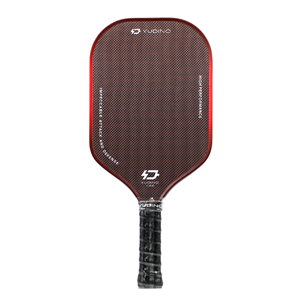
Carbon fiber is reshaping the performance pattern of Peak rackets and becoming the preference of professional players. Its advantages are direct feedback, light weight and high strength, easy manufacturing and rotation, and fatigue resistance. The combination of T700 carbon fiber and a thickness of 16mm takes into account stability and ball control. For example, YUDINO certified rackets have been widely used in professional events such as PPA and APP.
-
1807-2026
How Paddle Thickness Affects Your Game
Walk through any paddle comparison guide online, and you'll find plenty of attention paid to face material, carbon weave density, and paddle shape. Core thickness — the millimeter measurement that determines how much cushion sits between the two face layers — gets mentioned far less often, despite being one of the most consequential specs in the entire build. Change a paddle's core thickness by just 2 or 3 millimeters, and you change how power transfers at contact, how soft or crisp a dink feels, how forgiving the paddle is on off-center hits, and how the arm absorbs impact over a long match. This article explains exactly how that works and what it means when choosing between paddles at different thickness points.
-
1707-2026
Best Pickleball Paddle for Doubles
Doubles pickleball is a different game from singles — not just in the number of players, but in what the sport actually demands from your equipment. Singles rewards reach, power, and baseline control. Doubles punishes hesitation. At the non-volley zone, where most points in doubles are actually won and lost, success comes down to quick hands, consistent resets, and the ability to redirect fast incoming shots with minimal setup time. The paddle that suits that game is often not the one that looks best on a spec sheet.
-
1607-2026
Wide Body vs Elongated Pickleball Paddle
Ask a group of experienced pickleball players which paddle shape is better — wide body or elongated — and you'll hear strong opinions in both directions, usually from people who've never actually played with both back to back. The reality is that neither shape is objectively superior. They're engineered for different playing styles, different court positions, and different priorities. What matters is understanding exactly what each shape trades away to get what it offers, and whether that tradeoff makes sense for the player — or the market — you're building for.
-
Paddle shape gets far less attention than face material or core thickness, but it quietly shapes almost everything about how a paddle performs — reach, sweet spot size, maneuverability, and even how a paddle feels off a thermoformed pickleball paddle's edge. If you've ever picked up two paddles with identical specs on paper that felt completely different in hand, shape is usually the reason why. Here's what actually matters when choosing the right paddle shape, and why it matters even more for anyone sourcing a thermoformed pickleball paddle line rather than buying a single unit.
-
Pickleball has moved from backyard hobby to a certified competitive sport in under a decade, and paddle engineering has moved just as fast. If you've compared spec sheets from a handful of manufacturers this year, you've probably noticed one term showing up everywhere: thermoformed. It's not just a buzzword — it's arguably the single biggest shift in paddle construction since carbon fiber faces became standard. So what actually makes the best thermoformed pickleball paddle in 2026, and why does the manufacturing method matter as much as the material?
-
Introduction You've invested in a carbon fiber paddle. You've spent weeks dialing in your spin game, developing your third-shot drop, and building confidence with a piece of equipment that genuinely feels like an upgrade. Then the day before a sanctioned tournament, someone raises the question you suddenly realize you've never seriously investigated: Is your paddle actually legal to play with?
-
Introduction Walk into any serious pickleball conversation—on Reddit, in a Quora thread, or at the court between games—and the carbon fiber versus Kevlar debate surfaces fast. Both materials have passionate advocates. Both have real, documented performance advantages. And both get misrepresented constantly by sellers who prioritize marketing language over material science.
-
Introduction You just dropped $120—maybe even $250—on a carbon fiber pickleball paddle. You've put in the hours on the court, the muscle memory is building, and the spin performance feels exactly right. Then one day you pick it up and notice the surface feels slick. Your dinks are sailing. Your third-shot drops have lost their bite. What happened?
-
Introduction: How Long Should a Paddle Actually Last? Ask ten pickleball players how long a paddle should last, and you will get ten different answers. "Mine lasted two years." "I've had mine for four seasons, and it's still perfect." "My last one was dead in eight months." The range is real, and the variance is not random — it is the direct result of how paddles are built, how they are used, and critically, how they are cared for between sessions.